At a Glance
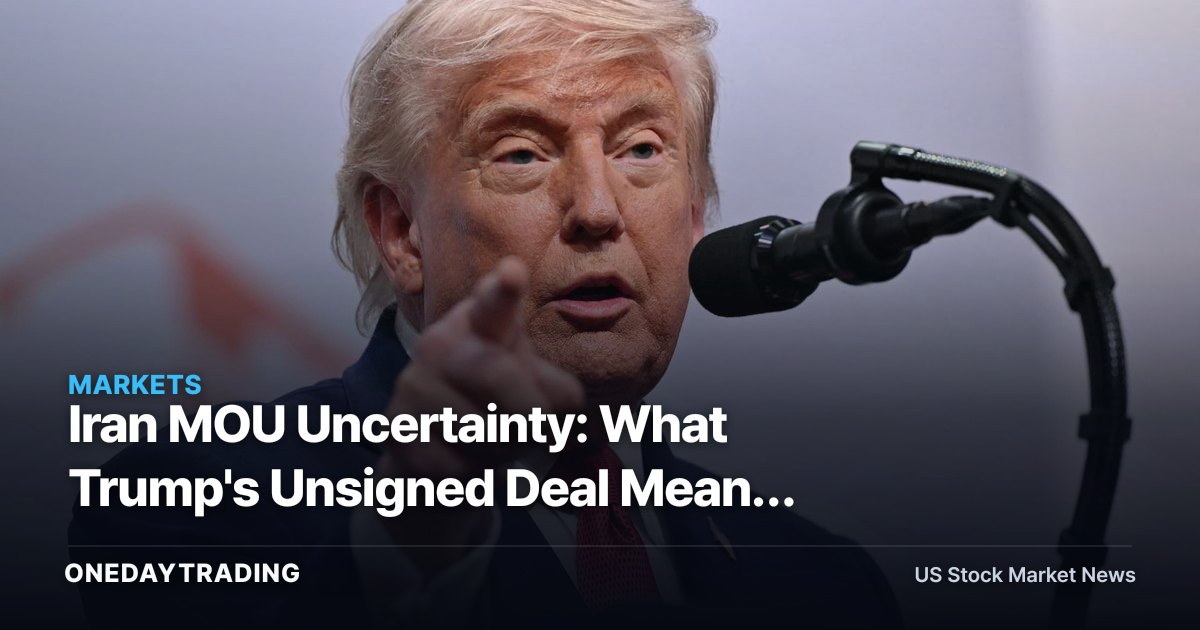
At the G7 summit, President Trump said the memorandum of understanding reached with Iran might not be the kind of document he should be signing, and floated assigning blame to Vice President Vance if the arrangement fails. For markets, the substance is not the blame game — it is that a potential Iran deal remains unsigned and contingent, leaving the oil-supply question open.
Why It Matters Now
Iran sits at the center of the global crude balance. Any framework that moves toward sanctions relief raises the prospect of additional Iranian barrels reaching legal export channels, which is a bearish supply signal for oil prices. A deal that stalls or collapses does the opposite, keeping a geopolitical risk premium embedded in crude.
The key takeaway from Trump describing the MOU as something he may not sign is that the path is unresolved. That ambiguity tends to compress conviction in energy positioning: traders cannot price either a clean sanctions-relief scenario or a hard breakdown. The headline is political process, not policy substance, so the direct market impact is indirect and channel-specific rather than a clear catalyst.
FAQ
- Was a deal signed? No. Trump indicated the memorandum might not be a document he should sign, leaving it unconfirmed.
- Why does this touch oil? Iran is a major crude producer; the direction of any deal shapes how many of its barrels reach world markets.
- Is this a buy or sell signal? Neither. It is an uncertainty headline; the market-moving event would be an actual signed agreement or a formal breakdown.
- Who is named? Trump referenced Vice President Vance in the context of accountability if the arrangement does not work out.
Related Stocks & Sectors
- ExxonMobil and Chevron — integrated majors whose earnings track crude prices; added Iranian supply would pressure the benchmark, while a failed deal supports it.
- Energy sector broadly — upstream producers are most sensitive to the supply narrative tied to Iran sanctions.
- Defense names — Middle East diplomatic risk is a secondary, looser channel if tensions re-escalate.
What to Watch
- Whether the memorandum is formally signed or abandoned after the G7.
- Any official language on Iranian sanctions and export terms.
- WTI and Brent reaction in the sessions following concrete deal news, not the blame headline.
- OPEC commentary on how Iranian barrels would fit existing supply policy.
Overall Outlook
The bull case for oil rests on the deal stalling and Iranian supply staying constrained; the bearish case is a signed framework that opens the door to more barrels. The realistic read today is that this is a political-process story with no confirmed agreement, so the genuine market trigger has not yet arrived. The variable that matters is the document itself, not who gets blamed for it.
📊 Analysis
Signal Neutral
Why The story is about political accountability over an unsigned Iran memorandum, with only an indirect, two-sided read-through to oil supply and no confirmed policy outcome.
This article was independently written by OneDayTrading from public reporting. Read the original (CNBC)