At a Glance
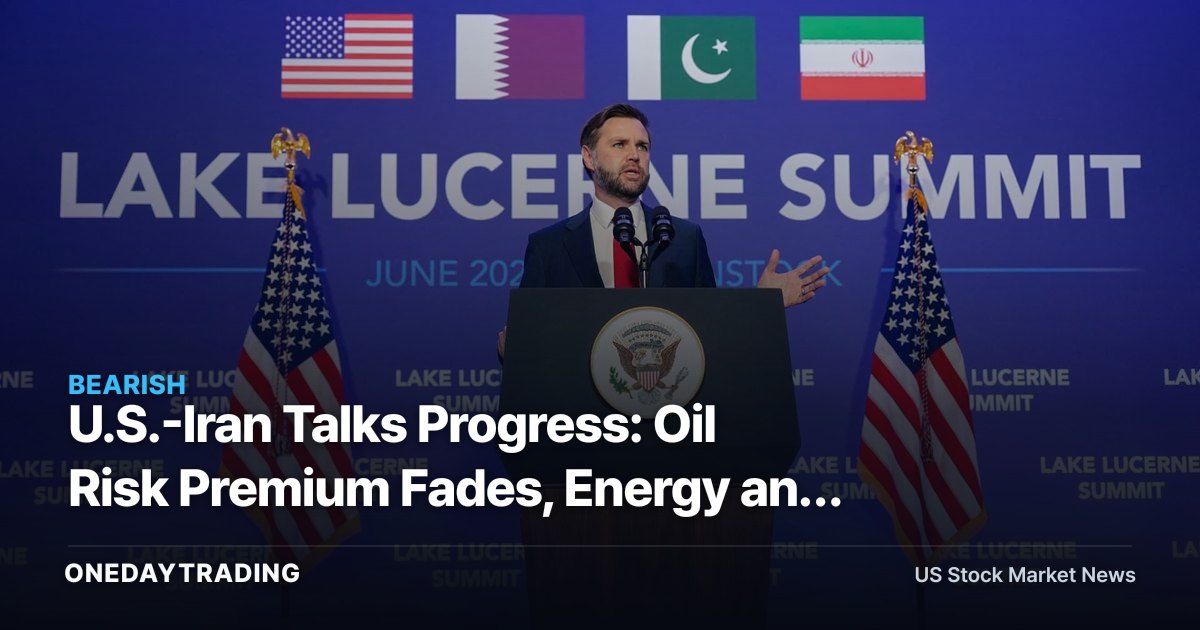
U.S. Vice President JD Vance described the latest U.S.-Iran talks in Switzerland as showing great progress, with Tehran agreeing to allow IAEA inspectors back into the country. For investors, the immediate read-through is a softer geopolitical risk premium on crude oil, which tends to weigh on energy and defense equities while supporting broad risk appetite.
Why It Matters Now
Middle East tension is one of the few variables that can move oil independently of supply-demand fundamentals. When inspection access returns and dialogue replaces escalation, the market typically strips out the war-premium that had been padding crude prices. That matters because integrated oil majors earn the bulk of their upstream profit on the marginal barrel price, so even a modest pullback in benchmark crude compresses the per-barrel margin that drives their cash flow and buyback capacity.
The same channel cuts against defense contractors, whose order momentum and investor sentiment strengthen when conflict risk rises. A credible diplomatic track dulls the near-term narrative that has supported the group, even if multi-year backlogs remain intact. On the other side, lower energy costs and reduced tail risk are a tailwind for transport, consumer discretionary and the broad index, since cheaper fuel feeds margins and a calmer macro backdrop lifts equity multiples.
The caveat is durability. Vance paired his optimism with references to threatening and whining from Tehran, signaling the process is fragile. Talks have collapsed before, and any reversal would snap the risk premium back into crude within hours.
FAQ
- Why would oil fall on this news? A diplomatic path lowers the odds of supply disruption in the Gulf, removing the geopolitical premium embedded in crude prices.
- Does this hurt energy stocks directly? Yes, upstream-heavy majors see margins track the benchmark price, so a lower crude floor trims earnings leverage.
- Why are defense names exposed? Their sentiment and near-term order narrative benefit from rising conflict risk, which de-escalation erodes.
- Is this a confirmed deal? No. It is described as progress, not a signed agreement, and language from both sides remains combative.
Related Stocks & Sectors
- ExxonMobil (XOM), Chevron (CVX) — upstream margins and buyback firepower are sensitive to any erosion of the crude risk premium.
- Lockheed Martin (LMT), RTX (RTX) — defense sentiment softens when diplomacy advances, even with backlogs intact.
- Airlines and transport — lower jet fuel costs would be a direct margin positive if crude eases.
- Broad index (S&P 500) — reduced tail risk and cheaper energy support multiples across cyclicals.
What to Watch
- Whether IAEA inspectors actually gain access on the ground, the real test of follow-through.
- Crude benchmarks (WTI) for confirmation that the risk premium is unwinding rather than just paused.
- Any official statements signaling a breakdown, which would reverse the move quickly.
- Next energy-sector earnings for guidance on price assumptions and capital returns.
Overall Outlook
The bull case for risk assets rests on a sustained de-escalation that lowers oil, eases input costs and lifts sentiment. The risk is that this is a headline, not a deal: combative rhetoric on both sides means a single setback could restore the war premium and reverse energy and defense moves. Positioning around fragile diplomacy demands sizing for headline volatility rather than treating the path as settled.
📊 Analysis
Signal Bearish
Why Diplomatic progress lowers the geopolitical risk premium on crude, pressuring oil majors and defense names most directly tied to the story.
This article was independently written by OneDayTrading from public reporting. Read the original (CNBC)