At a Glance
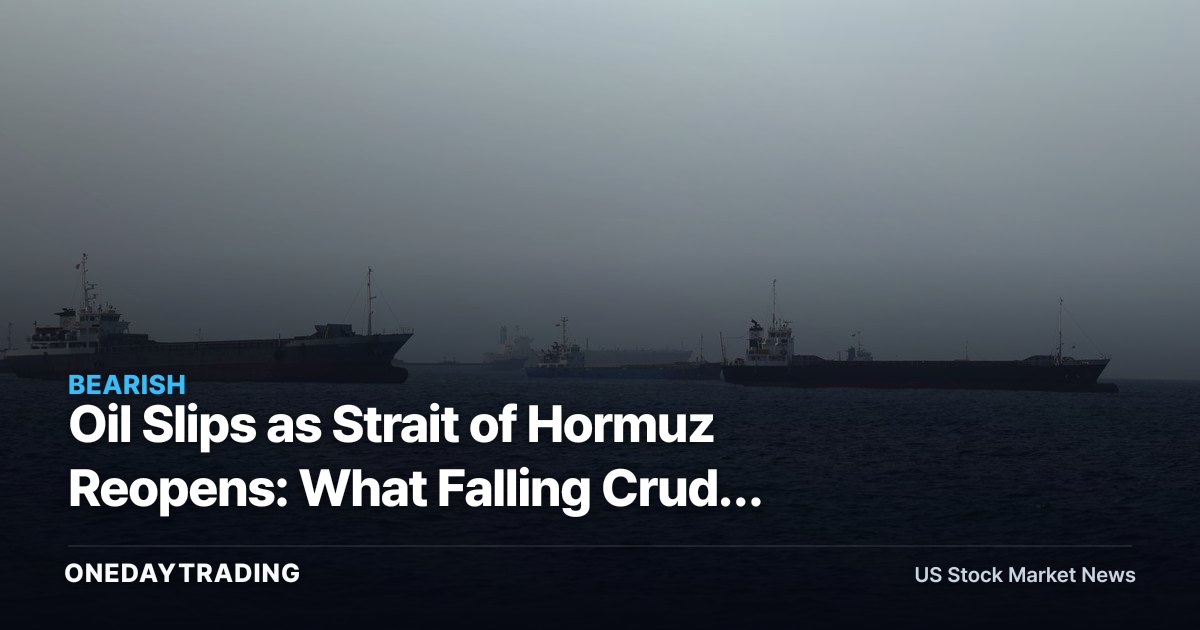
With tankers moving freely through the Strait of Hormuz again, the geopolitical risk premium that had been propping up crude is bleeding out, and prices are drifting lower. The market's attention is rotating away from supply scares toward the slower-burning question of demand and what OPEC does next. That rotation reshuffles who wins and who loses across energy, transport, and consumer-facing names.
Why It Matters Now
A reopened Strait of Hormuz removes the single most acute tail risk in oil. Roughly a fifth of seaborne crude transits that chokepoint, so the threat of disruption carries an outsized fear premium. When tanker traffic normalizes, that premium unwinds fast — and the downside in crude is less about new bearish news than the disappearance of a bullish one.
The deeper point for investors is the change in what drives price. Supply-shock trading is binary and headline-driven; demand-and-OPEC trading is grindier and fundamentals-led. For upstream producers like ExxonMobil and Chevron, realized prices track the crude curve closely, so a falling barrel compresses cash flow and the buyback-and-dividend math that has underpinned the group's appeal. Refiners face a more nuanced picture: cheaper feedstock can widen crack spreads if product demand holds, which is why downstream-heavy names do not move in lockstep with the producers.
On the other side of the cost ledger, lower crude is a tailwind for fuel-intensive businesses. Airlines and freight operators see jet fuel and diesel as among their largest variable costs, so a sustained pullback flows straight to margins. The same logic eases input costs for chemicals and broad consumer pricing, feeding into the inflation debate that shapes rate expectations.
FAQ
- Why is oil falling if nothing new happened? The decline reflects an unwind of the risk premium built in during the Hormuz tension — removing a fear, not adding a fundamental negative.
- What replaces geopolitics as the price driver? Global demand trends and OPEC's production and outlook signals now sit in the driver's seat.
- Is lower oil bad for all energy stocks? No — upstream producers feel the price drop most, while refiners can benefit from cheaper feedstock if product demand stays firm.
- Who benefits from cheaper crude? Airlines, freight, chemicals, and consumers exposed to fuel and energy input costs.
Related Stocks & Sectors
- ExxonMobil (XOM) — integrated major with heavy upstream exposure; realized prices and cash flow track crude directly, pressuring shareholder-return capacity if weakness persists.
- Chevron (CVX) — similar upstream sensitivity; dividend coverage and buyback pace hinge on the barrel staying above its breakeven economics.
- Refiners (Valero, VLO) — cheaper feedstock can widen crack spreads when gasoline and diesel demand holds, partly offsetting lower crude.
- Airlines (DAL, UAL) — fuel is a top variable cost; a durable crude decline is a direct margin tailwind.
- Energy ETF (XLE) — broad sector proxy that aggregates the producer-versus-downstream split.
What to Watch
- OPEC's next production decision and demand commentary — the new primary catalyst now that supply fears have faded.
- Weekly U.S. inventory and global demand data for signs of slowing or resilient consumption.
- Whether tanker traffic and shipping insurance rates in the Strait fully normalize or stay elevated.
- Refiner crack spreads as a tell on whether downstream names decouple from producers.
Overall Outlook
The bull case for crude rested on geopolitics, and that leg has been kicked out; with the risk premium gone, prices need fresh demand strength or OPEC restraint to find a floor. The counter-scenario matters: the Strait is a recurring flashpoint, and any renewed tension could snap the premium back overnight, so the current calm is conditional rather than structural. For equity investors, the cleaner read is not a single directional bet on energy but the divergence within it — producers exposed to price, refiners and fuel-buyers exposed to the spread.
📊 Analysis
Signal Bearish
Why Fading supply fears and resuming Hormuz tanker traffic are pulling crude lower, pressuring upstream producers most exposed to realized oil prices.
Tickers$XOM$CVX$VLO$DAL$XLE
This article was independently written by OneDayTrading from public reporting. Read the original (CNBC)