Summary
Trump’s planned meeting with travel-industry CEOs matters for investors because the White House is presenting the World Cup as a tourism catalyst, while the market must still determine whether extra visitors translate into durable revenue for online booking platforms, airlines and hotels. The immediate signal is policy attention; the earnings impact depends on passenger flows, room nights and consumer spending.
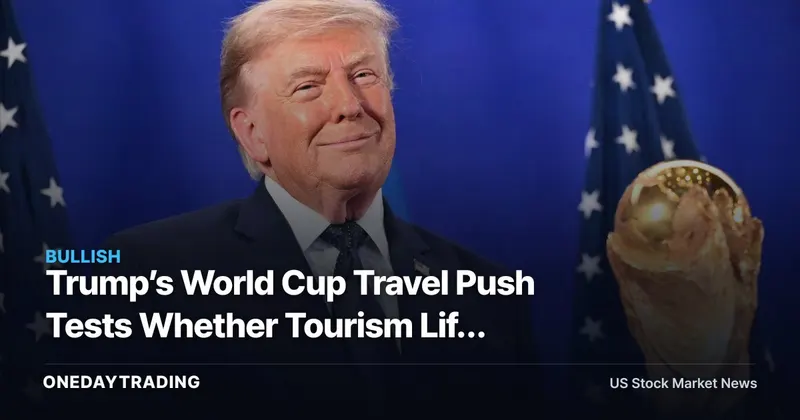
The event also highlights an unusual political channel: Trump’s close relationship with FIFA President Gianni Infantino was showcased around the tournament. That access may help coordinate promotion, but it does not by itself guarantee higher occupancy, pricing or margins.
The Full Story
The key question is not whether the World Cup creates publicity. It is whether publicity converts into paid travel. A meeting between the president and travel executives can align federal messaging with the companies that sell flights, rooms and experiences, yet investors still need evidence in booking volumes, international arrivals and hotel demand.
The White House is touting a tourism boost linked to the World Cup, an event capable of concentrating visitors across host markets. Travel businesses could benefit from a wider spending funnel: transportation captures the journey, hotels capture lodging, and booking platforms capture transaction fees. The same concentration can expose bottlenecks if available rooms, aircraft seats or local infrastructure fail to match demand.
Trump’s relationship with Infantino adds a diplomatic dimension to the story. FIFA controls the tournament’s global platform, while U.S. travel companies monetize the resulting audience through reservations and ancillary purchases. The commercial outcome therefore rests on execution after the headline: how many visitors arrive, how long they stay and how much they spend.
Structural Background
A sports-led tourism surge is a demand event, not a permanent change in capacity. Hotels can raise rates when rooms are constrained, but higher prices can also shorten stays or redirect travelers to alternative destinations. Airlines face the inverse problem: adding capacity can capture volume, but empty seats quickly turn a traffic opportunity into a margin drag.
Online travel agencies may see search and booking activity first, making gross bookings and take rate the cleanest early indicators. Hotel operators receive the signal later through occupancy and revenue per available room. Those metrics will separate a genuine tourism lift from a short-lived media effect.
Stock & Sector Ripple
- Booking Holdings (BKNG): A broad increase in tournament-related searches could lift reservations, but conversion and take rate determine how much demand reaches revenue.
- Expedia Group (EXPE): The platform is exposed to flight and lodging transactions; the key variable is whether incremental bookings carry profitable customer economics.
- Marriott International (MAR): A visitor influx can support occupancy and room pricing, while concentrated dates raise operating and service-pressure risks.
- Airlines: Additional international traffic can improve load factors, but capacity decisions and fuel costs determine whether volume becomes profit.
Bull vs Bear Scenarios
The bullish case is coordinated promotion, strong international attendance and constrained room supply that lifts occupancy and pricing across host markets. Booking platforms would capture demand before hotels and airlines fully adjust capacity.
The bear case is a publicity-heavy meeting followed by uneven arrivals. Travelers could substitute destinations, reduce length of stay or face transport constraints; aggressive airline capacity additions would then dilute yields, leaving investors with higher costs and no durable revenue lift.
Investor Action Points
- Track management commentary on World Cup-related bookings, international traffic and advance reservations at the next earnings updates.
- Compare occupancy and room-rate trends with airline load factors to test whether demand is broad or concentrated.
- Watch policy announcements after the CEO meeting for visa, border, infrastructure or promotional measures that change conversion from interest to travel.
- Separate one-time tournament volume from repeat tourism by monitoring booking lead times and post-event demand.
FAQ
Why is Trump meeting travel industry CEOs?
Trump is meeting travel executives as the White House promotes the World Cup as a source of increased tourism. The investment question is whether government promotion produces measurable bookings, room nights and passenger traffic.
What is the World Cup tourism boost for travel stocks?
The potential boost is higher transaction volume for booking platforms, stronger occupancy for hotels and additional passengers for airlines. Profitability still depends on pricing, capacity and the cost of serving those travelers.
Why does Trump’s relationship with FIFA President Gianni Infantino matter?
The relationship gives the White House a direct connection to FIFA’s global promotional platform. It may improve coordination, but commercial gains require visitors to arrive and spend, not simply watch the event.
Market data check: BKNG
BKNG last traded near $199.74 (+2.07%). Our composite signal — blending price momentum and news flow — reads 🟡 neutral. Price momentum scores 67/100 (firm).
Data as of publication. Price via market feeds; for reference only, not investment advice.
📊 Analysis
Signal Bullish
Why A White House-backed World Cup tourism push could increase travel demand, although booking conversion and capacity discipline will determine the earnings impact.
This article was independently written by OneDayTrading from public reporting. Read the original (CNBC)