At a Glance
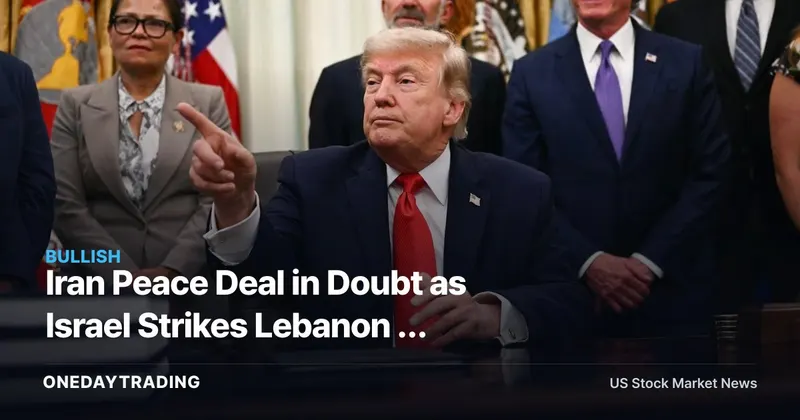
An initial agreement to end the war and reopen the Strait of Hormuz had been expected to be signed this week, but renewed Israeli strikes on Lebanon have thrown that timeline into question. For markets, the central issue is the Strait of Hormuz, the chokepoint through which a large share of global seaborne crude flows. Any threat to its reopening keeps a geopolitical risk premium embedded in oil prices.
Why It Matters Now
The Strait of Hormuz is the single most important transit point for energy markets. A signed deal would have signaled de-escalation and the prospect of smoother shipping, easing fears that had supported crude. With the deal now in doubt and military action continuing, traders are forced to price in the possibility of prolonged tension rather than a quick resolution.
This dynamic tends to support upstream energy producers and refiners, while raising input-cost concerns for transport-heavy and consumer-facing sectors. Higher oil can also feed into inflation expectations, which in turn shapes how investors think about interest rates and broad equity valuations.
FAQ
- Why does the Strait of Hormuz matter so much? It is a narrow passage that carries a major portion of the world's seaborne oil, so any disruption threat directly affects crude pricing.
- Was a deal close? An initial agreement to end the war and open the strait had been expected to be signed this week before the latest strikes raised doubts.
- What changed the outlook? Israeli strikes on Lebanon reintroduced escalation risk just as a peace framework appeared near.
- Is this bullish or bearish for oil? Supply-risk headlines generally support crude prices in the near term, which tends to help energy producers.
Related Stocks & Sectors
- ExxonMobil (XOM) — A major integrated producer that benefits from elevated crude prices.
- Chevron (CVX) — Upstream-heavy exposure makes it sensitive to oil supply-risk premiums.
- ConocoPhillips (COP) — A large independent producer leveraged to crude price strength.
- United States Oil Fund (USO) — Tracks crude moves directly as a thematic proxy.
- Airlines and transport — Carriers like Delta face higher fuel costs if oil stays elevated.
What to Watch
- Whether the peace deal is revived, delayed, or collapses in the coming days.
- The status of Strait of Hormuz shipping and any tanker disruptions.
- Crude oil price action and the size of the geopolitical risk premium.
- Knock-on effects in inflation expectations and energy-sensitive sectors.
Overall Outlook
The bull case for energy rests on a stalled deal and ongoing conflict keeping a supply-risk premium in crude, supporting producers like XOM and CVX. The risk is that diplomacy resumes and a deal is ultimately signed, reopening the strait and unwinding the premium quickly. With headlines driving sentiment, energy exposure remains tactically supported but vulnerable to sudden de-escalation.
📊 Analysis
Signal Bullish
Why A stalled Iran peace deal and renewed Middle East strikes keep a Strait of Hormuz supply-risk premium in oil, supporting energy producers.
Tickers$XOM$CVX$COP$USO$DAL
This article was independently written by OneDayTrading from public reporting. Read the original (CNBC)