What Changes
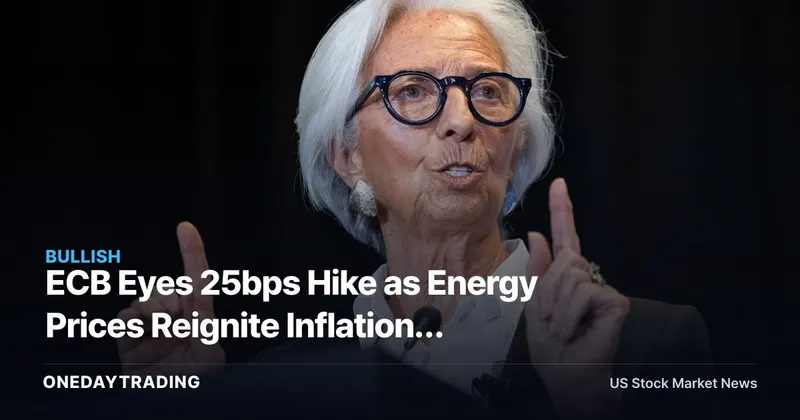
A 25 basis point hike signals that the ECB still views inflation as a live threat rather than a fading one. The trigger this time is energy: when oil and natural gas prices climb, they feed directly into headline inflation and indirectly into transport, manufacturing and food costs. That makes the central bank reluctant to pause, even as growth across the eurozone remains fragile.
For global investors, the read-through is twofold. First, central banks on both sides of the Atlantic remain sensitive to energy shocks, so a sustained commodity rally keeps the higher-for-longer rate narrative alive. Second, a more hawkish ECB can strengthen the euro versus the dollar, a dynamic that ripples into multinational earnings and commodity pricing.
The key tension is that rate hikes are meant to cool demand, but energy-driven inflation is a supply-side problem that higher rates do little to fix directly. That raises the risk of tightening into a slowdown.
By the Numbers
The headline figure is the expected 25 basis point increase, a measured step rather than an aggressive move. The decisive variable remains energy prices, which the central bank explicitly cites as the force pushing inflation higher and broadening price pressures across the economy.
Winners & Losers
- Exxon Mobil (XOM) — rising energy prices lift upstream revenue and margins.
- Chevron (CVX) — a direct beneficiary of stronger crude and gas pricing.
- ConocoPhillips (COP) — pure-play producer leverage to higher oil.
- Rate-sensitive growth and real estate — pressured by the prospect of higher-for-longer rates.
- European banks and exporters — mixed, with wider rate margins offset by slowing demand.
Risk Check
- The hike is widely expected, so much of the move may already be priced in.
- Energy inflation is supply-driven and may not respond to tighter policy.
- Over-tightening into weak eurozone growth raises recession risk.
- Energy prices can reverse quickly, undercutting the inflation thesis and oil-stock momentum.
Bottom Line
A 25 basis point ECB hike confirms that energy-led inflation is keeping central banks cautious, offering a tailwind to oil majors like XOM and CVX, but the same dynamic threatens growth and keeps rate-sensitive assets under pressure, making this a catalyst with clear winners and equally clear risks.
📊 Analysis
Signal Bullish
Why Rising energy prices that are forcing the ECB to hike directly boost revenue and margins for oil majors, the most investable angle for US-listed stocks.
This article was independently written by OneDayTrading from public reporting. Read the original (CNBC Markets)