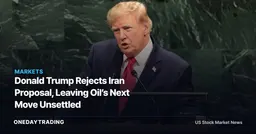
Donald Trump, RAF Fairford and the Oil-Market Signal
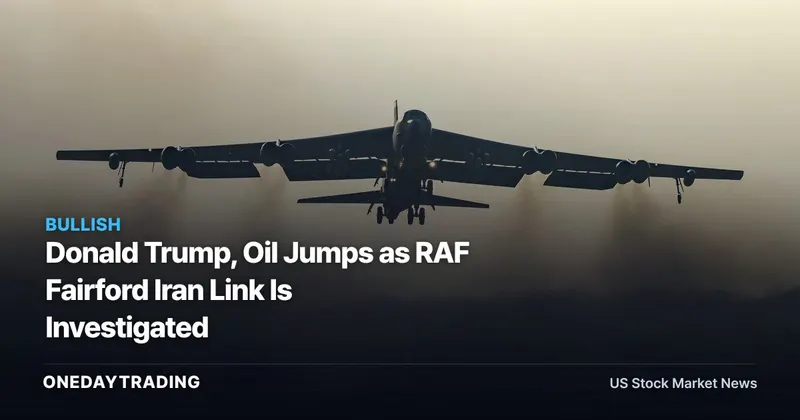
Donald Trump rejected Tehran’s conditional offer to reopen the Strait of Hormuz as British police investigated an alleged bomb threat near RAF Fairford. CNBC reported that police arrested five men there on Sunday on suspicion of explosives and terrorism offenses. The immediate investor signal came from oil: both international benchmark Brent crude futures and U.S. West Texas Intermediate futures traded sharply higher on Monday morning.
The central distinction is between a confirmed market move and an unresolved security narrative. Oil futures have already registered concern, while the identity and motives of whoever was responsible for the alleged threat remain unknown. That leaves investors assessing two separate developments: an ongoing British investigation and the prospect of further talks involving the U.S. and Iran.
Briefing: Arrests, Investigation and Market Reaction
- CNBC reported that British police arrested five men near RAF Fairford on Sunday, while counter-terrorism police were understood to be investigating a potential connection with Iran.
- RAF Fairford has hosted U.S. forces and has served as the U.S. Air Force’s command outpost for operations from Europe and for American strikes on Iranian missile sites.
- Donald Trump expected U.S. negotiators to engage in more talks that week after rejecting Tehran’s conditional proposal concerning the Strait of Hormuz.
What the RAF Fairford Investigation Changes for Oil
The investigation adds a security variable to an oil market already focused on the Strait of Hormuz. A potential Iran connection is being examined, according to CNBC, though involvement has not been established. The Daily Telegraph reported that U.K. police were understood to suspect Iran was the most likely state actor behind the alleged plot; that remains a reported suspicion, not a confirmed finding.
For commodity investors, the distinction matters because oil can respond before investigators establish responsibility. Futures prices incorporate expectations and uncertainty, while a criminal inquiry must determine evidence, attribution and possible charges. The Monday morning move therefore shows what the oil tape priced at that point; it does not prove why the alleged threat occurred or who directed it.
The unresolved diplomatic track creates the counterweight. Donald Trump rejected Tehran’s conditional offer to reopen the Strait of Hormuz, while also saying that he expected additional negotiations that week. Progress in those talks could change how traders interpret the risk surrounding the strait; failure to advance them could leave the uncertainty embedded in oil pricing.
Brent and WTI by the Numbers
CNBC reported that international benchmark Brent crude futures for November expiry were 3.8% higher at $108.32 per barrel on Monday morning. That pairing of percentage move, price and contract period is important: it identifies the instrument and timing without implying that the same move applies to every energy asset.
CNBC also reported that U.S. West Texas Intermediate futures rose 3.9% to $95.99 on Monday morning. Brent and U.S. West Texas Intermediate moved in the same direction during the reported period, giving the market reaction breadth across the two oil benchmarks named in the report.
Those prices establish the observable market response. They do not establish that the RAF Fairford incident caused the entire move, because the facts provided do not isolate a single driver. The disciplined read is narrower: oil futures were sharply higher while the investigation, the Strait of Hormuz dispute and expectations for further talks were all active considerations.
Why RAF Fairford Raises the Stakes
RAF Fairford is relevant because it has hosted U.S. forces and has been used as the U.S. Air Force’s command outpost for operations from Europe and for American strikes on Iranian missile sites. That operational history explains why investigators’ examination of a possible Iran link attracts attention beyond an ordinary criminal case.
In July, Iran’s Revolutionary Guard warned that any base used in air strikes on the Islamic Republic was a legitimate target. Iranian ambassador Seyed Ali Mousavi had also described the use of Fairford by U.S. bombers as an “important matter for our self–defense.” Those statements supply context for scrutiny of the potential connection, while stopping short of evidence that Iran was involved in the alleged plot.
Wes Streeting reinforced that boundary on Monday by calling speculation about potential Iranian involvement “very unwise.” His caution aligns with the limited state of the public evidence: investigators were examining a possible link, and no responsibility or charging outcome had been established.
Commodity Exposure: Beneficiaries and Constraints
- Brent crude futures: The November-expiry contract was already 3.8% higher at $108.32 per barrel on Monday morning. The positive move is observable, while its durability depends on information not yet available from the investigation and diplomatic contacts.
- U.S. West Texas Intermediate futures: The benchmark rose 3.9% to $95.99 on Monday morning. Its direction matched Brent during the reported period, though the supplied facts do not support extending that move into a forecast.
- Company-specific equities: The evidence identifies no listed company, revenue exposure, cost structure or operational impact. Assigning winners or losers among individual stocks would therefore go beyond the available facts.
Risk Check: Evidence Before Attribution
- Iranian involvement is unconfirmed. Counter-terrorism police were understood to be investigating a potential link, and the reported state-actor suspicion has not been established as fact.
- Responsibility remains unknown. The available evidence does not identify who was behind the alleged bomb threat.
- Charges are unresolved. Police arrested the men on suspicion of explosives and terrorism offenses, but the facts do not say whether any arrested person will be charged.
- Diplomacy remains active. Donald Trump expected more talks that week, creating a live checkpoint after his rejection of Tehran’s conditional Strait of Hormuz offer.
Andy Burnham and the Next Confirmed Checkpoints
Andy Burnham called the incident “deeply concerning” and said “every step necessary” was being taken to protect communities and keep the country safe. In his Sunday social-media post, he also stressed that the investigation remained ongoing and urged the public not to speculate before authorities established the full facts.
The next meaningful security checkpoint is an official finding on responsibility, evidence or charges. Until one arrives, reports of a potential Iran connection should retain their qualified status. The diplomatic checkpoint is the additional engagement Donald Trump expected that week, with any change concerning the Strait of Hormuz directly relevant to how the oil market reassesses the existing uncertainty.
Oil’s Bullish Move, With a High Evidentiary Bar
The commodity signal is bullish in the limited sense that Brent and U.S. West Texas Intermediate futures rose sharply on Monday morning. The analytical risk is treating price action as proof of the still-unresolved allegation. Investors have firm benchmark prices and confirmed arrests, but they do not yet have confirmed Iranian involvement, identified responsibility or a final investigative outcome.
The cleanest forward test is whether official evidence changes the status of the alleged Iran link and whether the expected U.S.-Iran talks alter the Strait of Hormuz dispute. Those developments—not speculation—will determine whether Monday morning’s oil move gains a stronger factual foundation or faces a materially different set of conditions.
📊 Analysis
Signal Bullish
Why Brent and U.S. West Texas Intermediate futures rose sharply on Monday morning, signaling a positive directional move for oil despite unresolved attribution.
This article was independently written by OneDayTrading from public reporting. Read the original (CNBC)