Key Takeaways
NYT, WSJ and Bloomberg losing G20 credentials is an access shock, not an earnings shock, but it matters because control of the room still shapes who sets the news flow. Trump criticizing NBC after the Treasury move adds political heat, yet the market read-through is mainly about brand authority, not near-term revenue.
The G20 is the Group of 20 major economies, and access to that forum is part reporting privilege, part competitive moat. For investors, the first question is whether this stays a one-off credential dispute or becomes a broader pattern of pressure on major media brands.
What Happened
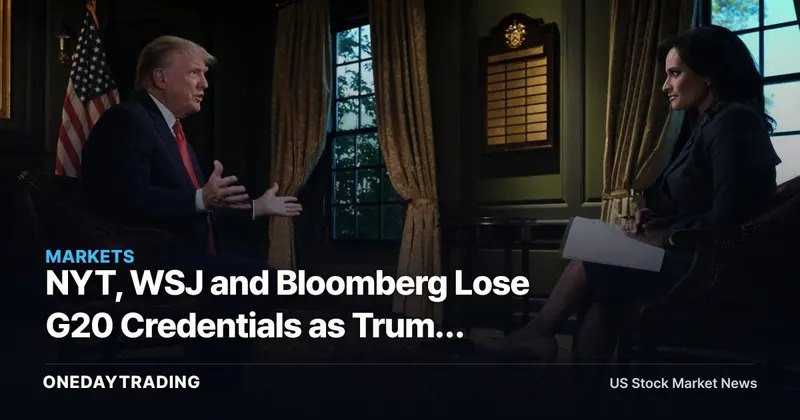
The source says Treasury barred journalists from The New York Times, The Wall Street Journal and Bloomberg from attending the G20. The same report says Trump criticized NBC over an election comment, which puts another major outlet in the middle of the same political dispute over coverage and access.
That sequence matters because it links two different channels of pressure: formal credential control and public criticism from the top. When access gets restricted at an event like the G20, the immediate damage is informational rather than financial, but the reputational effect can travel into subscriptions, audience trust and newsroom leverage.
Background & Context
Major news brands compete on speed, exclusivity and perceived authority. A credential denial at a global summit hits all three at once, because it decides who can report from the room and who has to rely on secondhand feeds.
That is why this reads differently for NYT and NWSA than for a generic media headline. When premium journalism is part of the product, access is not a side issue; it is part of the value proposition that helps defend pricing power and subscriber retention.
Why the G20 credential fight matters for media stocks
- NYT: The New York Times depends on authority and exclusives, so being denied G20 access can pressure the brand premium even if it does not change quarterly revenue.
- NWSA: The Wall Street Journal's value proposition leans on high-end reporting and agenda-setting coverage, so the credential fight reinforces the importance of newsroom access.
- CMCSA: NBC criticism keeps the network in the political spotlight, which can affect sentiment around the brand even when the immediate earnings impact is limited.
- Media sector: The dispute favors outlets with broad distribution and alternative reporting channels, while smaller brands can lose visibility when official access narrows.
Investor Checkpoints
- Watch for any Treasury explanation, clarification or reversal on the G20 credential decision.
- Track whether the denial is extended to more outlets or remains limited to the three named in the report.
- Follow whether Trump's criticism of NBC spreads into more public comments about coverage or media bias.
- Monitor the next summit or official event for signs that access rules are tightening beyond this one case.
Outlook
The bull case for the named media names is that controversy can lift attention and underline the scarcity value of trusted reporting. The bear case is that repeated access disputes weaken the first-look advantage that premium news brands sell to subscribers and advertisers.
Right now the impact looks mostly sentiment-driven. Until the Treasury changes course or the dispute widens beyond the G20, this is a story about political pressure on media power, not a clean earnings catalyst.
FAQ
Why were NYT, WSJ and Bloomberg reporters denied G20 credentials?
The source says Treasury denied the credentials but does not give a reason. That makes the event a question of access and control, not a fully explained policy change. The absence of an explanation is part of the market risk because it keeps the issue open.
Does Trump's criticism of NBC move media stocks?
The source does not point to an immediate financial effect. The read-through is reputational and political: repeated clashes can affect how investors think about newsroom access, regulatory pressure and audience trust.
Which listed media stocks are most exposed?
NYT and NWSA are the clearest public-market proxies because the outlets named in the source sit at the center of the dispute. CMCSA is also relevant through NBC exposure, but the initial impact is more about sentiment than measurable earnings.
Market data check: NYT
NYT last traded near $68.16 (+0.06%). Our composite signal — blending price momentum and news flow — reads 🟡 neutral. Price momentum scores 50/100.
Data as of publication. Price via market feeds; for reference only, not investment advice.
📊 Analysis
Signal Neutral
Why The event is negative for media access and optics, but the source does not show a direct earnings, guidance or demand impact.
This article was independently written by OneDayTrading from public reporting. Read the original (CNBC)