What Changes
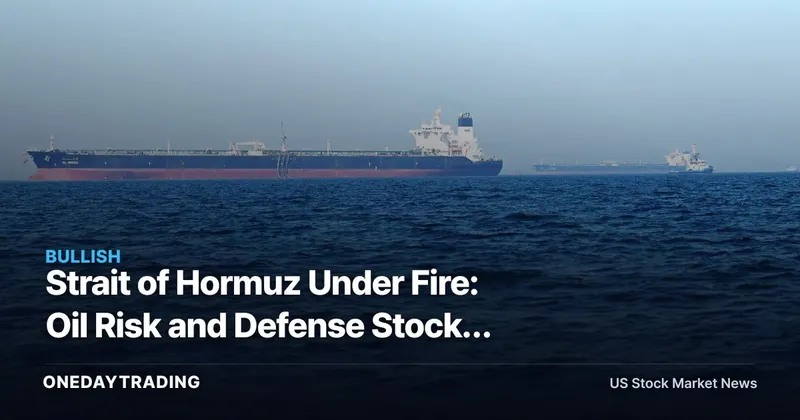
The Strait of Hormuz carries roughly one-fifth of global seaborne petroleum. Even before a single tanker is diverted, the insurance market reprices war-risk premiums, shipping operators reroute or idle, and spot differentials widen. With diplomatic talks now suspended rather than merely stalled, energy markets lose the optionality of a near-term agreement — the base case shifts from managed tension to open conflict, and the crude forward curve should reflect it. Integrated U.S. majors with heavy upstream exposure — XOM and CVX foremost — translate every sustained dollar on Brent directly into realized pricing on barrels already in the ground.
The Iranian decision to strike U.S. military facilities in Kuwait and Bahrain rather than limit retaliation to regional proxies is the structural change in this cycle. Bringing Gulf Cooperation Council host nations into the firing line raises the diplomatic cost of de-escalation on all sides and creates a deterrence problem for U.S. force posture in the theater. Operationally, that means accelerated munitions drawdown — the same mechanism that drove precision-guided munition and air-defense orders during prior Middle East flash points — landing squarely in the backlogs of LMT, RTX, and NOC.
By the Numbers
The source confirms U.S. kinetic action directly in and around the Strait of Hormuz — not a peripheral skirmish — and Iranian strikes on two separate sovereign host-nation bases. That geographic spread across Kuwait and Bahrain signals Iran is widening its deterrence perimeter, not contracting it. The absence of any stated ceasefire mechanism or back-channel reopening date means the market cannot triangulate a credible endpoint, which typically compresses time-to-pricing for risk premiums. Trump's annihilation language, repeated rather than walked back, eliminates the verbal off-ramp that markets had historically used to cap fear spikes.
Winners & Losers
- XOM, CVX — Upstream-heavy integrated majors are direct beneficiaries of a sustained crude spike; both carry large Gulf-adjacent production and trading operations that benefit from supply-route disruption premiums.
- LMT, RTX, NOC — Active engagement and facility strikes accelerate the munitions-replenishment cycle; air-defense systems (Patriot, THAAD) are particularly relevant given the missile-strike nature of Iranian retaliation.
- AAL, DAL, UAL — Airlines are the clearest losers; jet fuel is the largest variable cost, and carriers without substantial hedging programs face immediate margin compression from a crude spike.
- Tanker operators — War-risk insurance surcharges and potential route avoidance create a two-sided dynamic: spot rates can surge on rerouting demand, but insurability itself becomes the binding constraint.
- Refiners (MPC, PSX) — Crack spreads widen initially on crude supply uncertainty, but sustained input-cost inflation and demand-destruction risk from high retail fuel prices create a mixed medium-term picture.
Risk Check
- Rapid diplomatic re-engagement: Back-channel contacts — not visible in public statements — could produce a surprise de-escalation faster than the current risk premium implies; crude would give back gains sharply.
- Strategic Petroleum Reserve: A coordinated IEA or unilateral SPR release has historically capped oil spikes within days, particularly when the Strait itself remains navigable.
- Demand destruction feedback: If crude sustains elevated levels, global industrial demand softens, undermining the very commodity thesis that lifts E&P earnings.
- Defense budget ceiling: Congressional continuing-resolution constraints could slow incremental munitions orders even as operational tempo rises, delaying the revenue recognition that investors are pricing into defense backlogs.
Bottom Line
Direct U.S. strikes on the Strait of Hormuz and Iranian retaliation against host-nation bases represent a qualitative escalation that cannot be unwound by a single diplomatic statement — the market is right to reprice energy and defense. The upside case for XOM, CVX, LMT, and RTX is grounded in concrete mechanisms: realized crude pricing, munitions burn rates, and air-defense demand. The risk is that the conflict finds a ceiling faster than priced — a back-channel agreement, an SPR release, or a market-driven demand shock that undercuts the commodity rally before upstream earnings are booked. Watch the Strait's physical navigability daily, insurance market war-risk premiums as a real-time gauge of severity, and any White House or State Department language shift from maximalist to conditional — those are the signals that separate a sustained repricing from a spike-and-fade.
📊 Analysis
Signal Bullish
Why Active military conflict in and around the Strait of Hormuz lifts crude risk premiums and accelerates defense munitions demand, directly benefiting integrated oil majors and defense prime contractors.
Tickers$XOM$CVX$LMT$RTX$NOC
This article was independently written by OneDayTrading from public reporting. Read the original (CNBC)