What Changes
For months, the central risk hanging over global markets was the closure of the Strait of Hormuz, the chokepoint through which a large share of seaborne crude moves. With that passage blocked, the world economy absorbed an oil shock that lifted energy costs across the board and stoked inflation fears. A peace deal, if it holds, removes that supply bottleneck and lets shipping resume through the waterway.
The immediate market reaction was textbook risk-on. When geopolitical fear that throttles oil supply suddenly eases, two things tend to move together: crude prices drop because the supply threat fades, and equity futures rally because cheaper energy reduces input costs, calms inflation, and improves the outlook for consumers and businesses alike.
The key word for investors is durability. A weekend headline is not a signed, verified, multi-year arrangement. The size and persistence of the market move will depend on whether the agreement actually reopens Hormuz traffic in a sustained way.
By the Numbers
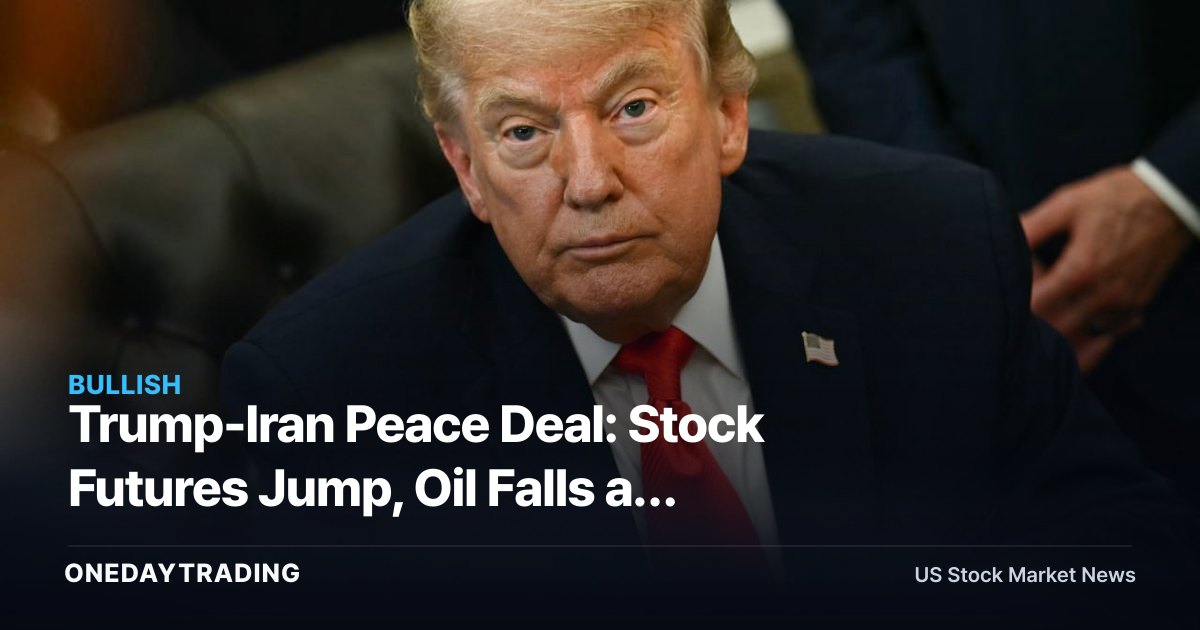
Two clear directional moves were reported: oil prices fell and U.S. stock-index futures jumped following Trump's announcement on Sunday. The backdrop is an oil shock severe enough that it had pushed the global economy into stress, driven by the closure of the Strait of Hormuz over months of hostilities.
Winners & Losers
- Airlines and transport — lower jet fuel costs flow straight to margins as crude eases.
- Broad equities (SPY, QQQ) — risk-on rotation as the oil-shock overhang lifts and inflation fears cool.
- Consumer and retail — cheaper energy frees household spending and lowers logistics costs.
- Integrated oil majors (XOM, CVX) — pressured as crude prices fall from elevated, conflict-driven levels.
- Energy producers and oilfield services — a normalized supply picture trims the premium baked into shares.
Risk Check
- Headline risk: a verbal peace claim can unravel before any formal, lasting agreement is in place.
- Hormuz reopening must actually be confirmed; shipping and insurers need time to resume normal flows.
- Lower oil cuts both ways — it dents energy-sector earnings even as it helps the broader market.
- Futures moves on thin Sunday liquidity can reverse once full cash trading opens.
Bottom Line
An apparent U.S.-Iran peace deal that reopens the Strait of Hormuz is a genuine tailwind for risk assets and a relief valve for an oil-shocked global economy, but the rally rests on a weekend headline that still needs to hold; energy producers face the offsetting drag of falling crude.
📊 Analysis
Signal Bullish
Why Easing of the Strait of Hormuz oil shock lowers energy costs and inflation risk, lifting broad equity futures despite a hit to oil producers.
Tickers$SPY$QQQ$XOM$CVX$DAL$UAL
This article was independently written by OneDayTrading from public reporting. Read the original (MarketWatch)