At a Glance
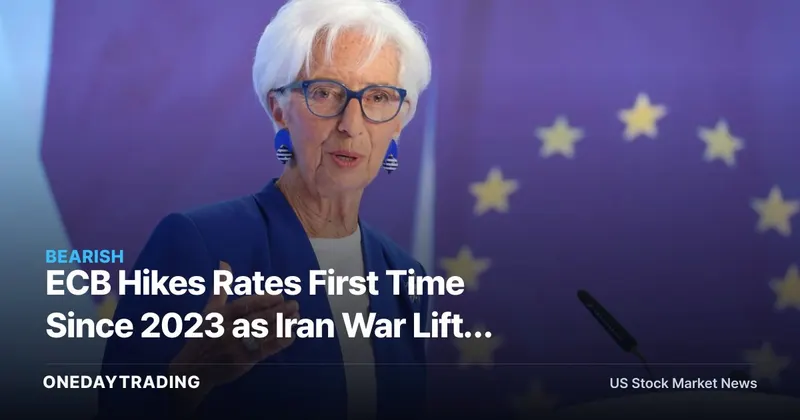
The European Central Bank delivered its first interest-rate hike since 2023, citing rising energy costs tied to the escalating Iran war. The central bank simultaneously raised its inflation forecasts and trimmed its growth outlook, a difficult mix that points toward stagflationary pressure across the euro area.
Why It Matters Now
For years the ECB had been on hold or easing as inflation cooled. A renewed hike marks a sharp pivot, and the trigger is notable: conflict-driven energy prices rather than overheating domestic demand. When a central bank tightens to fight supply-side inflation while growth is already slowing, it signals that policymakers see entrenched price pressure as the bigger threat.
The combination of higher inflation projections and a weaker growth forecast is the textbook definition of stagflation risk. That backdrop tends to compress corporate margins, pressure rate-sensitive equities, and reward energy producers and defensive sectors. For global investors, euro-area policy ripples into currency markets, multinational earnings, and the relative attractiveness of U.S. versus European assets.
U.S.-listed energy majors benefit directly from elevated crude and natural-gas prices, while banks often gain from wider net interest margins when policy rates rise. Conversely, growth-dependent and import-heavy companies face a tougher cost environment.
FAQ
- Why did the ECB hike now? The Iran war is pushing energy costs higher, feeding inflation, so the ECB tightened despite a softer growth backdrop.
- Is this stagflation? Higher inflation forecasts plus a lower growth outlook is the classic stagflation signal, though the ECB has not used that label.
- How does this hit U.S. investors? Through energy prices, the euro-dollar exchange rate, and the earnings of U.S. multinationals exposed to Europe.
- Which sectors win? Energy producers and banks typically benefit; rate-sensitive growth names tend to lag.
Related Stocks & Sectors
- Energy (XOM, CVX): Conflict-driven crude and gas prices lift upstream revenue and cash flow.
- Banks (JPM, BAC): Rising policy rates can widen net interest margins across the sector.
- Defense: Escalating Middle East conflict often supports defense-related demand and sentiment.
- Multinationals: U.S. firms with heavy euro-area exposure face currency and demand headwinds.
What to Watch
- Crude oil and natural-gas prices as the Iran conflict evolves.
- The euro-dollar exchange rate and ECB forward guidance for further hikes.
- European inflation prints versus the upgraded ECB forecasts.
- Whether U.S. and global central banks adjust their own tone in response.
Overall Outlook
The bull case favors energy producers and banks, which historically outperform when supply shocks lift prices and policy rates climb. The risk case is broader: a slowing euro-area economy combined with sticky inflation can drag on global growth, pressure equity valuations, and inject volatility into currency and rate markets. Investors should weigh the direct energy upside against the wider stagflation overhang.
📊 Analysis
Signal Bearish
Why An ECB rate hike paired with raised inflation forecasts and a cut growth outlook signals stagflation risk that pressures broad equities, even as it favors select energy names.
This article was independently written by OneDayTrading from public reporting. Read the original (CNBC Markets)