Key Takeaways
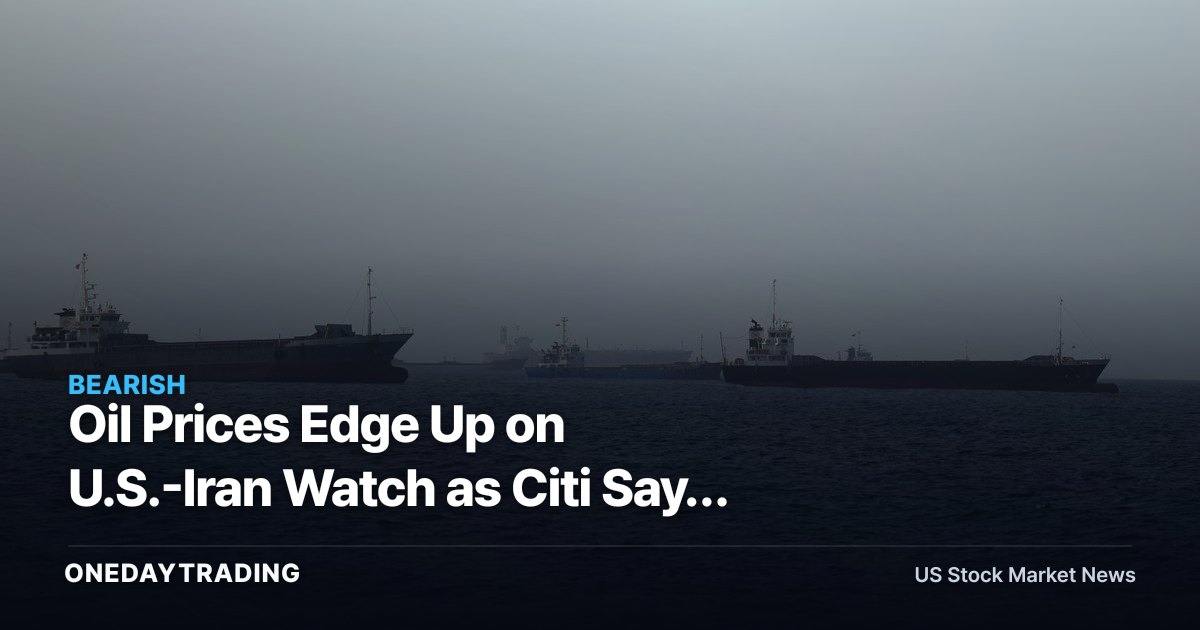
Crude oil firmed early Tuesday as traders parsed the latest U.S.-Iran signals, with growing optimism that the Middle East conflict could de-escalate. Citi argues the geopolitical risk premium that has propped up prices is starting to disappear, a framing that matters more for energy equities than the small price move itself.
What Happened
Oil moved slightly higher in early trading as markets continued to assess developments in the Middle East. The tone was constructive rather than fearful: investors appeared to lean toward the view that the conflict may wind down soon rather than escalate into a broader supply shock.
The more consequential signal came from Citi, which sees the risk overhang in oil pricing beginning to fade. In plain terms, part of recent crude strength reflected a war-risk premium — money paid for the possibility of supply disruption through the region and the Strait of Hormuz corridor. If that premium unwinds, the direction of travel for prices could be lower even as the headline tick was higher on the day.
Background & Context
Geopolitical premiums are inherently unstable: they inflate quickly on escalation headlines and deflate just as fast when de-escalation looks credible. For oil-leveraged equities, the swing factor is not just the spot price but whether the market believes a supply threat is being removed from the table. A fading overhang implies the recent bid was sentiment-driven, not anchored in an actual barrel shortage.
Market & Stock Impact
- ExxonMobil (XOM), Chevron (CVX): Integrated majors see upstream cash flow track crude. A receding risk premium caps the near-term tailwind, shifting attention back to volumes and downstream margins rather than price spikes.
- ConocoPhillips (COP): As a pure-play producer, earnings are more directly geared to realized prices, so it carries higher sensitivity if the premium continues to drain out.
- Energy sector ETF (XLE): A basket proxy that rises and falls with the same premium dynamic; momentum buyers should distinguish a fear-driven rally from a demand-driven one.
- Refiners and airlines (broad): Lower or stabilizing crude is a cost relief for fuel-intensive businesses, an offset to the producer side of the trade.
Investor Checkpoints
- Track concrete U.S.-Iran diplomatic headlines and any ceasefire confirmation — these flip the premium fastest.
- Watch whether WTI holds gains or fades intraday; a higher open that sells off supports the overhang-fading thesis.
- Monitor weekly U.S. inventory data for whether physical fundamentals, not headlines, are setting price.
- Note energy-sector relative strength versus the broader market as a read on positioning.
Outlook
The bull case for crude rests on any renewed escalation or a genuine supply interruption through key shipping routes, which would restore and widen the premium Citi sees fading. The counter-case is that de-escalation removes that support, leaving prices to reflect underlying demand and inventories — a setup where energy producers lose a sentiment tailwind while fuel consumers gain cost relief. The key variable is credibility: markets will reprice quickly the moment de-escalation looks real or breaks down.
📊 Analysis
Signal Bearish
Why Citi's view that the geopolitical risk premium is fading points to downside pressure on crude and a fading tailwind for oil producers despite the small intraday uptick.
This article was independently written by OneDayTrading from public reporting. Read the original (CNBC)