Summary
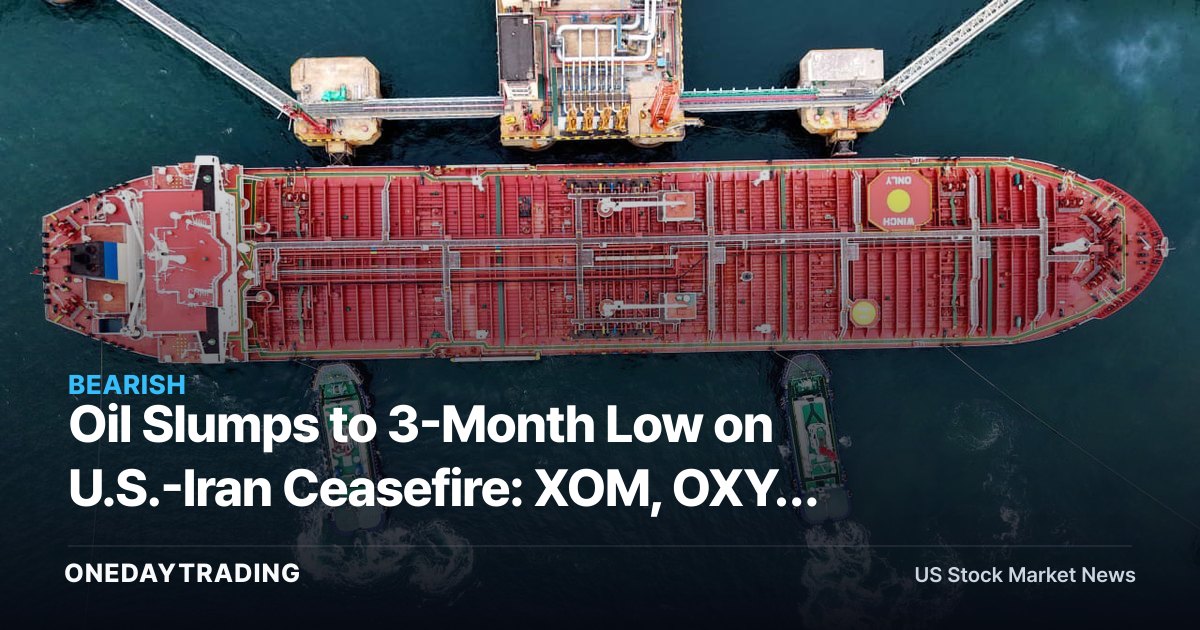
A 60-day ceasefire framework between Washington and Tehran has knocked the geopolitical risk premium out of crude, dragging West Texas Intermediate and Brent to a three-month low. For investors, the immediate read-through is negative for upstream energy revenue and positive for any business where fuel is a cost line rather than a product.
The move is less about new supply hitting the market today and more about the market unwinding the fear that Middle East tensions would choke the flow of barrels through the Gulf.
The Full Story
Officials agreed to a 60-day ceasefire while final arrangements are still being negotiated, and crude reacted the way risk-premium trades usually do — sharply and immediately. WTI and Brent both retreated to levels last seen three months ago. The key word is framework: nothing physical has changed on the supply side, but traders had been pricing in the possibility of disrupted exports or escalation around critical shipping routes, and that insurance value is now being marked down.
Because the deal is provisional, the price reset reflects probability rather than fact. If the 60-day window holds and converts into a durable arrangement, the path of least resistance for oil is lower as the conflict discount keeps draining. If talks collapse before final terms are signed, the same premium can snap back just as fast.
The distinction matters for how investors should weight this: energy equities are now trading on a headline that can be reversed by another headline, which raises near-term volatility even as the directional bias softens.
Structural Background
Oil prices carry a geopolitical premium whenever Middle East supply looks vulnerable, since the region is central to global crude flows. When that risk fades, prices fall toward the level justified by actual supply-demand fundamentals — inventories, OPEC+ output policy, and global growth. A diplomatic thaw therefore acts like a supply-side relief even before a single extra barrel is produced, because the market stops paying up for protection against worst-case disruption.
Stock & Sector Ripple
- ExxonMobil (XOM) and Chevron (CVX): Integrated majors see upstream realizations compress as crude falls; downstream refining margins can partly cushion the blow, making them less exposed than pure producers.
- Occidental (OXY) and ConocoPhillips (COP): Higher-beta, production-weighted names where cash flow tracks the oil price closely, so a sustained move lower bites earnings faster.
- USO (oil ETF): Directly tracks crude futures and moves one-for-one with the price reset, a clean proxy for the macro shift.
- Airlines and shippers: Carriers like Delta and freight operators benefit because jet fuel and bunker fuel are major cost inputs; a lower oil deck supports margins and is a quiet tailwind for transports.
- Oilfield services (SLB, HAL): Drilling activity is sensitive to producer budgets, which shrink when prices weaken, pressuring service demand with a lag.
Bull vs Bear Scenarios
Bear case for oil (bull case for fuel consumers): The ceasefire matures into a lasting deal, the risk premium fully unwinds, and crude settles into a lower range governed by fundamentals — a drag on producer earnings into the next reporting season.
Bull case for oil: A framework is not a signed agreement. If negotiations stall during the 60-day window, the premium returns abruptly. Layer in OPEC+ supply discipline or stronger demand and the fundamental floor could prove higher than the current selloff implies. Energy equities also entered this with relatively modest valuations, limiting downside versus richer parts of the market.
Investor Action Points
- Track whether the 60-day ceasefire converts to a final agreement before expiry — that date is the single most important catalyst for the risk premium.
- Watch the next round of energy earnings and management commentary on price-deck assumptions and capex plans, especially from XOM, CVX, and OXY.
- Monitor weekly U.S. crude inventory data and OPEC+ output signals to separate genuine fundamental softening from a pure geopolitical unwind.
- For consumers of fuel — airlines and shippers — check whether falling oil actually flows through to margin guidance rather than getting absorbed by other costs.
📊 Analysis
Signal Bearish
Why A U.S.-Iran ceasefire framework strips the geopolitical risk premium from crude, pushing oil to a three-month low and pressuring upstream energy revenue.
Tickers$XOM$CVX$OXY$COP$USO$SLB
This article was independently written by OneDayTrading from public reporting. Read the original (MarketWatch)