Summary
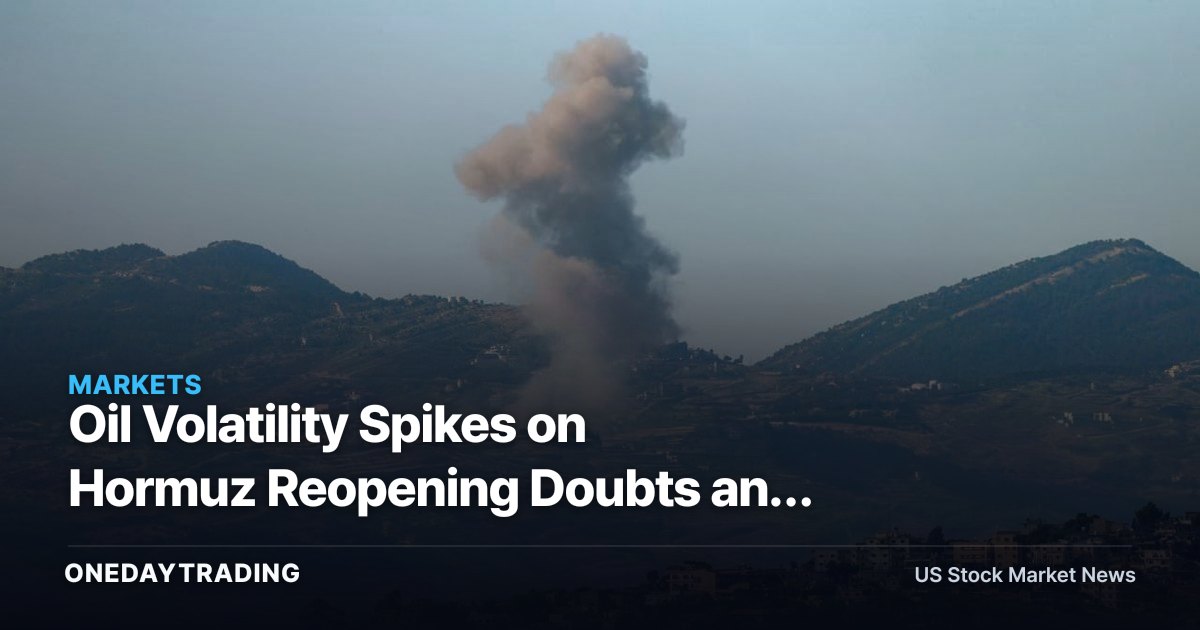
A fresh burst of crude-oil volatility is being driven not by supply data but by political signal noise: conflicting Friday headlines on whether the Strait of Hormuz is reopening, layered on top of a US-Iran arrangement that looks increasingly fragile. For investors, the read-through is a widening risk premium with no clear direction — a setup that rewards energy producers on every escalation and punishes them on every de-escalation rumor, while transport and consumer names sit on the opposite side of the same trade.
The Full Story
The core problem is informational, not physical. When the market cannot agree on whether a critical chokepoint is open or closed, traders price both outcomes at once, and that uncertainty itself becomes the catalyst for sharp intraday swings. A reopening narrative argues for crude sliding as transit fears ease; an ongoing-strife narrative argues for a higher floor as the market re-prices the probability of disrupted flows.
Compounding this, the reported deal between Washington and Iran is being described as fragile. Fragile diplomacy keeps the geopolitical risk premium embedded in the curve, because any single headline can flip sentiment. That is why the same session can deliver conflicting moves — the underlying barrels have not changed, but the perceived odds of disruption have.
Structural Background
The Strait of Hormuz is the single most concentrated transit route for seaborne crude and LNG leaving the Gulf, which is why even unconfirmed reports about its status move global benchmarks. Because there is no quick alternative for much of that volume, the market treats chokepoint headlines as a binary risk: flowing or not. That binary nature is precisely what produces violent two-way price action when reports conflict rather than confirm.
Stock & Sector Ripple
- ExxonMobil (XOM) and Chevron (CVX): integrated majors with large upstream exposure see realized prices and refining margins swing directly with crude; a sustained risk premium lifts cash flow, while a confirmed reopening compresses it.
- Occidental (OXY): higher operating leverage to the oil price means amplified moves in both directions versus the diversified majors.
- Airlines (DAL, UAL): jet fuel is a top cost line, so a higher crude floor pressures margins and is the natural hedge-loser if Hormuz fears persist.
- Energy ETFs and oil-services names: track the same premium and amplify it through sentiment and drilling-activity expectations.
Bull vs Bear Scenarios
Bull case for energy equities: if the US-Iran deal frays and disruption fears stick, crude holds an elevated floor and producer cash flows expand, supporting buybacks and dividends. Bear case: a credible Hormuz reopening plus a holding diplomatic framework removes the premium, sends crude lower, and unwinds the producer trade quickly — handing the advantage to fuel-sensitive consumers and transport. The key variable is verification: until reports are confirmed rather than conflicting, volatility itself is the dominant exposure, and chasing either direction risks being whipsawed.
Investor Action Points
- Track official confirmation of Hormuz transit status — distinguish sourced shipping or navigation reports from unconfirmed headlines before acting.
- Watch the crude price floor and how it reacts to each US-Iran headline; a premium that survives reopening rumors signals genuine supply concern.
- For energy longs, monitor producer breakeven and free-cash-flow commentary at the next earnings updates from XOM, CVX and OXY.
- For transport exposure, watch jet-fuel cost guidance from DAL and UAL as a mirror image of the same oil move.
📊 Analysis
Signal Neutral
Why Conflicting reopening reports and a fragile US-Iran deal create two-sided volatility with no confirmed direction for crude or energy equities.
Tickers$XOM$CVX$OXY$DAL$UAL
This article was independently written by OneDayTrading from public reporting. Read the original (MarketWatch)