What Changes
The signal here is a classic crosswind, not a clean all-clear. When oil prices decline, the effect splits the market: it acts like a tax cut for consumers and fuel-intensive businesses, while compressing the revenue line for upstream energy producers whose earnings track the price of the barrel. June's relief therefore helps and hurts different parts of the same index simultaneously.
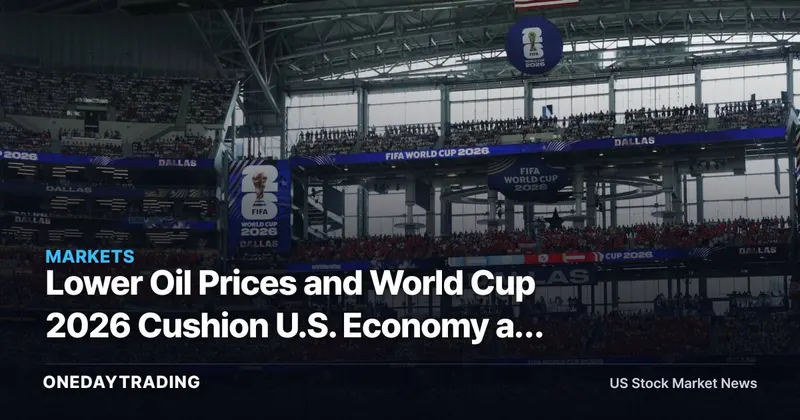
The start of the World Cup matters because it channels spending into specific verticals — air travel, hotels, restaurants, sports media and the brands that buy advertising around a global event. That demand is concentrated and time-boxed, which makes it visible in second-half results for exposed names rather than a diffuse macro lift.
The Iran overhang is the variable that prevents a full risk-off reversal. Peace talks reduce the tail risk of a supply shock through the Strait of Hormuz, but as long as the conflict is unresolved, crude carries a premium that can snap higher on a single headline — keeping energy and defense exposure two-sided.
By the Numbers
The concrete levers in June were declining oil prices and the kickoff of the 2026 World Cup, set against continued strain from the Iran conflict. The framing is explicit that the economy got relief but has not moved past the danger point — meaning the improvement is real but conditional on geopolitics not re-escalating.
Winners & Losers
- Airlines (DAL): jet fuel is one of the largest cost lines, so a sustained drop in crude directly widens margins and arrives just as World Cup travel demand builds.
- Consumer discretionary: lower pump prices free up household budgets, supporting spending on events, dining and travel during the tournament window.
- Energy producers (XOM, CVX): falling crude pressures upstream revenue and cash flow, the inverse of the consumer benefit.
- Defense (LMT): unresolved Iran tensions keep a bid under defense exposure even as peace talks proceed.
Risk Check
- Peace talks can stall or collapse, re-pricing the crude risk premium higher within days.
- World Cup spending is temporary; the lift fades once the tournament ends.
- If oil falls too far on demand weakness rather than easing tension, it signals a slowing economy — a different and less benign story.
- The economy is described as not past the danger point, so a single shock can erase June's relief.
Bottom Line
June handed the U.S. economy a genuine but fragile reprieve: cheaper oil and a spending event ease pressure on consumers and fuel-heavy sectors, while energy producers and the unresolved Iran conflict sit on the other side of the ledger. The checkpoint is whether crude stays soft for de-escalation reasons rather than demand-destruction reasons — watch oil's direction alongside the next round of Iran talks and second-half guidance from travel and energy names.
📊 Analysis
Signal Neutral
Why The story is genuinely two-sided — lower oil and World Cup spending help consumers and airlines while hurting energy producers, with unresolved Iran risk capping the upside.
This article was independently written by OneDayTrading from public reporting. Read the original (MarketWatch)