At a Glance
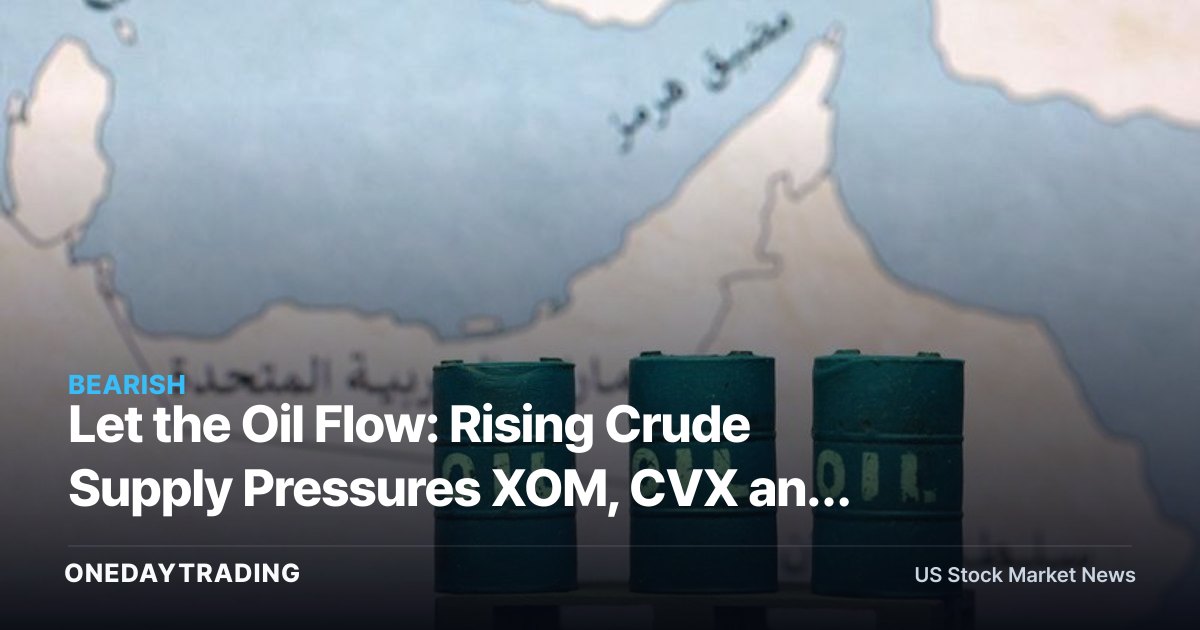
The Morning Bid framing of let the oil flow signals a market leaning toward more crude supply, not less. For investors, the cleaner read is that policy and producer behavior now favor volume over price discipline, which tilts the risk toward softer oil and compresses the upstream margin story that powered energy stocks in recent years.
Why It Matters Now
Oil is a commodity where price is set at the margin, so a supply-friendly stance matters even before barrels physically arrive. When the dominant narrative shifts from constrained output to encouraged output, traders tend to fade the geopolitical risk premium first. That repricing hits the most oil-leveraged names hardest, because integrated and pure-play producers earn the bulk of upstream profit on the spread between realized crude prices and a largely fixed cost base.
The transmission is uneven across the energy complex. Producers such as the majors carry direct price sensitivity in their exploration and production segments, so each dollar off the barrel flows almost straight to upstream cash flow and, by extension, to buybacks and dividends that the market has been capitalizing. Refiners sit on the other side: cheaper feedstock can widen crack spreads if product demand holds, making them a partial hedge against falling crude. Fuel-intensive buyers, especially airlines and trucking-exposed logistics, see input costs ease, which can support margins even as the energy sector itself derates.
The counterweight is that more supply only depresses price if demand does not absorb it. A resilient global economy, restocking, or any disruption to actual flows can reverse the bearish setup quickly, and producers have shown they will defend cash returns by trimming capital spending rather than chasing volume into a weak price.
FAQ
- Why does more oil supply hurt producer stocks? Upstream earnings scale with realized crude prices against a mostly fixed cost base, so lower prices cut margins, free cash flow and the buybacks investors had priced in.
- Who benefits from cheaper oil? Refiners can gain on wider crack spreads, while airlines, shippers and consumers benefit from lower fuel and energy input costs.
- Is this a guaranteed move lower for crude? No. Supply intent only translates to lower prices if demand fails to absorb the extra barrels, and producers can curb spending to protect price.
- What is the key swing factor? Whether actual output and inventories rise, versus a rhetorical stance that the market later fades.
Related Stocks & Sectors
- ExxonMobil and Chevron: direct upstream price exposure means softer crude pressures realized margins and the cash-return thesis.
- Refiners: cheaper feedstock can lift crack spreads if product demand stays firm, offering a partial offset within energy.
- Airlines and logistics: jet fuel and diesel are major variable costs, so falling crude supports operating margins.
- Energy sector broadly: a supply-led narrative caps the risk premium that drove the group, weighing on sentiment even before fundamentals confirm.
What to Watch
- Whether headline supply intent shows up in rising production and inventory builds, or stays rhetorical.
- Producer capital-spending and buyback commentary at the next round of energy earnings.
- Refining crack spreads as a tell on whether product demand is absorbing extra crude.
- Any flow disruption or demand surprise that could snap the risk premium back into crude.
Overall Outlook
A supply-friendly oil backdrop favors fuel buyers and pressures price-taking producers, rotating relative strength away from upstream-heavy energy names. The bull case for crude rests on demand resilience and producer discipline holding the line, while the risk is that more barrels meet a market already comfortable fading the geopolitical premium. The decisive evidence is physical, not verbal: watch barrels and inventories, not just the slogan.
📊 Analysis
Signal Bearish
Why A supply-friendly let the oil flow stance points to softer crude prices, which compress upstream margins for oil producers.
This article was independently written by OneDayTrading from public reporting. Read the original (Yahoo Finance)