Key Takeaways
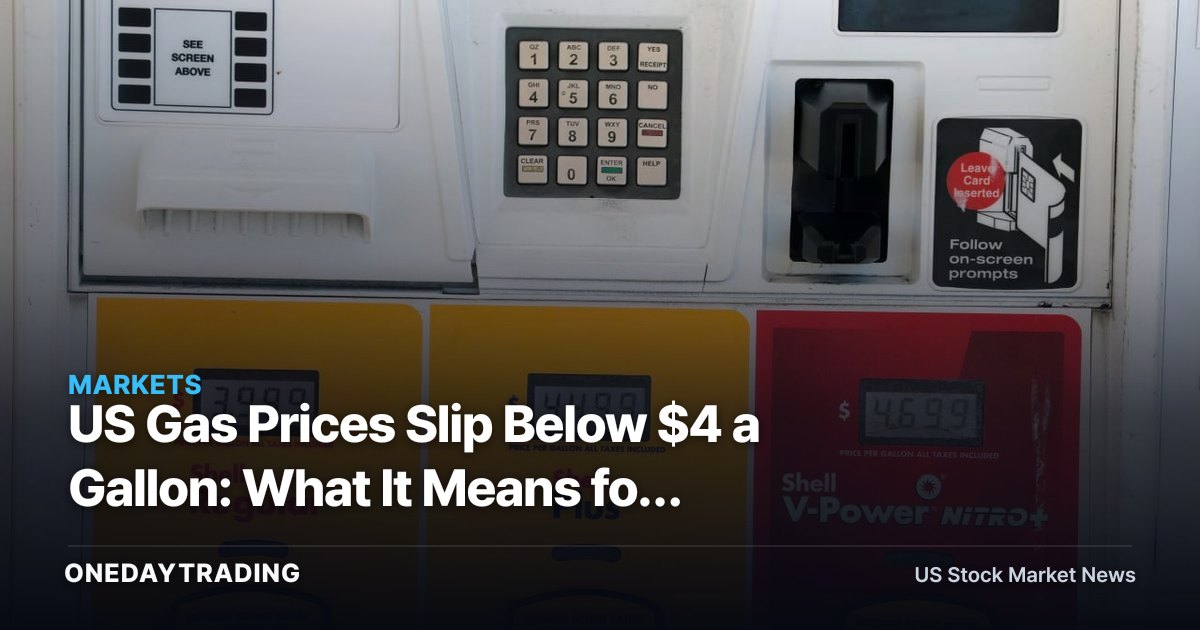
The national average price of gasoline has crossed back below the symbolic $4-per-gallon line, even if only barely. For investors, the level matters less as a price and more as a signal about crude demand, refining margins, and the discretionary income left in consumers pockets heading into the driving season.
What Happened
US retail gasoline slipped under $4 a gallon, clearing the threshold by the smallest possible increment. The move is marginal in cash terms but psychologically meaningful: the $4 mark is the number that shows up in headlines, shapes political messaging, and anchors how households perceive the cost of living.
A sub-$4 print typically reflects some combination of softer crude oil prices, ample refined-product inventories, or seasonal demand patterns. Because pump prices lag the wholesale market, the retail dip often confirms moves that already happened in crude and gasoline futures weeks earlier.
Background and Context
Gasoline is the most visible price in the economy, and it feeds directly into headline inflation readings. When pump prices ease, it relieves pressure on consumer budgets and can cool inflation expectations, a channel that ultimately touches rate policy and broad equity sentiment.
Market and Stock Impact
- Integrated majors (XOM, CVX): Lower pump prices that stem from weaker crude are a headwind to upstream earnings, since production revenue is tied to oil prices; however, their downstream and chemicals arms can partially offset softer crude.
- Refiners (VLO, MPC, PSX): The key variable is the crack spread, not the absolute pump price. If product prices fall faster than crude, margins compress; if crude leads the decline, refiners can hold profitability.
- Consumer discretionary and travel: Cheaper fuel acts like a tax cut, freeing cash for retail and travel spending, a modest tailwind for names exposed to household budgets.
- Broad market via inflation: Easing energy costs can soften CPI prints, supporting the case for a friendlier rate backdrop.
Investor Checkpoints
- Watch WTI crude (CL=F) direction, since pump prices follow it with a lag.
- Track refiner crack spreads in upcoming quarterly results to judge downstream margin health.
- Monitor the next CPI release for whether falling fuel costs show up in headline inflation.
- Note whether the dip holds or prices rebound as summer driving demand builds.
Outlook
For energy bulls, a small drop below $4 is noise rather than a trend break, and disciplined supply plus geopolitical risk can reverse it quickly. For the consumer-and-inflation thesis, sustained relief at the pump would be a genuine positive. The risk on both sides is the same: crude is volatile, and a single supply shock can push the average back above $4 as fast as it fell below it.
📊 Analysis
Signal Neutral
Why A marginal dip below $4 cuts both ways — a mild tailwind for consumers and inflation but a potential drag on upstream energy revenue, with no decisive direction.
Tickers$XOM$CVX$VLO$MPC$PSX
This article was independently written by OneDayTrading from public reporting. Read the original (MarketWatch)