Key Takeaways
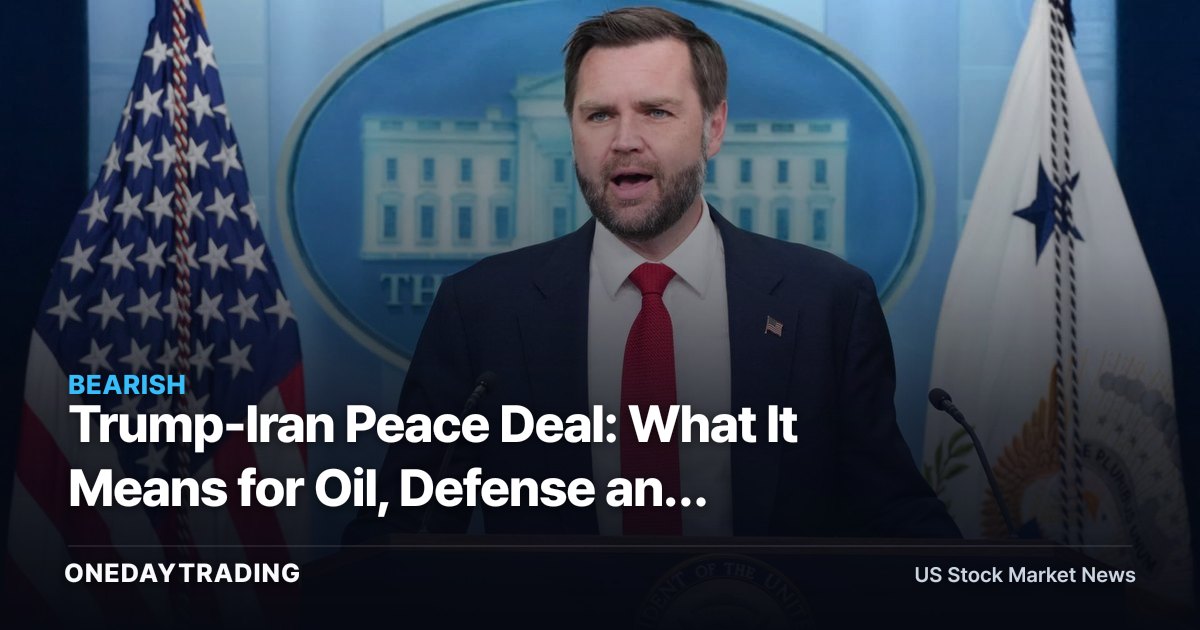
Vice President JD Vance framed the administration Iran agreement as conditional, stating that Iran gets access to resources only by complying fully with the deal terms. For markets, the signal that matters is not the politics but the supply channel: any path toward easing Iran sanctions reshapes the oil risk premium, which flows straight into energy, defense, and transport equities.
What Happened
Vance publicly defended the Trump peace deal and pushed back on the idea that Washington is handing Iran money, summarized in his line that the U.S. is not giving Iran a cent. The structure he described is performance-based: relief or access to frozen or restricted resources is gated behind compliance rather than delivered upfront.
The source offers the political framing without disclosing dollar amounts, barrel volumes, or a timeline for sanctions changes. That absence is itself important for traders, because the market impact of an Iran deal hinges almost entirely on whether and how fast Iranian crude can legally return to export markets.
Background & Context
Iran sits on some of the world largest proven oil and gas reserves, and its barrels have been constrained by sanctions for years. A credible de-escalation in the Persian Gulf tends to compress the geopolitical risk premium embedded in crude, while a verified return of Iranian supply would add physical barrels to a market where OPEC+ already manages output. Both effects point the same direction for prices.
Market & Stock Impact
- Oil majors (XOM, CVX): Lower crude prices pressure upstream realizations and cash flow; integrated names with refining and chemicals are partially buffered, but earnings sensitivity to the oil strip is real.
- Defense primes (LMT, RTX): A durable Middle East peace narrative can soften the near-term urgency behind missile-defense and munitions demand, a headwind to sentiment even where multi-year backlogs stay intact.
- Airlines (DAL, UAL): Jet fuel is among the biggest variable costs; a sustained drop in crude is a direct margin tailwind into peak travel demand.
- Energy services and E&P: High-cost producers and drillers carry the most downside if prices fall, given thinner breakevens than the majors.
Investor Checkpoints
- Watch for any official text or executive action that specifies which Iranian resources are unlocked and on what compliance schedule.
- Track WTI and Brent reaction to confirm whether the market is actually pricing added supply or just headline noise.
- Monitor OPEC+ messaging, since the cartel can offset returning Iranian barrels and blunt the price move.
- Review next-quarter guidance from oil majors and airlines for commentary on price-deck and fuel-cost assumptions.
Outlook
The bull case for energy bears is straightforward: conditional relief plus a calmer Gulf removes a risk premium and threatens to add barrels, capping crude and lifting fuel-sensitive sectors. The counter-scenario is that the deal stalls on enforcement and verification, no meaningful Iranian volume reaches the market, and the risk premium snaps back on the first sign of non-compliance. With the source short on figures, position sizing should respect that the supply timeline, not the diplomacy, is the variable that actually moves these stocks.
📊 Analysis
Signal Bearish
Why Conditional Iran sanctions relief and Gulf de-escalation point to a lower oil risk premium and potential added supply, pressuring crude and oil majors.
Tickers$XOM$CVX$LMT$RTX$DAL
This article was independently written by OneDayTrading from public reporting. Read the original (CNBC)