What Changes
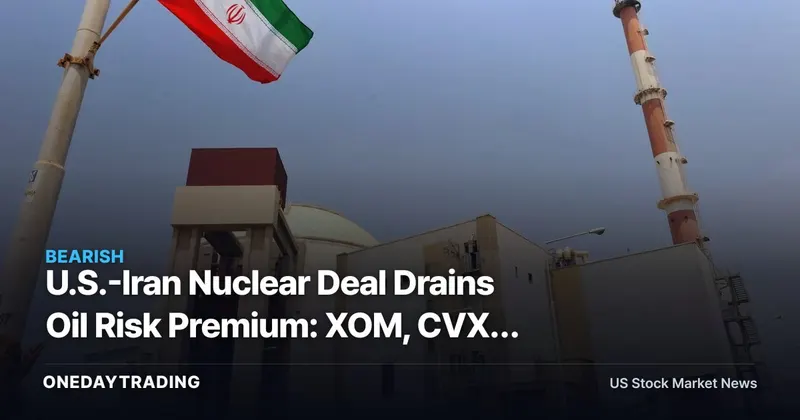
Markets do not price barrels in the ground; they price the probability of supply disruption. For two years that probability carried a Gulf premium tied to the risk that confrontation over Iran's nuclear program could choke the Strait of Hormuz, the chokepoint for roughly a fifth of seaborne crude. Grossi confirming inspector access converts an open-ended military risk into a managed diplomatic process, and the first thing such a shift erodes is that premium.
The mechanism is direct. Lower disruption odds compress the forward curve and pull spot crude toward fundamentals — supply, inventories, demand — rather than headlines. That is a revenue-line event for upstream producers, whose earnings lever almost one-for-one to the oil price, and a cost-line relief for anyone who burns refined product as a primary input.
It also feeds the macro channel. Softer oil is disinflationary at the headline level, marginally loosening the rates backdrop that has weighed on long-duration equity multiples. The effect is second-order, but it reinforces the rotation away from energy and toward rate-sensitive growth.
By the Numbers
The concrete facts are diplomatic, not financial: an agreement granting access to Iran's nuclear sites, confirmed by the IAEA's director general at a Friday news conference in Japan, with technical preparation already started and inspectors expected on site soon. Durability hinges on the verification timeline — when teams actually deploy and what they certify — which is the variable energy desks will mark against every barrel.
Winners & Losers
- ExxonMobil (XOM), Chevron (CVX) — Integrated majors face top-line pressure as the geopolitical bid leaves crude; high earnings leverage to oil cuts both ways.
- Airlines (DAL, UAL) — Jet fuel is among the largest operating costs; a sustained crude pullback widens margins directly.
- Refiners and shippers — Lower input crude and calmer Hormuz routing ease feedstock and freight-risk costs.
- Oil services (SLB, HAL) — Softer prices temper the upstream capex impulse that drives their order book.
- Broad equities — Disinflationary oil is a mild tailwind for rate-sensitive multiples.
Risk Check
- Diplomacy can reverse; a stalled verification timeline or a breakdown re-prices the premium back into crude within sessions.
- OPEC+ supply policy, not Gulf headlines, sets the medium-term floor — production discipline can offset any risk-premium drop.
- Demand, not just supply, drives oil; a weakening growth picture would muddy the bearish-crude read.
- The agreement's scope and enforcement remain unconfirmed beyond the access announcement.
Bottom Line
A verified path into Iran's nuclear sites is the kind of event that quietly bleeds a risk premium out of crude rather than crashing it, tilting near-term pressure onto upstream energy and relief onto fuel buyers — but the trade lives or dies on whether inspectors actually deploy and what they certify, and OPEC+ still owns the floor under the price.
📊 Analysis
Signal Bearish
Why De-escalation removes the Gulf war-risk premium from crude, pressuring oil prices and upstream energy earnings.
Tickers$XOM$CVX$SLB$DAL$UAL
This article was independently written by OneDayTrading from public reporting. Read the original (CNBC)