Key Takeaways
A U.S.-Iran deal has knocked crude lower by removing a slice of geopolitical risk premium, a headwind for integrated oil and exploration names whose earnings track the barrel. The catch for energy bears: prices remain well above prewar levels, so producer cash flows are pressured but not broken, while fuel-heavy consumers get only partial relief.
What Happened
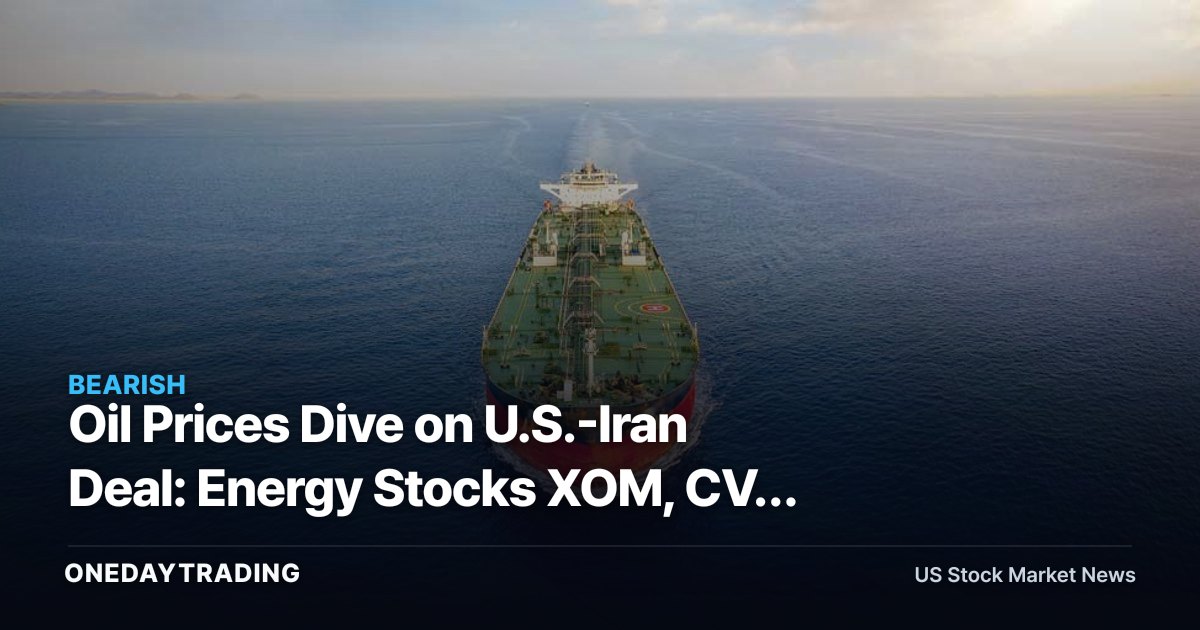
Oil prices fell sharply after news of a U.S.-Iran agreement, as traders unwound part of the war-risk premium that had been embedded in crude. The logic is straightforward: a diplomatic thaw lowers the perceived odds of supply disruption through key Middle East routes and raises the prospect of more barrels reaching the market, both of which push the marginal price of crude down.
Yet the move did not return prices to where they sat before the conflict. That gap matters. It signals that the market still prices in structural tightness — from production discipline among major exporters to firm global demand — rather than treating the deal as a full normalization of supply.
Background and Context
Energy equities are leveraged to the commodity: when crude drops, upstream revenue per barrel compresses immediately, while the cost base moves slowly. That asymmetry is why oil-price headlines swing producer shares more than almost any company-specific news. A premium that builds on fear can also deflate quickly, making these stocks volatile around any geopolitical signal.
Market and Stock Impact
- ExxonMobil (XOM), Chevron (CVX): Integrated majors see upstream margins squeezed as crude falls, though downstream refining can partly offset; their dividends rest on cash flow that is sensitive to sustained lower prices.
- Occidental (OXY), ConocoPhillips (COP): Pure-play exploration and production names carry the most direct leverage — earnings and free cash flow fall fastest when the barrel cools, with less refining cushion.
- Airlines (Delta, DAL): Lower crude feeds into jet fuel, a top operating cost; cheaper energy is a tailwind for carrier margins if the decline holds.
- Energy sector ETFs: Broad energy exposure underperforms as the group reprices a smaller risk premium.
Investor Checkpoints
- Whether crude holds above or breaks below prewar price levels — the dividing line between a risk-premium unwind and a genuine supply glut.
- Production signals from major exporters; voluntary cuts could offset added Iranian barrels and stabilize prices.
- Next quarterly results from XOM, CVX, OXY and COP, watching realized price per barrel and free cash flow guidance.
- Durability of the U.S.-Iran agreement; any breakdown would rapidly rebuild the premium.
Outlook
The bull case for energy rests on prices staying elevated relative to prewar levels, which keeps producer cash flows healthy even after the drop. The risk is that added supply plus softer demand pushes crude lower still, pressuring dividends and capital plans. The deal's staying power and exporter discipline are the two variables that decide which scenario wins.
📊 Analysis
Signal Bearish
Why Falling crude on eased supply risk compresses upstream margins for oil producers, the most directly affected group.
Tickers$XOM$CVX$OXY$COP$DAL
This article was independently written by OneDayTrading from public reporting. Read the original (Yahoo Finance)