Key Takeaways
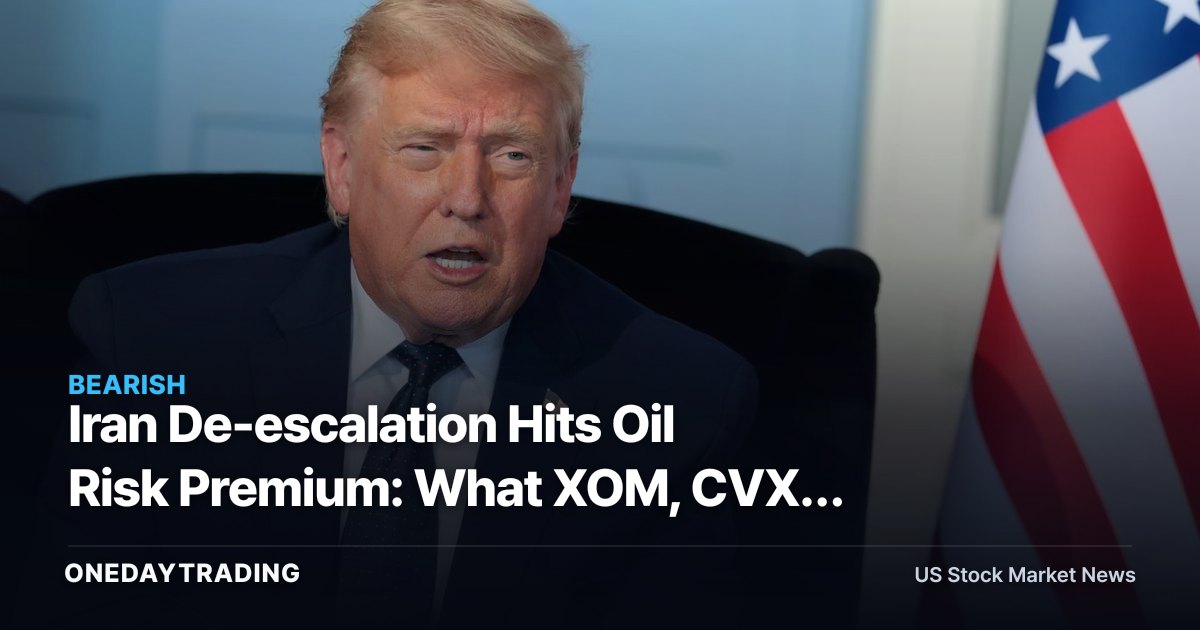
A claimed Iran agreement framed by Trump as an unconditional surrender, pitched as a move to stop the conflict from triggering a global depression, mainly matters to markets through one channel: the geopolitical risk premium embedded in oil. If Middle East tail risk fades, the immediate losers are crude prices and energy producers, while fuel-sensitive sectors and broad risk assets get relief.
What Happened
In an interview with Axios, Trump described the Iran outcome as an unconditional surrender and said his power has no limits. He tied the negotiation directly to economic stakes, arguing the deal was meant to prevent the conflict from cascading into a global depression.
For investors, the substance is less about the political framing and more about de-escalation itself. A conflict involving Iran carries a specific market fear: disruption to Gulf supply routes and the Strait of Hormuz, through which a large share of seaborne crude transits. When that threat recedes, traders unwind the war premium they had priced into oil.
Background and Context
Energy has been the cleanest expression of Middle East tension. Spikes in crude during prior flare-ups lifted producer margins but also raised input costs across transport, chemicals and consumer goods, feeding inflation worries. A credible step toward calm reverses that mechanism — softer oil eases headline inflation pressure, which in turn shapes expectations for the rate path.
Market and Stock Impact
- Exxon Mobil (XOM) and Chevron (CVX): upstream earnings track realized crude prices, so a fading risk premium compresses the most profitable barrels and weighs on near-term cash flow and buyback capacity.
- Airlines such as Delta (DAL): jet fuel is one of the largest controllable costs; lower crude directly widens unit margins and supports a demand-sensitive group.
- Defense names like Lockheed Martin (LMT) and RTX: active conflict tends to lift defense sentiment, so de-escalation removes a short-term tailwind, though multi-year procurement backlogs limit the fundamental hit.
- Broad market (SPY): receding war risk and cooler oil support a risk-on tone, especially for rate-sensitive growth and consumer cyclicals.
Investor Checkpoints
- Watch WTI and Brent levels — whether crude holds its decline or rebuilds a premium signals how durable the de-escalation is.
- Track whether any formal terms are confirmed beyond the interview framing; rhetoric and a verifiable agreement are not the same input.
- Monitor energy-sector guidance into next earnings for sensitivity to lower price decks.
- Follow inflation prints and rate expectations, the channel that translates cheaper oil into equity multiples.
Outlook
The bull case is straightforward: lower oil, lighter inflation pressure and reduced tail risk are a net positive for most of the equity complex. The risk is symmetry — Middle East truces have historically proven fragile, and a single supply scare can restore the premium overnight. Until terms are documented and crude stabilizes, the energy weakness and broad-market relief should be treated as a risk-premium move, not a structural shift in fundamentals.
📊 Analysis
Signal Bearish
Why Iran de-escalation strips the geopolitical risk premium from crude, pressuring oil prices and energy producers' near-term margins.
Tickers$XOM$CVX$DAL$LMT$RTX
This article was independently written by OneDayTrading from public reporting. Read the original (CNBC)