Key Takeaways
A U.S.-Iran memorandum aimed at ending the conflict removes a major geopolitical bid from crude prices, which tends to compress the oil risk premium that benefited energy producers during the fighting. The clearest read-through is bearish for oil-leveraged names and supportive for fuel buyers such as airlines and transport. The Strait of Hormuz remaining open and active is the single variable that anchors this trade.
What Happened
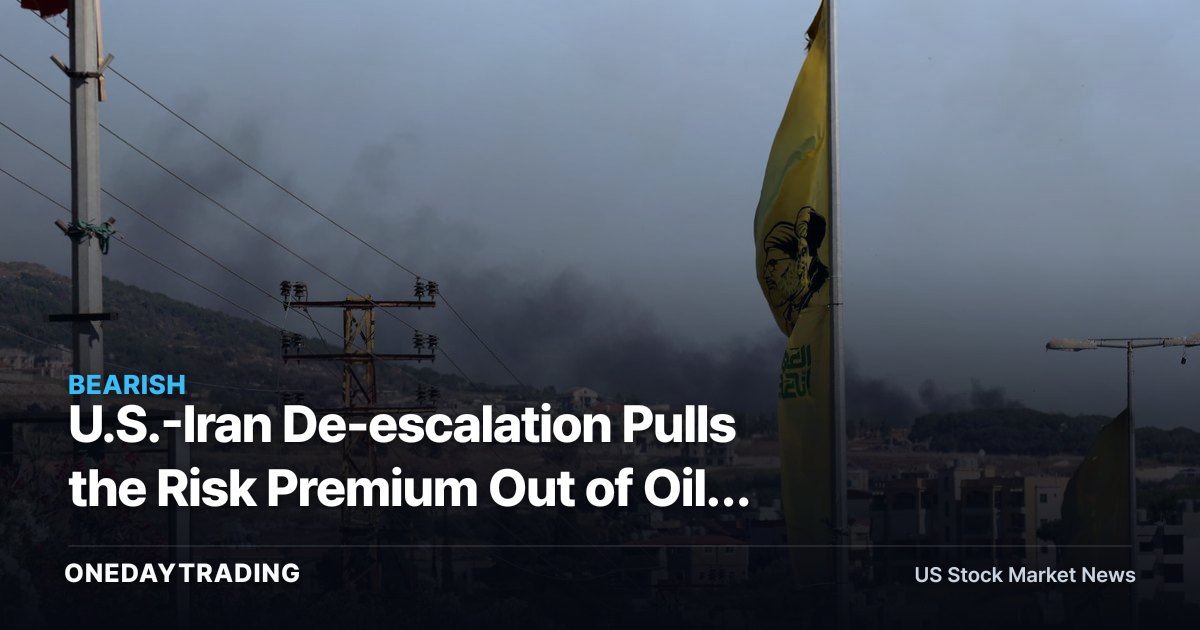
The United States and Iran signed a memorandum aimed at ending their conflict, and the first signs of a post-war recovery are appearing across the Middle East. Imagery of ships moving through the Strait of Hormuz and ordinary daily life resuming in Tehran signals a shift from wartime disruption toward normalization of regional flows.
For markets, the Strait of Hormuz is the headline. It is the chokepoint through which a large share of seaborne crude and condensate transits, so any threat to it injects a fear premium into global oil. A credible move toward peace works in the opposite direction, draining that premium as the perceived probability of a supply shock falls.
Background and Context
During periods of Middle East conflict, traders price in the tail risk of blocked tanker traffic, which lifts crude and, by extension, the cash flows of integrated oil majors and refiners. De-escalation reverses that logic: lower headline oil eases input costs for fuel-intensive industries but squeezes the upstream margins that conflict-era prices inflated.
Market and Stock Impact
- ExxonMobil (XOM), Chevron (CVX): integrated majors lever directly to crude realizations; a fading geopolitical premium pressures the per-barrel pricing that drives upstream earnings.
- Occidental (OXY): higher-beta, debt-carrying producers feel oil moves more sharply than diversified majors, amplifying downside on softer crude.
- Delta Air Lines (DAL), United (UAL): jet fuel is one of the largest variable costs; a lower oil path supports unit margins and is a fundamental tailwind.
- United States Oil Fund (USO): a direct proxy for WTI exposure that mechanically tracks the unwinding of the war premium.
Investor Checkpoints
- Track whether Hormuz tanker traffic stays uninterrupted; any reversal re-prices the premium fast.
- Watch the next round of energy-major earnings for guidance on realized prices and capex discipline.
- Monitor crude spreads and inventory data for confirmation that supply fears are genuinely easing.
- Follow the durability of the memorandum itself, since a fragile agreement keeps a residual premium in the market.
Outlook
The bull case for risk assets is straightforward: cheaper energy lowers inflationary pressure and input costs across the economy, a net positive for consumers and transport. The counter-case is that a memorandum is not a settlement. If the agreement frays or Hormuz traffic is challenged again, the premium snaps back and energy names rebound just as quickly. OPEC supply decisions and global demand trends remain independent drivers that can override the geopolitical signal entirely.
📊 Analysis
Signal Bearish
Why A U.S.-Iran peace memorandum and reopened Strait of Hormuz traffic drain the geopolitical risk premium from crude, pressuring oil-leveraged energy stocks.
Tickers$XOM$CVX$OXY$DAL$USO
This article was independently written by OneDayTrading from public reporting. Read the original (CNBC)