At a Glance
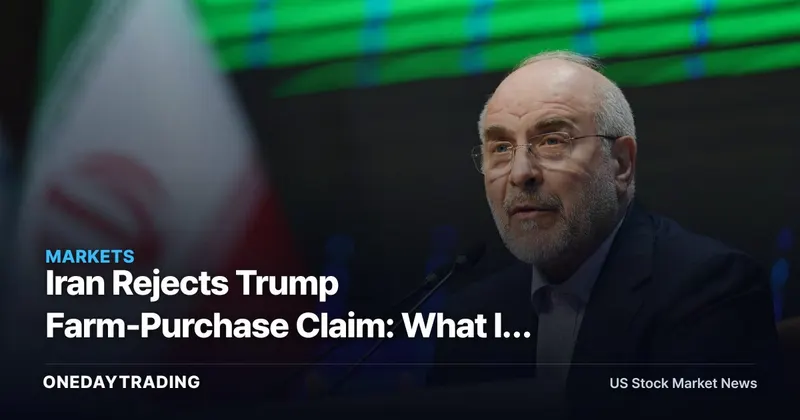
Iranian parliament speaker Mohammad Bagher Ghalibaf publicly rejected a claim attributed to President Trump that Iran would have to spend unfrozen assets on U.S. farm products, framing the relationship as decades of accumulated mistrust. The exchange is rhetorical rather than transactional, but it sets the tone for two market-sensitive questions: whether sanctions relief is anywhere on the table, and whether Iranian barrels stay off the global market.
Why It Matters Now
The headline reads as diplomacy, but the investable channel runs through commodities. A scenario where Iran uses unfrozen funds to buy American grain, soybeans or other agricultural goods would be a demand event for U.S. exporters. Ghalibaf's flat rejection signals no such deal is imminent, which removes a speculative upside catalyst for agriculture names rather than creating a new one.
The larger lever is energy. Continued hostility lowers the odds of sanctions easing, which keeps a meaningful slice of Iranian crude export capacity constrained. For oil markets, no thaw is mildly supportive of prices at the margin, because it delays the return of additional supply. The flip side: this is talk, not policy, and a single social-media post does not change barrels shipped or bushels ordered.
FAQ
- Is there an actual trade deal here? No. The source describes a claim about how unfrozen assets might be used and Iran's rejection of it — no agreement, volume or timeline.
- Who would benefit if Iran did buy U.S. farm goods? Grain merchandisers and agricultural exporters tied to bulk commodity flows.
- Why does this touch oil stocks? Sanctions posture toward Iran influences how much Iranian crude reaches the market, which affects global supply and price.
- Is this directional for stocks today? Largely not — it is geopolitical signaling without concrete figures attached.
Related Stocks & Sectors
- Archer-Daniels-Midland (ADM) — a grain-purchase scenario would lift agricultural trading volumes; the rejection keeps that optionality dormant.
- Bunge (BG) — similar exposure to global crop trade flows and export demand.
- Exxon Mobil (XOM), Chevron (CVX) — beneficiaries if constrained Iranian supply supports crude prices.
- Agriculture and Energy sectors — both sit downstream of U.S.-Iran sanctions policy.
What to Watch
- Any official statement on sanctions relief or asset unfreezing — the only thing that turns rhetoric into volume.
- WTI and Brent crude reaction to shifts in Iran tone.
- Concrete grain or soybean purchase announcements, with actual tonnage.
- Whether the U.S. attaches conditions to frozen Iranian funds in any future negotiation.
Overall Outlook
For now this is signaling, not a catalyst. The bull case for U.S. ag exporters needs a real purchase commitment that does not yet exist, while energy bulls can read continued friction as supportive for crude. The risk for traders is overreacting to a quote: with no figures, deal terms or dates in the record, positioning around it is speculation on diplomacy, which historically reverses quickly on a single new statement.
📊 Analysis
Signal Neutral
Why A rhetorical exchange with no deal, figures or policy change offers no clear directional catalyst for the linked agriculture or energy stocks.
This article was independently written by OneDayTrading from public reporting. Read the original (CNBC)