Philadelphia’s Flavor Push Puts Kraft Heinz’s Turnaround to a Shopper Test
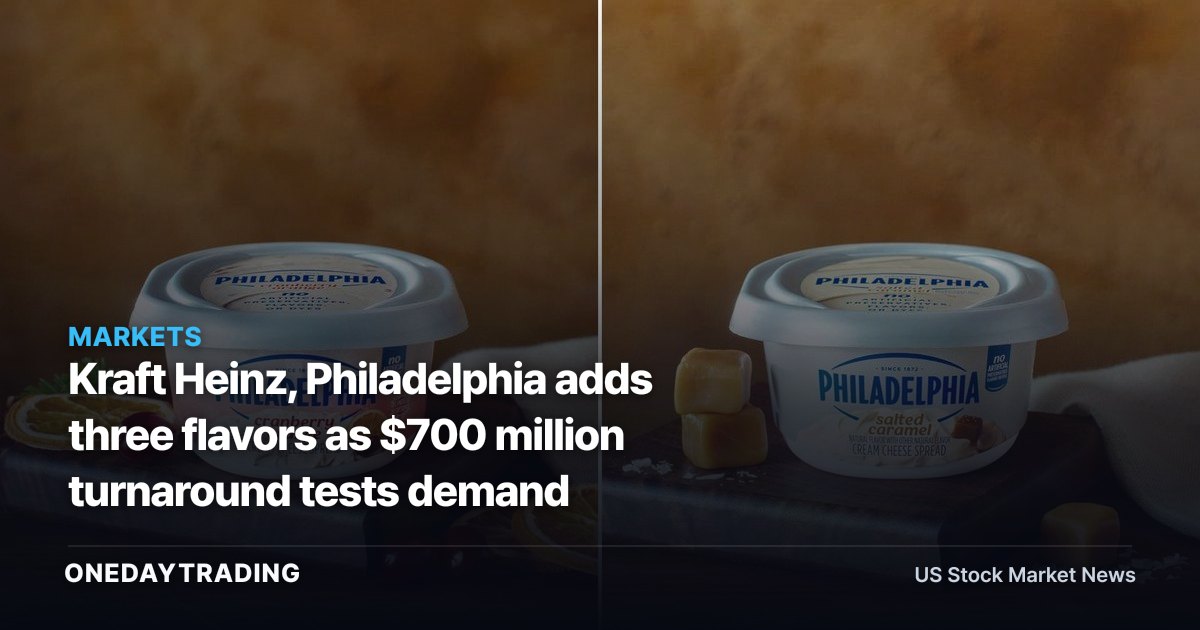
Kraft Heinz is releasing three Philadelphia cream cheese flavors on Tuesday, Sept. 15, 2026, making the 154-year-old brand a live test of whether heavier innovation spending can rebuild consumer demand. The company’s shares have declined 2% since management paused its planned split, so investors now need evidence that product activity converts into repeat purchases and broader category growth.
CNBC reported the launch and Kraft Heinz’s wider reinvestment plan. Philadelphia will introduce Mike’s Hot Honey whipped cream cheese, salted caramel and seasonal cranberry orange, then target 10 new varieties over the next two years. The exact calendar date of the Tuesday release is not specified beyond the publication date.
Why the Philadelphia Launch Matters Now
Philadelphia historically added about one or two flavors per year. Moving to 10 varieties over two years changes the brand’s innovation cadence and raises the odds of finding products that attract new usage occasions. Jerome Drolet, Kraft Heinz’s president of taste elevation, said the objective is “creating some excitement” while ensuring each product reaches a critical mass rather than becoming a niche item with only a few sales.
The first distribution plan gives Walmart an exclusive window for Mike’s Hot Honey whipped cream cheese before the product reaches other retailers in January. That sequence creates a defined retail checkpoint: Walmart’s initial sell-through, followed by distribution expansion. The source does not provide sales targets, shipment volumes or the exact January expansion date, so investors cannot yet calculate the contribution to Kraft Heinz revenue.
Philadelphia’s scale makes the experiment relevant beyond one product line. Euromonitor International data cited by CNBC puts the brand at about 62% of U.S. cream cheese sales. That share gives Kraft Heinz a large installed base, but it also means Philadelphia carries responsibility for expanding the overall category, not merely shifting shoppers among its own varieties.
Investment is rising alongside the flavor count. Kraft Heinz increased its planned reinvestment from $600 million to $700 million. Philadelphia spending is expected to increase 63% this year compared with 2025, while investment in new flavors has quadrupled. Those figures describe capital and marketing intensity, not realized profit; the source provides no flavor-level financial results.
The Consumer Mechanism: From Bagel Topping to More Occasions
Drolet’s strategy targets usage frequency. Philadelphia is promoting cream cheese as an ingredient for dips, cooking and baking, rather than limiting consumption to a bagel spread. The brand’s brick format has been a cooking and baking staple for decades, and the company is encouraging recipe websites and TikTok influencers to demonstrate additional applications, including pasta sauce.
That approach could make innovation incremental if new recipes add consumption occasions. It could also simply redistribute purchases from existing Philadelphia products if shoppers substitute one flavor for another. The distinction matters for Kraft Heinz’s income statement: incremental volume can support revenue leverage, while substitution may add complexity without expanding the category.
The portfolio is also addressing a specific dietary use case. Philadelphia launched a lactose-free version earlier this year. Together with the new flavors, that release broadens the product set, but the available evidence does not show adoption, pricing, margins or repeat rates for any of these products.
Key Debates for Kraft Heinz Investors
- Innovation versus novelty. Ten varieties in two years is a sharp increase from the prior one-or-two-per-year pace. The central question is whether products achieve the “critical masses” Drolet described and generate incremental demand.
- Category growth versus share defense. Philadelphia’s approximately 62% U.S. cream cheese share gives it influence over category occasions. New flavors may grow total consumption, but they may also shift volume within the brand.
- Spending productivity. A 63% year-over-year increase in Philadelphia spending and a fourfold increase in flavor investment raise the hurdle for returns. Without sales or margin disclosure, investors must treat the program as an operating test rather than a confirmed earnings driver.
- Turnaround credibility. About 35% of Kraft Heinz’s portfolio was holding or gaining market share earlier this month, up from 21% at the end of 2025, according to CEO Steve Cahillane at the Barclays Global Consumer Conference. The improvement is encouraging, but it does not isolate Philadelphia’s performance or establish that the turnaround will restore lost shoppers.
Related Stocks and Sector Read-Through
- Kraft Heinz (KHC): Philadelphia is one of the company’s billion-dollar brands, alongside Kraft Mac & Cheese, Kraft Singles, Heinz, Lunchables and Oscar Mayer. Successful launches could strengthen the consumer portfolio’s revenue and marketing productivity; weak repeat demand would leave the higher spending burden without demonstrated returns.
- Walmart: The retailer receives an exclusive initial window for Mike’s Hot Honey whipped cream cheese. Its early availability makes Walmart the clearest distribution venue for observing trial and sell-through, although no Walmart sales figures are reported.
- Food & Beverage: The case centers on brand reinvestment, product development and usage occasions. Kraft Heinz was formed by a 2015 megamerger, and Philadelphia was one of six brands written down in early 2019, context that raises the stakes of today’s capital allocation.
What to Watch Next
- Track Walmart availability and any disclosed evidence of Mike’s Hot Honey sell-through before the planned January expansion to other retailers.
- Look for Kraft Heinz commentary on Philadelphia volume, category growth and repeat purchase; the company does not break out Philadelphia sales today.
- Measure whether the 63% increase in Philadelphia spending and fourfold flavor investment are accompanied by improving portfolio market-share trends beyond the 35% figure cited for earlier this month.
- Assess execution across the broader portfolio, including improved Oscar Mayer packaging, Kool-Aid electrolyte packets and Kraft Mac & Cheese PowerMac, for signs that reinvestment is broad rather than dependent on one brand.
Overall Outlook: A High-Visibility Operating Experiment
The bullish mechanism is straightforward: a dominant brand uses new flavors, lactose-free positioning and recipe-led marketing to increase occasions, expand cream cheese demand and improve the productivity of Kraft Heinz’s $700 million reinvestment. Walmart’s exclusive launch provides an observable first test, while the January expansion can reveal whether trial travels beyond one retailer.
The risk is equally concrete. Philadelphia’s size can conceal whether new products are incremental or cannibalize existing sales, and heavier spending can pressure returns if consumers do not repeat purchases. Kraft Heinz’s 2% share decline since the split pause shows that investors remain unconvinced; no evidence yet proves that the turnaround will restore shoppers or that any new flavor will produce material financial results.
The next useful signal is not another launch announcement but disclosed operating data: Philadelphia volume, category growth, repeat demand and portfolio market-share progression as the varieties reach more retailers. Until those measures appear, the flavor push is a credible strategy with measurable checkpoints—not a verified turnaround.
📊 Analysis
Signal Neutral
Why The investment and innovation plan could support demand, but no flavor-level sales or proof of shopper recovery is available yet.
This article was independently written by OneDayTrading from public reporting. Read the original (CNBC)