Key Takeaways
Iran's declaration that a new Strait of Hormuz transit route is unacceptable and dangerous, paired with a warning against ships passing without Tehran's approval, reinjects a geopolitical risk premium into crude. The most direct beneficiaries are integrated oil majors with upstream leverage and tanker operators that price war-risk into freight rates; the clearest losers are energy-intensive importers and airlines exposed to fuel costs.
What Happened
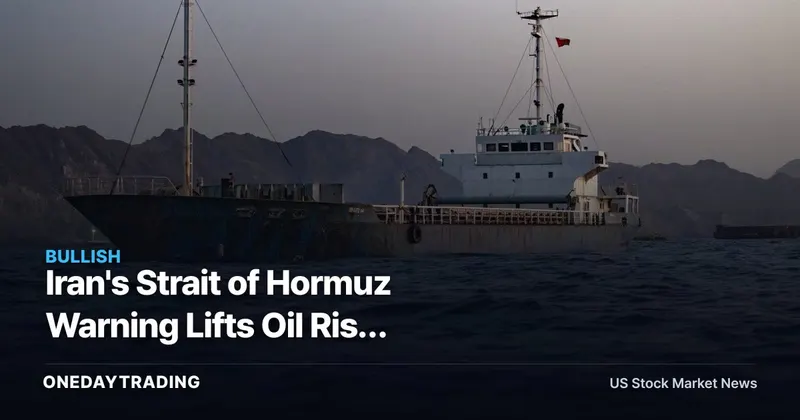
Tehran issued a stern warning underscoring its resolve to keep control over the Strait of Hormuz and to resist transits that bypass its authorization. By labeling an alternative route unacceptable and dangerous, Iran signals it intends to govern who moves through the waterway and on what terms.
The Strait of Hormuz is the single most important oil chokepoint on the planet, carrying a large share of seaborne crude and a substantial volume of liquefied natural gas from Gulf producers toward Asia and Europe. Any credible threat to free passage there does not need to halt a single barrel to move prices; the mere rise in perceived interdiction risk pushes up insurance, freight, and the forward curve as buyers scramble to secure supply.
Background and Context
Hormuz tensions follow a familiar script: rhetoric and shipping incidents periodically spike oil before diplomacy or the absence of actual disruption lets the premium bleed off. What matters for investors is the channel — higher war-risk insurance and re-routing raise the cost of moving Gulf barrels, and that cost is what filters into Brent and WTI even when physical flows continue uninterrupted.
Market and Stock Impact
- Oil majors (XOM, CVX): Upstream-weighted producers capture higher realized prices directly through their production volumes, so a sustained crude premium expands margins even before any change in their own output.
- Tanker operators (FRO, STNG, EURN): Heightened transit risk and re-routing around the Gulf lengthen voyages and lift war-risk surcharges, both of which tighten vessel supply and push day rates higher.
- Refiners (VLO, MPC): A double-edged exposure — feedstock costs rise, but supply disruption fears can widen product cracks; the net depends on whether crude or refined-product prices move faster.
- Airlines and shippers (DAL, UAL, FDX): Jet fuel and bunker costs are a major variable expense, so a rising oil base directly pressures unit costs and margins.
- US shale proxies (COP, FANG): Domestic producers outside the chokepoint benefit from price strength without the transit risk facing Gulf barrels.
Investor Checkpoints
- Watch the Brent and WTI front-month spread and whether the curve shifts into steeper backwardation — a sign the market is pricing near-term scarcity, not just headlines.
- Track war-risk insurance quotes and any reports of actual vessel inspections, seizures, or re-routing through the Strait; rhetoric without incidents tends to fade fast.
- Monitor next-quarter guidance from oil majors and tanker operators for realized-price and day-rate assumptions.
- Follow diplomatic signals and any Gulf-state or US naval response that could either de-escalate or harden the standoff.
Outlook
The bull case for energy rests on a durable risk premium if Iran follows words with enforcement, which would reward upstream majors and tanker names. The counter-scenario is equally real: Hormuz scares have a long history of reversing once no barrels are actually stopped, and a premium built on rhetoric can evaporate within days, leaving late buyers exposed. The deciding variable is whether Tehran moves from warnings to interdiction — until then, the move is a sentiment trade, not a supply shock.
📊 Analysis
Signal Bullish
Why A credible threat to the world's key oil chokepoint adds a geopolitical risk premium to crude, a tailwind for oil majors and tanker operators.
Tickers$XOM$CVX$FRO$VLO$COP
This article was independently written by OneDayTrading from public reporting. Read the original (CNBC)