What Changes
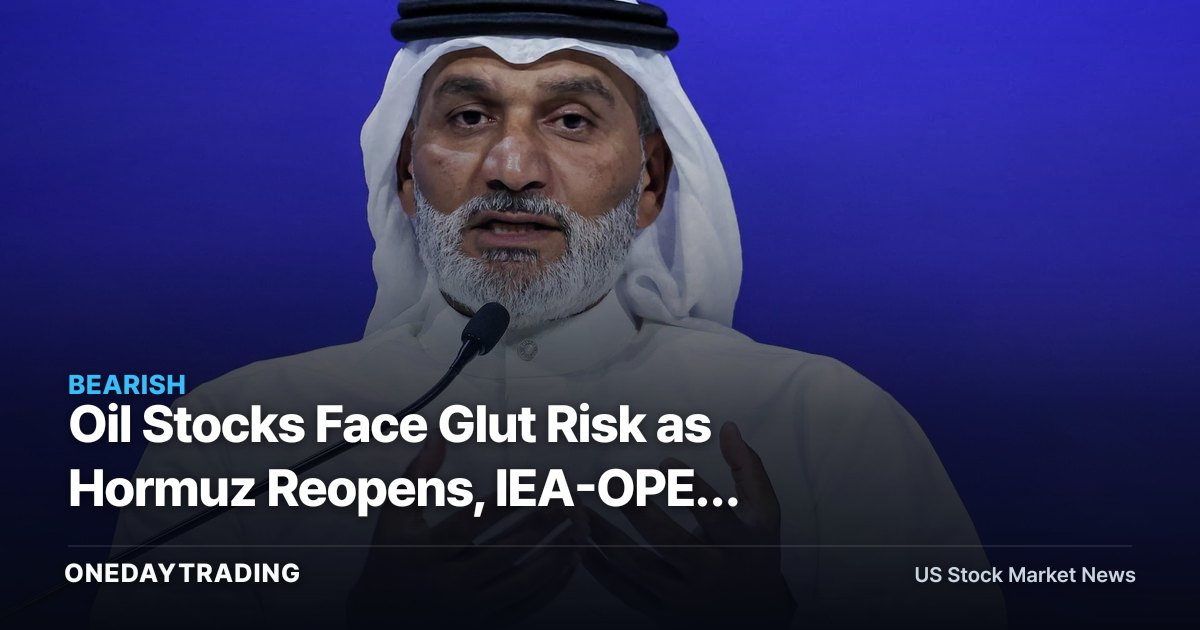
The market narrative is shifting from supply-disruption fear to oversupply anxiety. When the Strait of Hormuz, the chokepoint for a large share of seaborne crude, was at risk, traders priced in a geopolitical premium. Its reopening unwinds that premium, and the IEA layering a supply-overhang warning on top tells investors the next leg of the oil story may be about too many barrels, not too few.
The OPEC-versus-IEA disagreement matters because it is a fight over the 2026 balance. OPEC dismissing the glut forecast signals it intends to defend prices, potentially through restrained output. The IEA sees resolution-driven volumes flooding back. For equity investors, that gap is the single biggest swing factor for energy earnings into next year.
By the Numbers
The concrete claim from the source is directional rather than quantified: the IEA expects a lasting resolution to drive a surge in supply volumes and a major overhang in 2026, a forecast OPEC labeled and dismissed as overstated. With no disruption premium left from the Hormuz reopening, the burden of price support now falls on OPEC discipline rather than on fear.
Winners & Losers
- ExxonMobil (XOM), Chevron (CVX): integrated majors with large upstream exposure see realized prices and cash flow compress if a glut materializes, though their downstream arms partially offset.
- ConocoPhillips (COP), Occidental (OXY): pure-play producers are the most price-sensitive; a sustained lower crude deck pressures buybacks and dividends fastest.
- Refiners and airlines: cheaper feedstock and jet fuel are a tailwind, the mirror image of producer pain.
Risk Check
- OPEC can blunt the overhang through deeper output curbs, keeping prices firmer than the IEA models.
- Geopolitics can re-escalate; a single Hormuz incident can restore the risk premium overnight.
- Demand surprises, from China or winter consumption, could absorb returning barrels.
- The IEA forecast is a projection, not a balance sheet item; timing and magnitude are uncertain.
Bottom Line
The reopening of Hormuz plus an IEA glut warning tilts the near-term setup against upstream-heavy energy names and toward refiners and consumers, but OPEC supply discipline and any geopolitical flare-up are the live offsets that could keep crude from sliding as far as the bears expect. Watch OPEC output decisions and the next IEA monthly balance for confirmation.
📊 Analysis
Signal Bearish
Why A fading Hormuz risk premium plus an IEA 2026 oversupply warning point to weaker crude and pressure on upstream-heavy producers.
This article was independently written by OneDayTrading from public reporting. Read the original (CNBC)