Summary
A flare-up around the Strait of Hormuz is pushing Gulf producers to accelerate pipeline routes that bypass the chokepoint, a shift that supports crude prices and the cash flows of oil majors, oilfield-services firms and the contractors who build export infrastructure. The story is less about a single headline and more about a durable re-rating of energy supply risk.
The Full Story
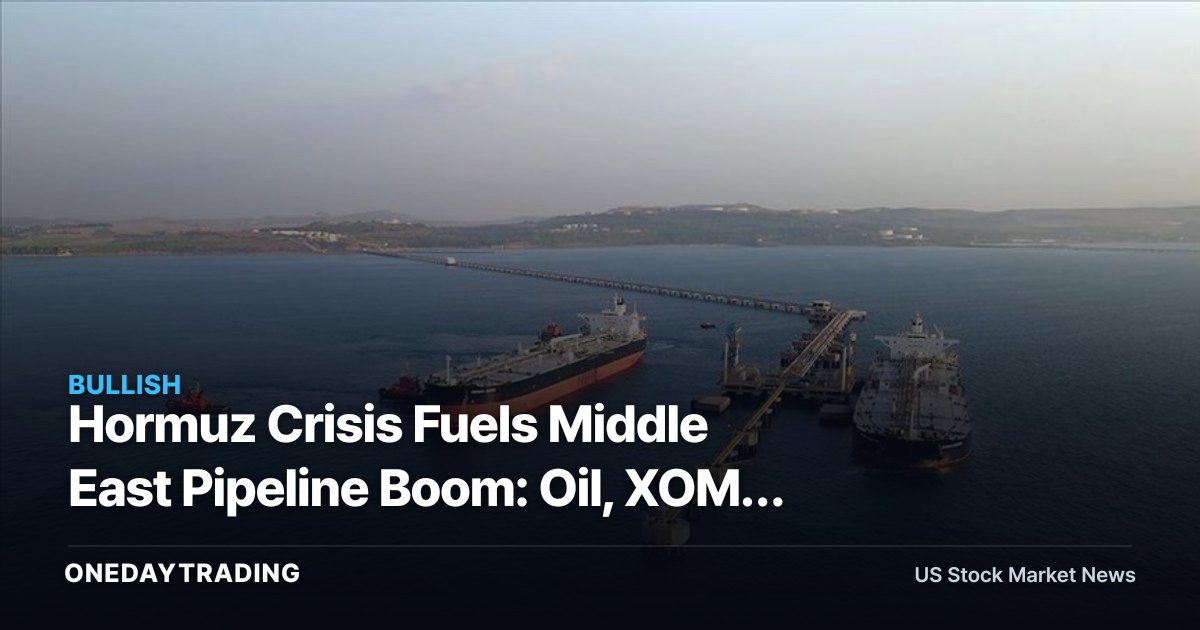
The Strait of Hormuz is the single most important oil artery on the planet, with roughly a fifth of the world's seaborne crude passing through a waterway just a few kilometers wide at its narrowest point. When transit through it is threatened, the market does two things at once: it adds a risk premium to oil, and it rewards any infrastructure that can move barrels to market without touching the strait.
That is the core of a Middle East pipeline boom. Saudi Arabia's East-West line to the Red Sea and the UAE's route to Fujairah on the Gulf of Oman already let some volumes skip Hormuz. A crisis turns that optionality into urgency, which means more spending on pipe capacity, pumping stations and export terminals. The beneficiaries are not just the producers but the engineering and services chain that gets paid to expand it.
Structural Background
Hormuz risk is recurring rather than one-off, so each episode tends to harden the long-term case for redundancy. Higher and more volatile crude also lifts upstream margins, since producers sell into a stronger price while their lifting costs stay roughly fixed. That combination of a price premium plus an infrastructure capex cycle is what makes this more than a one-day trade.
Stock & Sector Ripple
- Integrated majors (XOM, CVX): Higher crude flows straight into upstream earnings, where each dollar of oil above the cost of production is largely margin.
- Oilfield services (SLB, HAL): A bypass-pipeline buildout is a direct demand signal for engineering, completion and infrastructure work, the part of the value chain that gets paid regardless of where barrels finally sell.
- Tankers (FRO): Disrupted routes and longer voyages around risk zones can tighten ship availability and lift day rates, even as some Hormuz traffic shifts to pipelines.
- Refiners and importers: The mirror image of the trade, as crude-cost inflation squeezes margins for buyers without their own supply.
Bull vs Bear Scenarios
The bull case is straightforward: any sustained Hormuz threat keeps a premium in oil and accelerates a multi-year capex cycle for pipelines and services. The bear case is that geopolitical premiums fade fast once tensions ease, and that OPEC spare capacity, weak global demand or a faster pipeline ramp could cap prices. Energy equities also carry the risk that the move is already priced in after a sharp spot rally, leaving little upside if the headline calms.
Investor Action Points
- Track Brent and WTI spot levels and the term structure; a move into backwardation signals real physical tightness rather than just fear.
- Watch services backlog and order commentary at SLB and HAL next earnings for confirmation the pipeline capex is being booked, not just discussed.
- Monitor official Hormuz transit and tanker-rate data for evidence of actual rerouting versus pure sentiment.
- Watch OPEC and Saudi output decisions, the key variable that can offset any supply scare.
📊 Analysis
Signal Bullish
Why A Hormuz-driven pipeline boom and oil-price premium are positive catalysts for crude, oil majors and oilfield-services names.
Tickers$XOM$CVX$SLB$HAL$FRO
This article was independently written by OneDayTrading from public reporting. Read the original (Yahoo Finance)