At a Glance
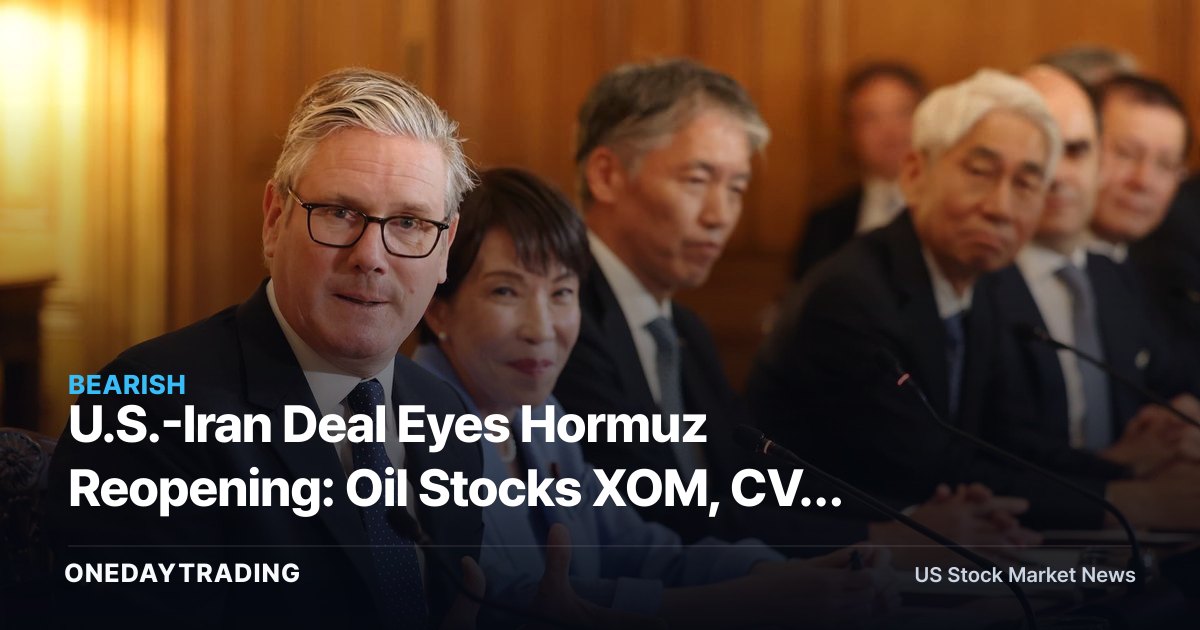
World leaders have welcomed a newly reached U.S.-Iran deal, with European officials signaling sanctions relief and urging the reopening of the Strait of Hormuz. The breakthrough follows more than three months of stop-start negotiations and intermittent fighting since late February that rattled global energy and commodity markets.
Why It Matters Now
The Strait of Hormuz is the single most important chokepoint in the global oil trade, carrying a large share of seaborne crude and liquefied natural gas. Any threat to its flow injects a war-risk premium into prices, while signs of reopening tend to do the opposite. A credible path toward normalization removes one of the largest geopolitical overhangs that traders have been pricing into crude since the conflict flared.
European sanctions relief is the second key lever. If Iranian barrels can return to legitimate export channels, global supply effectively expands at a time when markets have been anxious about scarcity. That combination — lower geopolitical risk plus more supply — typically pressures oil prices lower, reshaping the calculus for energy producers, refiners, airlines, and shipping companies alike.
For retail investors, the immediate read-through is a potential unwinding of the fear premium. Energy equities that rallied on supply-disruption fears may give back gains, while transportation and consumer names exposed to fuel costs could benefit from cheaper input prices.
FAQ
- Why does the Strait of Hormuz matter so much? It is the world's most critical oil transit chokepoint, so disruptions there spike prices and reopening eases them.
- Is this bullish or bearish for oil prices? A de-escalation and added Iranian supply are generally bearish for crude prices, even if positive for broader risk sentiment.
- What changed? A U.S.-Iran agreement was reached after months of negotiations, and Europe is signaling sanctions relief and a push to reopen Hormuz.
- Who wins from lower oil? Fuel-intensive sectors like airlines and shippers, plus consumers, while pure-play oil producers may see margins compress.
Related Stocks & Sectors
- XOM (Exxon Mobil) — Major integrated producer; lower crude prices can compress upstream margins.
- CVX (Chevron) — Similar upstream exposure; sensitive to a falling war-risk premium.
- COP (ConocoPhillips) — Pure-play exploration and production highly leveraged to oil prices.
- DAL (Delta Air Lines) — Airlines benefit from cheaper jet fuel if crude falls.
- Energy and Oil Services sector — Broad exposure to supply normalization and geopolitical de-escalation.
What to Watch
- Whether sanctions relief is formalized and how quickly Iranian barrels re-enter export markets.
- Confirmation that the Strait of Hormuz is fully reopened to commercial traffic.
- The pace at which the crude war-risk premium unwinds in WTI and Brent.
- Reactions from OPEC+ on production policy as supply conditions shift.
Overall Outlook
The bull case for risk assets is clear: easing Middle East tensions removes a major uncertainty and can lift broad equity sentiment while lowering input costs for fuel-dependent industries. The risk for energy investors is the flip side — a deflating supply-disruption premium and additional Iranian crude could weigh on oil prices and producer margins. Much hinges on execution: deals can stall, and a reopening that proves slow or partial would keep some premium intact. Investors should treat headlines cautiously until sanctions relief and Hormuz traffic are confirmed in practice.
📊 Analysis
Signal Bearish
Why A U.S.-Iran deal, sanctions relief, and a Hormuz reopening point to easing geopolitical risk and more Iranian supply, which is bearish for crude prices and oil producer margins.
This article was independently written by OneDayTrading from public reporting. Read the original (CNBC)