Summary
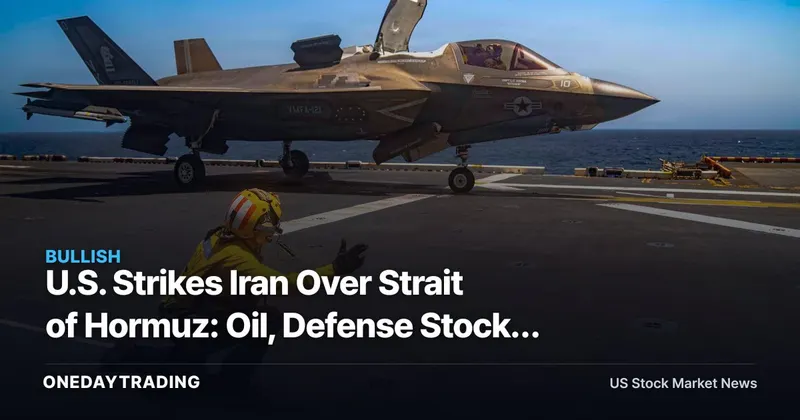
The U.S. struck Iran after President Trump accused Tehran of violating a ceasefire in the Strait of Hormuz, fracturing a planned 60-day pause in hostilities meant to support war-ending talks. The tape now has to price a chokepoint risk it had been treating as dormant. For investors, this is a classic supply-shock reflex: crude and the defense complex catch a bid, the dollar and gold draw safe-haven flows, and rate-cut timing gets murkier as energy threatens the inflation path.
The Full Story
Hormuz is not just another headline; it is the single most concentrated oil transit lane on the planet, and any credible threat to passage reprices the entire crude curve, not just spot. A strike that breaks a negotiated cessation tells the market the de-escalation trade was premature. The first move is in the risk premium embedded in oil, which had bled out during the talks and now has to be rebuilt.
The mechanism runs in stages. Higher crude lifts revenue and cash flow for integrated majors and E&P names with the leanest cost structures. Military action that consumes munitions and air-defense inventory feeds order books at prime contractors. Meanwhile, equities that live on cheap fuel and steady consumer demand — airlines, cruise lines, discretionary retail — face a margin and demand headwind if prices stay elevated into the summer driving season.
The cross-asset read matters more than any single stock. A sustained oil spike complicates the disinflation story the Fed has leaned on, which can push real yields and the dollar higher and compress equity multiples, especially in long-duration growth. That is the channel through which a Middle East strike reaches a software or chip portfolio thousands of miles from the conflict.
Structural Background
This is a geopolitical risk premium, not a fundamental change in barrels produced — yet. The distinction is the whole trade. If shipping continues unimpeded and talks resume, the premium decays within days, as it has after prior flare-ups. If passage is genuinely contested, the curve flips to backwardation and the move becomes structural rather than a spike to fade.
Stock & Sector Ripple
- Exxon Mobil (XOM), Chevron (CVX): Integrated majors with global upstream leverage; every dollar of sustained crude flows through to free cash flow and buyback capacity.
- Lockheed Martin (LMT), RTX (RTX): Defense primes benefit from munitions and air-defense replenishment demand when conflict escalates.
- United States Oil Fund (USO): Direct WTI exposure — the cleanest expression of the Hormuz risk premium, and the first to round-trip if tensions ease.
- Airlines (DAL): Jet fuel is a top cost line; a crude spike pressures unit costs just as demand and the dollar turn against international carriers.
Bull vs Bear Scenarios
Bull (for energy/defense): Strikes harden into a prolonged standoff, Hormuz passage is questioned, and crude holds a structural premium that re-rates the entire energy complex and sustains defense order flow.
Bear (for the trade): The exchange proves contained, talks resume within the 60-day window, and the oil premium evaporates — leaving energy and defense longs holding a fast-decaying headline trade while higher rates weigh on the broad index.
Investor Action Points
- Watch the WTI curve shape: a shift to backwardation signals the market is pricing real supply disruption, not a one-day spike.
- Track whether the 60-day cessation framework survives — any return to talks is the cue for the risk premium to unwind.
- Monitor the 10-year yield and the dollar; an oil-driven move higher is the transmission line into growth and tech multiples.
- Size energy and defense exposure as a tactical hedge, not a core thesis, until barrels — not headlines — actually move.
📊 Analysis
Signal Bullish
Why A military strike reopening Strait of Hormuz transit risk rebuilds the crude risk premium, a direct tailwind for oil majors and defense contractors.
Tickers$XOM$CVX$LMT$RTX$USO$DAL
This article was independently written by OneDayTrading from public reporting. Read the original (CNBC)