Key Takeaways
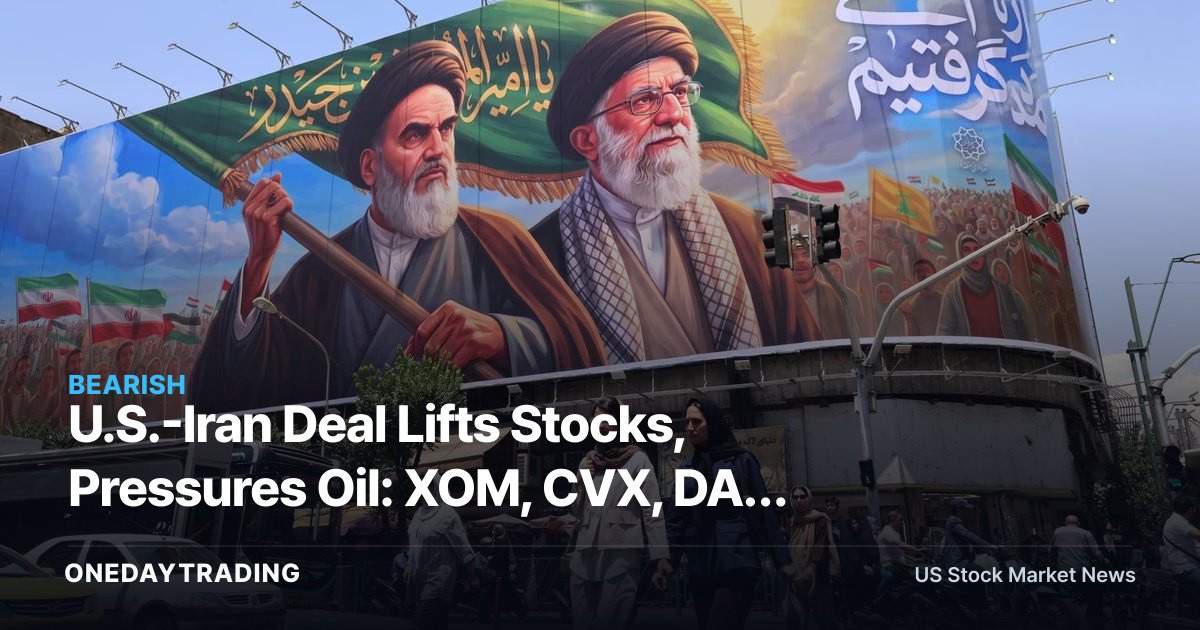
A preliminary U.S.-Iran agreement, with a potential signing in Geneva, sent equities higher by trimming the geopolitical risk premium baked into oil. The same de-escalation that supports broad indices works against integrated energy producers, while fuel-sensitive sectors like airlines stand to benefit if crude stays soft. Unresolved questions over the Strait of Hormuz and Israel keep the trade incomplete.
What Happened
Stocks rose after news of a preliminary deal between Washington and Tehran, a classic risk-on response to falling Middle East tensions. Markets price war and supply disruption into crude long before barrels are actually lost, so even a framework agreement that has not been signed is enough to start unwinding that premium.
The key word is preliminary. A signing is floated for Geneva, but the most market-relevant variables remain open: the status of the Strait of Hormuz, through which a large share of seaborne crude transits, and Israel's posture, which has been the main escalation trigger in the region. Until those are addressed, any price move rests on sentiment rather than confirmed changes to oil flows.
Background and Context
Sanctions relief on Iran would, over time, add barrels to a global market already balancing OPEC+ supply decisions against uneven demand. The first-order effect of de-escalation is the removal of a fear premium; the second-order effect, if sanctions ease, is incremental Iranian export volume that pressures prices further. Both channels point the same direction for crude.
Market and Stock Impact
- Exxon Mobil (XOM), Chevron (CVX): Upstream earnings track realized crude and gas prices, so a falling risk premium compresses the per-barrel economics that drive cash flow and buyback capacity.
- Airlines (DAL, UAL): Jet fuel is among the largest operating costs; softer crude flows straight to margins and is a direct tailwind to earnings leverage.
- Defense (LMT, RTX): Names that rallied on regional conflict can give back gains as the conflict premium fades, though existing program backlogs cushion the impact.
- Broad market: Lower energy costs ease input inflation, a supportive backdrop for consumer and transport-heavy sectors.
Investor Checkpoints
- Whether the Geneva signing actually occurs, and the specific language on Hormuz and sanctions.
- Crude price reaction and whether the move holds or reverses once headlines fade.
- Any Israeli response, the single largest variable that could re-impose the risk premium.
- OPEC+ commentary on how it would absorb returning Iranian barrels.
Outlook
If the deal advances and sanctions loosen, the disinflationary impulse from cheaper energy is a genuine support for equities and a headwind for upstream producers. The counter-scenario is real: a preliminary deal is not a signed one, Hormuz and Israel are unresolved, and a collapse in talks or a flare-up could snap the risk premium back into crude within a single session, reversing the trade.
📊 Analysis
Signal Bearish
Why De-escalation unwinds oil's geopolitical risk premium and threatens incremental Iranian supply, pressuring crude and upstream energy producers.
Tickers$XOM$CVX$DAL$LMT$RTX
This article was independently written by OneDayTrading from public reporting. Read the original (CNBC)