What Changes
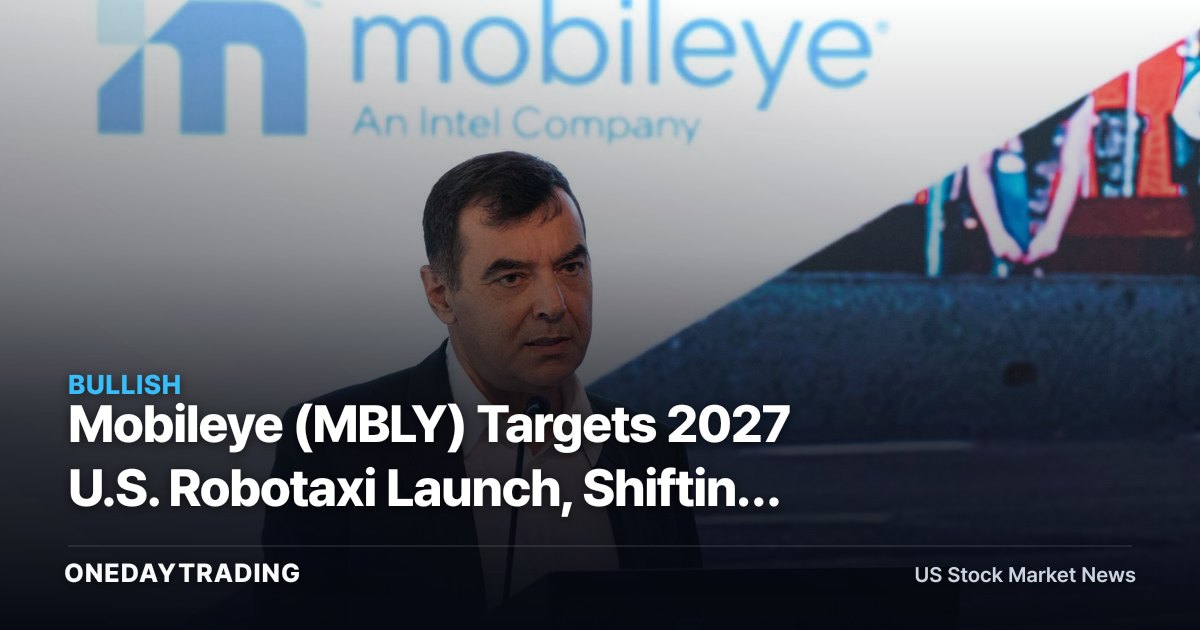
The strategic weight here is not the launch date but the change in business model. Mobileye has historically been an arms dealer to the auto industry — supplying EyeQ chips and driver-assistance stacks to carmakers — which keeps capital expenditure light and revenue tied to design wins. Choosing to operate a robotaxi service in the U.S. by 2027 means owning vehicles, depots, remote-operations staff and rider-facing software, a far more capital-intensive and operationally complex model.
For investors, the announcement reframes Mobileye as both a supplier and a would-be platform operator. That opens a potential new revenue line in mobility services, but it also risks unsettling the automaker customers who buy its technology and may not want their supplier competing for the same ride-hailing dollars. The 2027 timeline also signals that meaningful service revenue is years away, so near-term financials still hinge on the legacy chip-and-software business.
By the Numbers
The concrete anchor from the announcement is the 2027 U.S. launch target. That multi-year runway matters: it sits behind Waymo, which already runs paid driverless rides in several U.S. cities, and it leaves room for Tesla's own robotaxi ambitions to advance. The gap means Mobileye must fund development and pilots well before any operating service contributes to results.
Winners & Losers
- Mobileye (MBLY) — potential winner if it converts its supplier-grade perception stack into a higher-margin services franchise, but the burden of proof and spending falls on it first.
- Intel (INTC) — as Mobileye's majority owner, it shares the upside and the execution risk of this pivot.
- Alphabet (GOOGL) and Tesla (TSLA) — incumbents in autonomous ride-hailing now face one more credible entrant targeting the same U.S. market.
- Uber (UBER) and Lyft (LYFT) — robotaxi platforms can be partners or rivals; a Mobileye-operated fleet could compete with their human-driver networks or plug into them.
Risk Check
- Execution and timing: a 2027 target is far out, and autonomous deployment schedules across the industry have repeatedly slipped.
- Channel conflict: operating a fleet may strain relationships with the carmakers that buy Mobileye's technology.
- Capital intensity: a services model carries fixed costs and regulatory hurdles that a chip supplier does not.
- Competitive lead: Waymo and others already have paid driverless operations and accumulated road data.
Bottom Line
Mobileye is reaching for a larger, higher-value role in autonomous mobility, and a successful 2027 launch could re-rate it from component vendor to platform operator — but until pilots prove unit economics and customer relationships stay intact, the upside remains a multi-year option rather than a booked result.
Market data check: MBLY
MBLY last traded near $9.83 (+3.13%). Our composite signal — blending price momentum and news flow — reads 🟡 neutral. Price momentum scores 75/100 (firm).
Data as of publication. Price via market feeds; for reference only, not investment advice.
📊 Analysis
Signal Bullish
Why Expanding from supplier to robotaxi operator opens a new high-value revenue avenue, a forward strategic catalyst despite long execution timeline.
Tickers$MBLY$INTC$GOOGL$TSLA$UBER$LYFT
This article was independently written by OneDayTrading from public reporting. Read the original (CNBC)