At a Glance
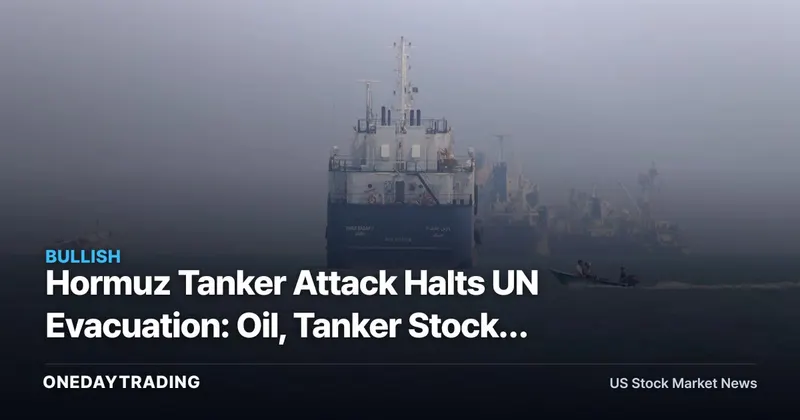
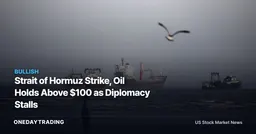
A container ship was struck near the coast of Oman on Thursday, the first vessel attack since a peace deal took effect, prompting a UN agency to pause its plan to evacuate ships from the Strait of Hormuz. A U.S. official attributed the attack to Iran, reintroducing a tail risk that markets had begun to discount.
Why It Matters Now
The Strait of Hormuz is the chokepoint for roughly a fifth of global seaborne oil and a large share of LNG. When a single attack is enough to freeze a UN evacuation effort under an active peace deal, the market reprices the probability that the deal holds. That probability discount flows straight into the crude curve as a geopolitical risk premium, even before any barrel is actually disrupted.
The transmission is mechanical. Higher perceived transit risk lifts war-risk insurance and charter rates, which benefits tanker owners on the spot market. It also widens the floor under crude, helping upstream producers whose earnings lever directly to the oil price, while squeezing refiners and airlines that buy fuel as an input. The key nuance: this is a sentiment and insurance shock first. Unless transit is physically curtailed, the premium can fade as quickly as it appeared once headlines cool.
For equity investors, the cleaner read is on names with direct price or freight exposure rather than broad index bets, since a contained incident rarely moves the S&P 500 durably but can swing energy and shipping subsectors sharply.
FAQ
- Why does one ship strike move oil? Hormuz handles a major slice of global crude and LNG flows, so any threat to passage prices in a risk premium regardless of actual volume lost.
- Who blamed Iran? A U.S. official said Iran was responsible for the strike on the vessel near Oman.
- Is supply actually cut? Not from this single attack. The market is pricing the risk of escalation and the paused evacuation, not a confirmed disruption.
- Which side benefits in equities? Oil producers and spot tanker owners tend to gain on a risk premium, while refiners and airlines face higher input costs.
Related Stocks & Sectors
- Oil majors (XOM, CVX) Upstream earnings lever to crude prices, so a sustained geopolitical premium supports cash flow and buyback capacity.
- Tankers (FRO, STNG) Higher war-risk and rerouting demand lift spot charter rates, a direct revenue tailwind for owners with spot exposure.
- Energy ETF (XLE) Broad sector vehicle that captures the producer and services beta to a higher oil floor.
- Airlines (DAL, UAL) Jet fuel is a top cost line, so a rising crude premium pressures margins, a counterweight to the energy trade.
What to Watch
- Whether the UN agency resumes or further suspends the Hormuz evacuation plan in coming days.
- WTI and Brent moves and the war-risk insurance rate for Hormuz transits as a real-time gauge of escalation.
- Any confirmation of physical flow disruption versus a sentiment-only premium.
- Tanker spot rate prints and energy versus airline relative performance.
Overall Outlook
The bull case for energy and tankers rests on a durable risk premium if the peace deal frays and transit threats persist, rewarding upstream producers and spot shipping. The risk is symmetry: contained incidents historically fade fast, and a reaffirmed truce could unwind the premium just as quickly, leaving late buyers exposed and handing relief to fuel-sensitive sectors like airlines.
📊 Analysis
Signal Bullish
Why A Hormuz vessel attack blamed on Iran injects a geopolitical risk premium that supports oil prices and tanker charter rates.
Tickers$XOM$CVX$FRO$STNG$DAL
This article was independently written by OneDayTrading from public reporting. Read the original (CNBC)