At a Glance
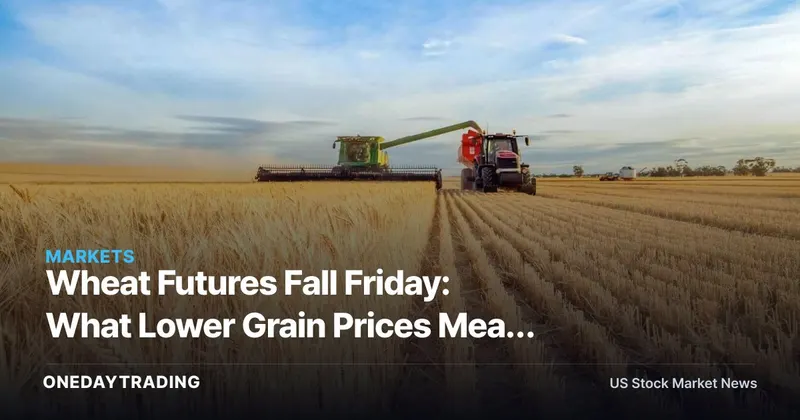
Wheat futures moved lower on Friday, extending pressure on the grain complex. For equity investors, soft wheat prices ripple through agribusiness processors, fertilizer producers and food companies rather than showing up directly in any single stock.
Why It Matters Now
Wheat is a global benchmark commodity, and its price reflects the balance of harvest supply, export demand and currency moves. A down day in futures is not, by itself, a trend, but persistent weakness signals comfortable inventories and limited weather-related supply scares. That dynamic tends to compress margins for growers while easing input costs for buyers further down the chain.
The most direct market read-throughs are agricultural merchandisers and processors such as Archer-Daniels-Midland and Bunge, whose earnings hinge on grain origination, trading spreads and crush volumes rather than the flat price of any one crop. Lower wheat can also soften the demand narrative for crop-nutrient suppliers like Nutrien and Mosaic, since cheaper grain can pressure farmer planting economics and fertilizer purchasing into the next season.
For retail investors, the cleaner way to express a direct view is through commodity-linked vehicles like the Teucrium Wheat Fund, while equity exposure offers a more diversified, business-driven angle on the same theme.
FAQ
- Does a one-day wheat drop change the investment case? Not on its own — single sessions are noise; the trend in inventories, exports and weather matters more.
- Which stocks track wheat most closely? Grain handlers ADM and Bunge are the most exposed, with fertilizer names as a secondary, indirect link.
- Is cheaper wheat good or bad for these companies? It is mixed — lower flat prices can squeeze farmer income and fertilizer demand but may aid processors' input costs.
- How can I trade wheat directly? Commodity ETFs such as WEAT offer price exposure without futures accounts.
Related Stocks & Sectors
- ADM — global grain merchandiser whose trading and processing margins move with the grain cycle.
- BG (Bunge) — agribusiness leader in origination and oilseed crush, sensitive to grain flows.
- NTR (Nutrien) — crop-nutrient demand is linked to farmer economics and grain prices.
- MOS (Mosaic) — fertilizer producer exposed to planting and input-cost trends.
- WEAT — Teucrium ETF offering direct wheat price exposure for retail accounts.
What to Watch
- USDA crop and export reports for supply and demand revisions.
- Black Sea and major-exporter shipping flows that swing global wheat availability.
- The U.S. dollar, since a stronger dollar pressures grain export competitiveness.
- Weather across key growing regions heading into the next planting cycle.
Overall Outlook
The bull case for ag equities is that processors like ADM and Bunge profit from volume and spreads regardless of flat price, so cheaper wheat is not automatically negative. The risk case is that sustained low grain prices erode farmer incomes, weigh on fertilizer demand and signal a well-supplied, low-volatility market that offers fewer catalysts. On balance, a single down session in wheat is a mild, mixed signal rather than a decisive directional move for the sector.
📊 Analysis
Signal Neutral
Why A one-day wheat futures decline is a mixed, low-conviction signal with offsetting effects across processors, fertilizer names and growers.
Tickers$ADM$BG$NTR$MOS$WEAT
This article was independently written by OneDayTrading from public reporting. Read the original (Yahoo Finance)