University of Michigan Sentiment at a Glance
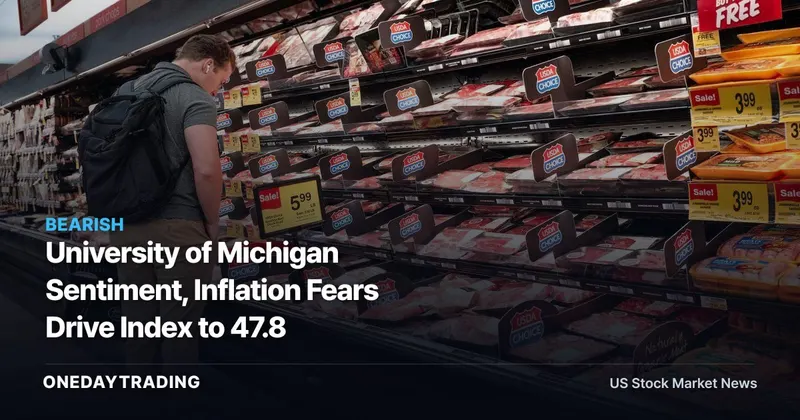
The University of Michigan’s September consumer sentiment index fell to 47.8, its second-lowest level on record, according to CNBC Markets on September 11, 2026. For investors, CNBC Markets’ figures point to a difficult macro combination: consumers reported a weaker outlook while expecting more inflation, leaving both consumer-facing sectors and Federal Reserve policy exposed to the next readings.
Consumer sentiment is a survey-based measure of how households assess current conditions and the economic outlook. According to CNBC Markets, the University of Michigan headline index dropped 7.5% from its August reading and 13.2% from a year earlier in September.
The deterioration was concentrated in the forward-looking component. According to CNBC Markets, the University of Michigan current-conditions index declined 1.9% from the prior month, while its expectations measure fell 11.1% from the prior month. CNBC Markets’ figures therefore suggest that concern about what lies ahead was more pronounced than the change in consumers’ assessment of present conditions.
Inflation Expectations Deepen the September Warning
The survey’s inflation reading makes the decline harder to treat as an isolated confidence shock. According to CNBC Markets, the University of Michigan’s one-year inflation outlook rose to 4.6%, an increase of 0.6 percentage point from the prior level. In CNBC Markets’ framing, falling expectations for personal finances and business conditions appeared alongside a higher expected rate of price growth.
Joanne Hsu, the University of Michigan survey director, said, “Year-ahead expectations for both personal finances and business conditions plunged,” according to CNBC Markets. That statement reinforces the numerical split between the 1.9% monthly decline in current conditions and the much larger 11.1% monthly contraction in expectations.
Separate price data moved in the same unfavorable direction. According to CNBC Markets, Bureau of Labor Statistics data showed gasoline prices rising 3.9% in August and 27.4% from a year earlier. The Bureau of Labor Statistics also reported fuel oil prices increasing 10.1% in August and 52% annually, according to CNBC Markets.
CNBC Markets’ evidence suggests that these fuel-price increases matter because they coincide with the survey’s worsening inflation outlook and expectations component. The fact sheet does not establish that fuel prices caused the sentiment decline, however, so investors should treat the overlap as a monitoring signal rather than a proven causal relationship.
Federal Reserve Tension and the Market Read-Through
The inflation backdrop extends beyond household expectations. According to CNBC Markets, the Bureau of Labor Statistics consumer price index showed annual inflation of 3.4%, compared with the Federal Reserve’s 2% objective. CNBC Markets reported that the perceived probability of a Federal Reserve rate increase moved above 85% on Friday, although the supplied evidence does not identify the exact calendar date represented by Friday.
For the broad market, CNBC Markets’ figures support a bearish macro interpretation because weaker consumer expectations did not arrive with easing inflation expectations. Under that interpretation, the 47.8 sentiment reading raises concern about the outlook, while the 4.6% one-year inflation expectation and 3.4% annual consumer price inflation constrain the scope for investors to view weaker sentiment as an unambiguously favorable policy signal.
The survey does not establish the future path of spending, corporate revenue, interest rates or equity valuations. It also provides no evidence tying the release to any specific listed company, which is why a company ticker or sector winner should not be inferred from these data alone.
The counter-scenario is equally important. According to CNBC Markets, the evidence describes one September survey and August price readings; it does not confirm that sentiment will weaken further, that inflation will remain elevated or that the Federal Reserve will take a particular action. The market implication therefore remains conditional on whether subsequent readings confirm or reverse the current combination.
What Investors Should Check Next
- Consumer expectations: The next University of Michigan survey should be checked against September’s 47.8 headline index, the 11.1% monthly decline in expectations and the 1.9% monthly decline in current conditions. According to CNBC Markets’ data, a reversal or further deterioration in the expectations component would be the clearest test of whether September represented a persistent shift.
- Inflation expectations: The University of Michigan’s next one-year inflation outlook should be compared with September’s 4.6% reading and its 0.6-percentage-point increase from the prior level, according to CNBC Markets. That comparison will show whether households’ inflation concern is broadening or receding, without presuming either outcome.
- Official inflation data: The next Bureau of Labor Statistics consumer price index should be assessed against annual inflation of 3.4%, as reported by CNBC Markets. Fuel categories also merit direct comparison with August, when gasoline rose 3.9% and fuel oil rose 10.1%, according to the same source.
- Federal Reserve decisions: Investors should compare the Federal Reserve’s next action with the greater-than-85% perceived probability of a rate increase reported by CNBC Markets for Friday. That probability reflects expectations rather than a confirmed decision, and the fact sheet does not establish what the Federal Reserve will do.
CNBC Markets’ evidence leaves the macro balance tilted negatively: sentiment is near a record low, expectations weakened more sharply than current conditions, and both surveyed and official inflation measures remain elevated relative to the Federal Reserve’s stated objective. The live question is whether the next sentiment, inflation and Federal Reserve readings confirm that alignment or break it.
📊 Analysis
Signal Bearish
Why CNBC Markets’ figures show weakening consumer expectations alongside higher inflation expectations, a negative combination for the macro outlook.
This article was independently written by OneDayTrading from public reporting. Read the original (CNBC Markets)