Summary
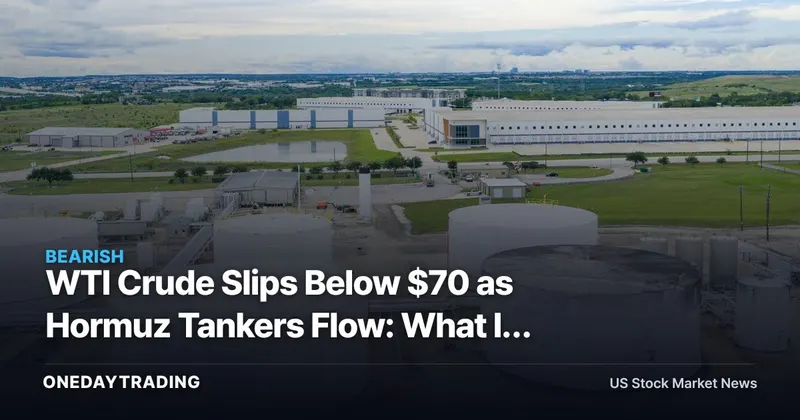
U.S. crude oil has slipped below the $70 mark as tankers move freely through the Strait of Hormuz, signaling that the geopolitical risk premium traders had built into prices is draining out. President Donald Trump is now leaning on producers to pass the relief through to the pump. For investors, the message is a squeeze on upstream margins paired with a tailwind for fuel-heavy consumers and select refiners.
The Full Story
The drop under $70 for West Texas Intermediate matters because the Strait of Hormuz is the chokepoint for roughly a fifth of global seaborne oil. When tankers transit normally, the market reprices the probability of supply disruption sharply lower, and the fear premium that had supported crude unwinds quickly. That is the mechanical driver behind the latest leg down.
The political layer adds a second dimension. By publicly pressuring oil companies to lower gasoline prices after the crude decline, the administration is targeting the spread between wholesale crude and the retail pump. Gasoline prices typically lag crude moves, so producers and marketers face a window where falling input costs have not yet translated into lower prices for drivers, a gap the White House wants closed fast.
Structural Background
Oil is a price-taker business at the wellhead. For integrated majors and pure-play producers, every dollar off the barrel compresses upstream cash flow, since drilling cost structures are largely fixed in the short run. The offset sits downstream: refiners and marketers can see margins widen when crude falls faster than the products they sell, and energy-intensive end users get direct cost relief.
Stock & Sector Ripple
- ExxonMobil (XOM) and Chevron (CVX): upstream-weighted earnings mean lower crude directly trims realized prices per barrel; their integrated refining arms only partly cushion the hit.
- ConocoPhillips (COP): as a pure exploration-and-production name with no refining buffer, it carries the most direct sensitivity to a sub-$70 print.
- Refiners such as Valero (VLO): cheaper crude feedstock can lift crack spreads if pump prices stay sticky, the exact dynamic the political pressure aims to erase.
- Airlines and transport: jet and diesel fuel are major operating costs, so falling crude is a margin tailwind for fuel-heavy operators.
Bull vs Bear Scenarios
The bull case for energy equities is that a relaxed Hormuz situation removes a war-premium overhang and lets the market refocus on disciplined producer capital returns, with buybacks and dividends defended even at lower prices. The bear case is straightforward: if crude stabilizes well under $70 and political pressure forces faster pump cuts, upstream cash flow and the spreads that fund those shareholder returns both narrow. The key swing variable is whether the Hormuz calm holds or a fresh disruption snaps the premium back in.
Investor Action Points
- Track WTI around the $70 level as the near-term pivot, and watch whether it holds or breaks lower.
- Monitor the crude-to-gasoline spread to gauge how quickly pump prices follow, the focus of the administration pressure.
- In upcoming energy earnings, weigh management commentary on capital-return sustainability and breakeven oil prices.
- For refiners, follow crack-spread trends as the cleaner read on whether cheaper feedstock is reaching the bottom line.
📊 Analysis
Signal Bearish
Why Crude below $70 with an easing Hormuz risk premium and political pressure to cut prices compresses upstream realizations for oil producers.
This article was independently written by OneDayTrading from public reporting. Read the original (CNBC)