At a Glance
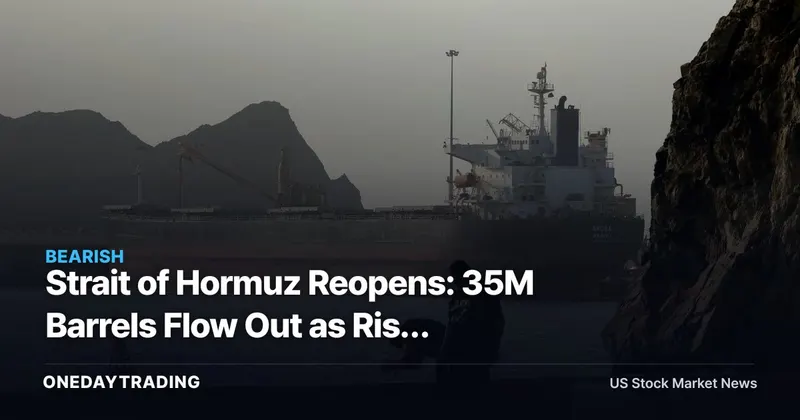
Roughly 35 million barrels of crude have moved out of the Persian Gulf through the Strait of Hormuz since the Iran deal, and the threat level for ships transiting the chokepoint has been downgraded to moderate. The combination of restored flows plus lower perceived risk works against the geopolitical premium that had been propping up oil, a net negative for producer margins and a relief for energy buyers.
Why It Matters Now
The Strait of Hormuz carries a large share of seaborne crude, so any disruption headline tends to inject a fear premium into prices that has little to do with actual barrels. When 35 million barrels physically clear the Gulf and the risk rating is formally cut to moderate, the market loses the excuse to price in worst-case supply loss. That mechanically compresses the spread between spot anxiety and underlying fundamentals.
For integrated majors, upstream revenue is leveraged directly to realized crude prices, so a fading premium trims the per-barrel uplift even though volumes are healthy. Refiners and crack-spread plays see the mirror image: cheaper feedstock and steadier supply support margins. Tanker owners face a split outcome — more cargoes transiting Hormuz lifts utilization, but a downgraded threat level deflates the elevated war-risk and insurance surcharges that had fattened spot charter rates.
FAQ
- What changed at Hormuz? Crude exports resumed at scale after the Iran deal, with about 35 million barrels exiting the Gulf and the shipping threat level reduced to moderate.
- Why is that bearish for oil? It removes the geopolitical scarcity premium and confirms supply is moving, narrowing the gap between fear-driven prices and physical fundamentals.
- Who benefits? Refiners, airlines and consumers exposed to lower input costs; tanker firms benefit from higher transit volumes if rates hold.
- What is the key risk? The moderate rating is not zero — any fresh escalation in the Gulf could snap the premium back instantly.
Related Stocks & Sectors
- ExxonMobil (XOM), Chevron (CVX) — upstream barrels are levered to realized crude, so a softer risk premium pressures per-barrel margins despite normal volumes.
- Frontline (FRO), Scorpio Tankers (STNG) — gain from more cargoes through Hormuz, but lose the war-risk surcharge embedded in spot rates.
- Refiners and airlines — lower and more stable crude feeds into better crack spreads and fuel costs.
- Energy sector ETFs — broad exposure to a deflating geopolitical bid in crude.
What to Watch
- WTI and Brent levels in the days after the threat downgrade — does the premium keep bleeding or stabilize.
- Tanker spot charter and insurance surcharge trends through Hormuz as risk normalizes.
- Any new Gulf incident that could reverse the moderate rating.
- Upcoming major oil earnings for guidance on realized prices versus volumes.
Overall Outlook
The bull case for energy names rests on sustained volumes and the fact that a moderate rating still carries latent escalation risk that could re-inflate the premium. The bear case is cleaner near term: physical barrels are moving, fear is being repriced lower, and crude that had leaned on geopolitical anxiety now has to justify itself on fundamentals alone. The deciding variable is whether the Gulf stays calm long enough for the discount to stick.
📊 Analysis
Signal Bearish
Why Restored Hormuz flows of 35 million barrels and a downgraded threat level deflate the geopolitical risk premium, pressuring crude prices and producer margins.
This article was independently written by OneDayTrading from public reporting. Read the original (CNBC)