Key Takeaways
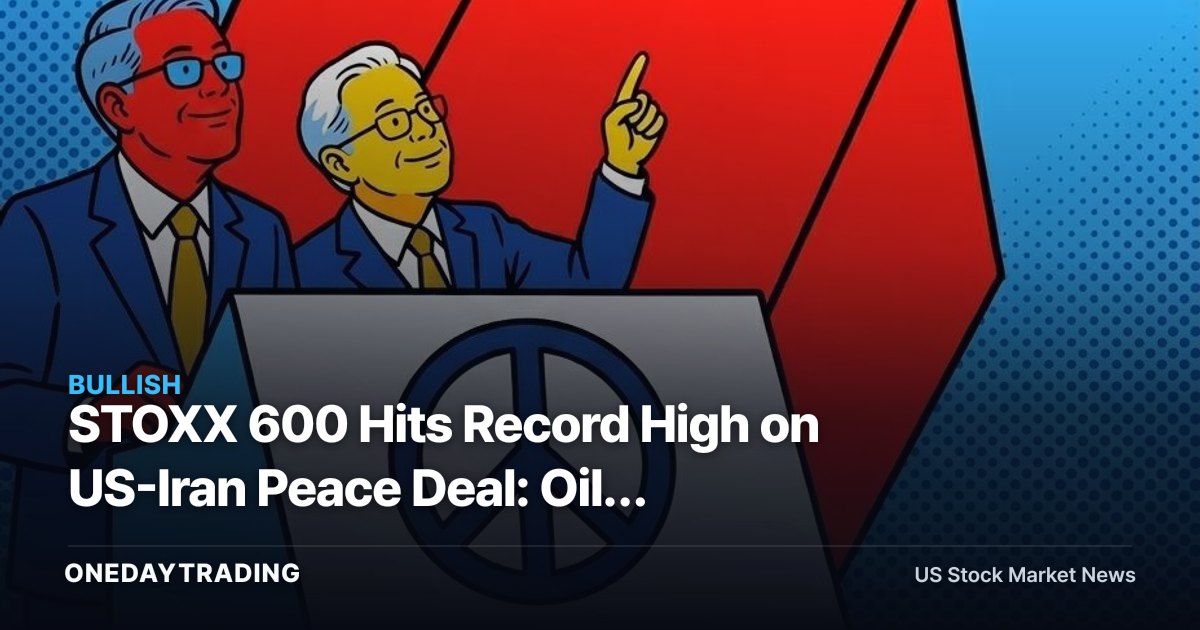
A reported US-Iran peace breakthrough pushed Europe's STOXX 600 to an all-time high, a classic risk-on reaction to falling geopolitical risk. The cleanest channel runs through energy: less Middle East tension typically drains the war premium out of crude, which helps fuel-heavy buyers and pressures oil producers and parts of defense.
What Happened
The STOXX 600, the broad benchmark for European equities, set a record high after news of a diplomatic breakthrough between the United States and Iran. Markets read the headline as a reduction in the tail risk that has periodically threatened shipping lanes, energy supply and regional stability.
When that risk premium compresses, two things tend to move together: equity indices rerate higher as investors demand less compensation for uncertainty, and crude oil softens because traders unwind supply-disruption bets. The rally being led by a European index, rather than a single sector, signals a broad-based shift in sentiment rather than a stock-specific story.
Background and Context
Middle East flashpoints have repeatedly injected a risk premium into oil over recent years, and energy costs feed directly into inflation, central-bank policy and corporate margins. A credible de-escalation removes one of the recurring shocks markets have had to price, which is why a single diplomatic headline can move a continent-wide benchmark.
Market and Stock Impact
- Oil majors (XOM, CVX): a lower geopolitical premium tends to cap crude prices, squeezing the upstream revenue that drives integrated oil earnings.
- Airlines (DAL, UAL): jet fuel is one of the largest single cost lines, so softer crude is a direct margin tailwind for carriers.
- Defense primes (LMT, RTX): easing conflict risk can weigh on the threat narrative that supports order pipelines, even if existing contracts run for years.
- Broad European and global equities (EWG, VGK): a falling risk premium lifts cyclical, export-heavy names most sensitive to global stability.
Investor Checkpoints
- Watch Brent and WTI crude for confirmation: a sustained drop would validate the peace-premium thesis; a quick reversal would signal skepticism.
- Track whether the deal moves from headline to durable framework, since markets often fade unverified diplomatic breakthroughs.
- Monitor airline and energy guidance for any change in fuel-cost or price-deck assumptions.
- Check whether the rally broadens into US indices or stays contained to Europe.
Outlook
The bull case is straightforward: less geopolitical risk plus cheaper energy supports margins and equity valuations across cyclicals. The risk is durability. Diplomatic breakthroughs can stall, and a record high reached on a single catalyst leaves indices exposed if the agreement frays or if the oil reaction proves short-lived. Position sizing should respect that the move is sentiment-driven, not yet earnings-confirmed.
📊 Analysis
Signal Bullish
Why A US-Iran de-escalation lowers the geopolitical risk premium, a positive catalyst for European and global equities and fuel-sensitive sectors.
Tickers$XOM$CVX$DAL$LMT$RTX
This article was independently written by OneDayTrading from public reporting. Read the original (Yahoo Finance)