At a Glance
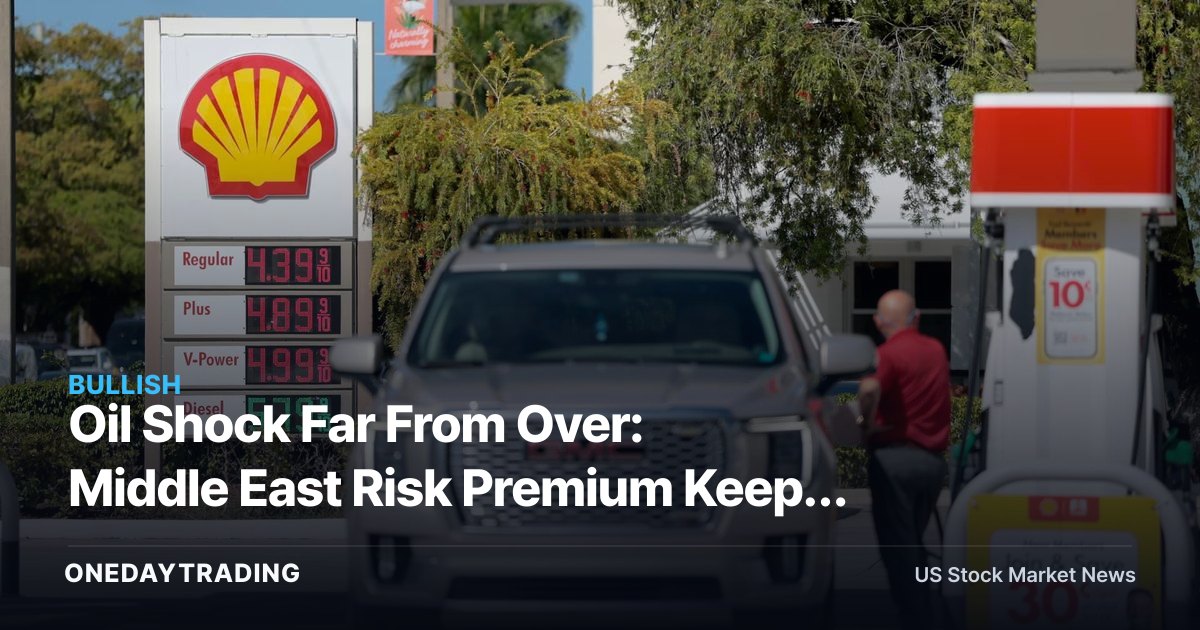
Commodity analysts say the oil shock is far from over, arguing that a fresh Middle East risk premium will keep crude prices volatile even after the U.S.-Iran peace agreement. The message for investors is that a diplomatic headline does not reset the supply-risk math, and energy exposure remains a two-way trade rather than a one-way relief rally.
Why It Matters Now
The core insight is about how markets price geopolitical risk. A peace agreement typically compresses the so-called risk premium embedded in crude, the extra dollars traders pay to insure against supply disruption through chokepoints like the Strait of Hormuz. When analysts say volatility will persist despite the deal, they are signaling that the premium is sticky because the underlying threat of re-escalation, sanctions enforcement, and shipping risk has not been structurally removed.
For equity investors, the channel runs through revenue and margins, not just sentiment. Integrated majors and exploration-and-production names capture higher realized prices directly in upstream revenue, so a durable premium supports cash flow and buyback capacity. The opposite holds for fuel buyers: airlines, shipping, and chemicals carry crude and refined products as a major cost line, so sustained price uncertainty pressures hedging budgets and forward margins. The key nuance is volatility itself, not just price level, because choppy crude makes hedging more expensive and planning harder across the energy supply chain.
FAQ
- What is a risk premium in oil? It is the extra price markets pay to hedge against supply disruption from conflict, sanctions, or blocked shipping routes.
- Why does it stay high after a peace deal? Analysts argue the structural threat of re-escalation and enforcement keeps uncertainty elevated even when headlines improve.
- Who benefits from sustained crude prices? Upstream producers that realize higher prices on each barrel, supporting cash flow.
- Who is hurt? Fuel-intensive sectors such as airlines and shipping that face higher and less predictable input costs.
Related Stocks & Sectors
- Exxon Mobil (XOM) and Chevron (CVX): integrated majors with large upstream segments that capture higher realized crude prices directly in revenue.
- Energy sector broadly: explorers and oilfield services benefit from a higher price floor that supports drilling activity.
- Airlines (DAL, UAL): jet fuel is a top cost line, so persistent crude volatility raises hedging cost and margin uncertainty.
- Oil ETFs (USO): a direct vehicle tracking crude that amplifies the volatility analysts are flagging.
What to Watch
- Whether crude holds an elevated floor or fades as deal optimism fades, the clearest read on the premium.
- Headlines on sanctions enforcement and Strait of Hormuz shipping activity for re-escalation signals.
- Next earnings from majors for realized price and cash-flow commentary.
- Airline guidance for fuel-cost assumptions that reveal hedging stress.
Overall Outlook
The bull case for energy names is straightforward: a structural risk premium underpins crude and supports producer cash flow even without a fresh conflict. The counter-scenario is equally real. If the peace agreement holds and supply fears genuinely ease, the premium can unwind quickly, and majors trading on elevated price assumptions would see estimates reset lower. The deciding variable is not the headline itself but whether disruption risk in the region is priced as resolved or merely paused.
📊 Analysis
Signal Bullish
Why A persistent Middle East risk premium supports crude prices and upstream producer cash flow even after the U.S.-Iran agreement.
Tickers$XOM$CVX$USO$DAL$UAL
This article was independently written by OneDayTrading from public reporting. Read the original (CNBC)