Summary
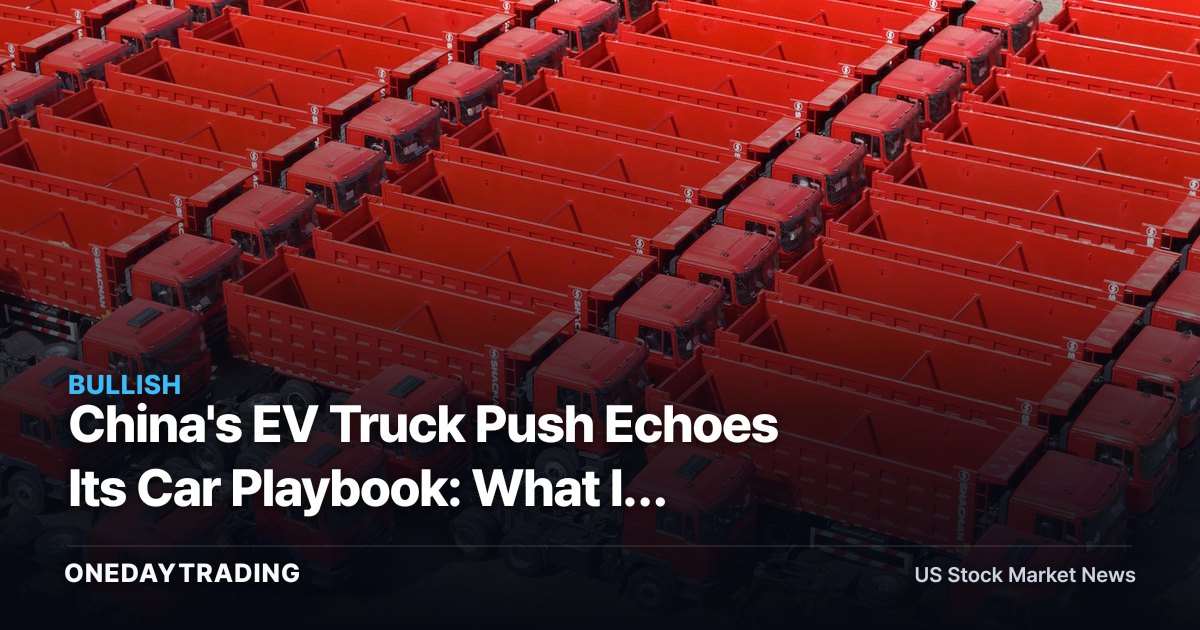
Beijing is steering the same subsidy-and-mandate toolkit that built the world's largest electric passenger-car market toward heavy electric trucks. The read for investors is a structural demand tailwind for Chinese commercial-EV and battery names, paired with a slow-burn threat to diesel powertrain and component suppliers.
The Full Story
The signal from CNBC's reporting is not a single product launch but a policy posture: China's central planners are treating electric trucks the way they treated new-energy passenger cars more than a decade ago. That earlier push combined purchase subsidies, license-plate advantages, charging buildout and procurement targets, and it turned a niche into the dominant growth segment of the domestic auto market.
Applying that template to trucks matters because commercial vehicles punish a disproportionate share of road fuel use and emissions relative to their unit count. A policy that nudges fleet operators toward battery-electric and fuel-cell trucks reshapes total cost of ownership math, where electricity and maintenance savings can offset higher upfront prices over high-mileage duty cycles. That is the specific channel through which demand gets pulled forward.
Structural Background
The passenger-car precedent is the key analytical anchor: China demonstrated that sustained state demand-pull can compress an adoption curve that markets alone would stretch over decades. Trucks are a harder problem because payload, range and charging time are operationally binding, which is why the policy is likely to lean on depot charging, battery-swap models and fuel-cell pilots rather than a simple subsidy copy-paste.
Stock & Sector Ripple
- BYD (BYDDY) — already vertically integrated across batteries, electric buses and commercial vehicles, giving it the broadest exposure to a truck mandate and cost control rivals lack.
- NIO, Li Auto, XPeng (NIO, LI, XPEV) — primarily passenger-focused, so the direct truck benefit is limited, but a friendlier NEV policy backdrop and charging/swap infrastructure spend spills over to their ecosystem.
- Battery and materials supply chain — heavier truck packs mean more cells per vehicle, lifting volume demand for lithium-iron-phosphate chemistry that Chinese suppliers dominate.
- Legacy diesel and Western truck makers (PCAR) — face a competitive and policy headwind in China and potential low-cost export pressure if Chinese electric trucks scale.
Bull vs Bear Scenarios
Bull case: a truck mandate replays the passenger-car flywheel, handing scale and global cost leadership to Chinese commercial-EV and battery firms. Bear case: truck electrification stalls on charging economics and freight-operator caution, subsidies get trimmed amid fiscal strain, and rising trade barriers in the US and EU cap the export upside that underpins the growth thesis.
Investor Action Points
- Track concrete policy text — subsidy size, procurement quotas and timelines — since vague intent and funded mandates move stocks differently.
- Watch BYD's commercial-vehicle and battery segment disclosures in upcoming quarterly results for truck-unit traction.
- Monitor US and EU tariff actions on Chinese EVs, the main external risk to the export leg of the thesis.
- Check charging and battery-swap infrastructure announcements as the leading indicator of whether truck adoption can actually scale.
Market data check: BYDDY
BYDDY last traded near $9.94 (-3.40%). Our composite signal — blending price momentum and news flow — reads 🟡 neutral. Price momentum scores 23/100 (soft).
Data as of publication. Price via market feeds; for reference only, not investment advice.
📊 Analysis
Signal Bullish
Why A state-led policy template that succeeded for passenger cars is being extended to trucks, creating a demand tailwind for Chinese commercial-EV and battery makers.
Tickers$BYDDY$LI$NIO$XPEV$PCAR
This article was independently written by OneDayTrading from public reporting. Read the original (CNBC)