Key Takeaways
Iran has reportedly closed the Strait of Hormuz once more, this time framing it as a response to ongoing Israeli military operations in Lebanon. The strait is the single most important chokepoint for seaborne crude and LNG, so any credible closure pressures oil prices higher and reshapes the risk-reward across energy, transport, and defense names. The same shock that lifts producers squeezes fuel-cost-heavy businesses.
What Happened
According to a report cited by CNBC, Iran's joint military command announced the closure of the Strait of Hormuz, explicitly tying the move to continued Israeli operations in Lebanon. The development also casts a shadow over parallel nuclear negotiations, adding a diplomatic dimension to an already tense security backdrop.
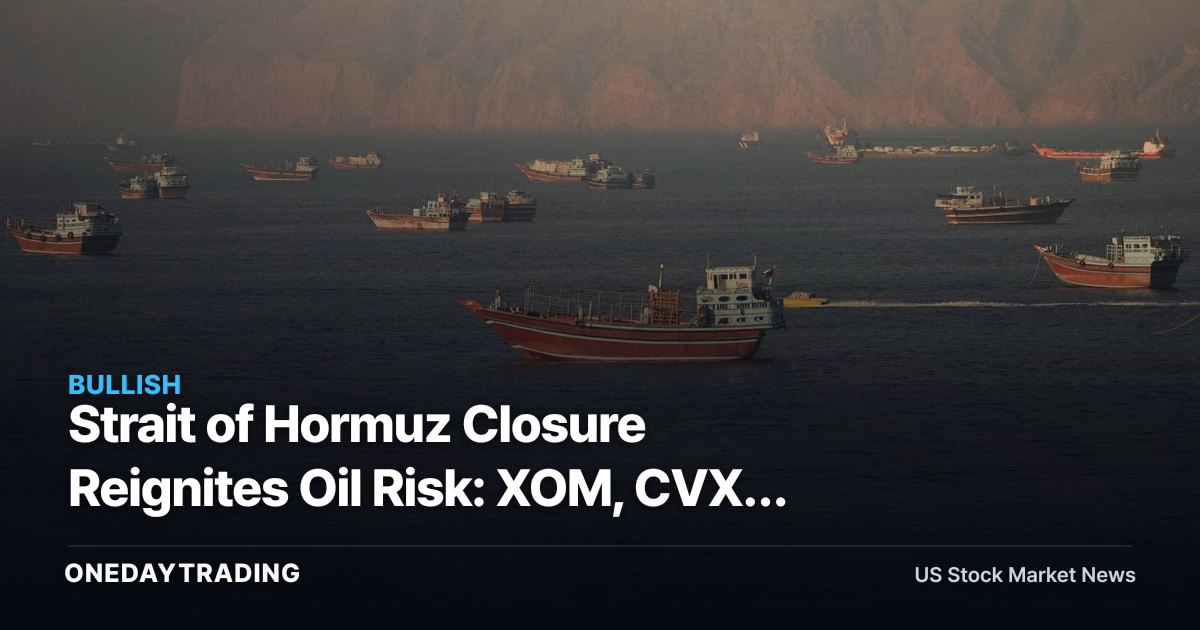
The strait connects the Persian Gulf to the open ocean and is the export route for crude from Saudi Arabia, Iraq, Kuwait, the UAE, and Iran itself, alongside a large share of global liquefied natural gas. There is no easy substitute: pipeline bypass capacity is limited relative to the volumes that normally transit the waterway. Even if a full physical closure proves short-lived or partial, the headline alone tends to embed a geopolitical risk premium into crude futures.
Background and Context
Hormuz threats have surfaced repeatedly during past Gulf tensions, and markets have learned to price the gap between rhetoric and sustained disruption. What makes this iteration notable is the linkage to an active Israel-Lebanon conflict and the overlay on nuclear talks, which raises the odds of miscalculation. The key variable is duration and enforcement: a brief symbolic gesture versus a multi-week interdiction of tanker traffic are very different outcomes for supply.
Market and Stock Impact
- Integrated oil majors (XOM, CVX): Higher crude benchmarks lift upstream realizations and cash flow; their diversified portfolios capture the price spike directly, making them the cleanest beneficiaries of a supply scare.
- Oil ETFs and producers (USO, COP, OXY): Price-tracking vehicles and leveraged shale producers gain most when spot crude jumps, given high operating leverage to the marginal barrel.
- Airlines (DAL, UAL): Jet fuel is one of the largest cost lines; a sustained crude rally compresses margins and pressures earnings into the next quarter.
- Tankers and LNG shippers: Rerouting and war-risk insurance can spike day rates, a potential tailwind for crude and gas carriers even as cargo volumes face disruption.
Investor Checkpoints
- Confirmation of whether tanker traffic is physically halted versus a rhetorical closure, and for how long.
- Brent and WTI levels and the shape of the futures curve, which signal how lasting the market expects the disruption to be.
- Status of the nuclear talks and any U.S. or Gulf naval response that could escalate or de-escalate.
- Energy sector guidance and airline cost commentary at the next round of earnings.
Outlook
The bull case for energy rests on a genuine, prolonged supply interruption that keeps a premium in crude. The counter-scenario is just as real: past Hormuz scares have often faded within days, and a quick reopening or diplomatic off-ramp could unwind the spike, leaving late buyers exposed and handing relief to fuel-sensitive sectors. Positioning here is a bet on duration, not direction alone.
📊 Analysis
Signal Bullish
Why A reported Hormuz closure threatens global crude supply, a classic catalyst that lifts oil prices and energy producers.
Tickers$XOM$CVX$USO$COP$OXY$DAL
This article was independently written by OneDayTrading from public reporting. Read the original (CNBC)