At a Glance
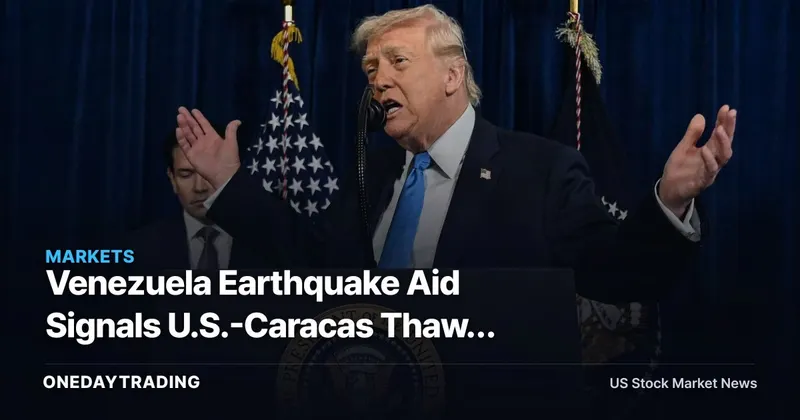
A disaster headline carries a market subtext. Historic earthquakes that killed dozens in Venezuela prompted the Trump administration to pledge a rapid U.S. response, and Washington framed the gesture as part of a wider diplomatic realignment with the Venezuelan interim government. For investors, the humanitarian story matters less than the channel it could open: any normalization with one of the world's largest holders of crude reserves feeds directly into sanctions policy, oil supply and a small set of U.S. energy names.
Why It Matters Now
Venezuela sits on the planet's largest proven oil reserves, but sanctions and underinvestment have kept its output far below potential. A warming of relations — even one triggered by disaster diplomacy rather than a formal policy shift — raises the question of whether U.S. licenses for operating in the country are widened or tightened. That distinction is the whole investment case. The company most exposed is Chevron, which has held a specific U.S. authorization to run joint ventures and lift crude in Venezuela; clearer political footing supports operational continuity, while a hardline turn toward the interim government's rivals could disrupt it.
The second channel is global crude pricing. More Venezuelan barrels reaching legal export markets would add supply at the margin — a mild headwind for oil prices and therefore a mixed signal for high-cost U.S. producers even as it helps Gulf Coast refiners configured for heavy, sour crude. The catch is that nothing concrete has been announced. A disaster-relief pledge is not a sanctions decision, and Venezuela policy has reversed direction repeatedly across administrations.
FAQ
- Is this a sanctions change? No. The source describes humanitarian aid and a diplomatic realignment, not a formal easing or tightening of sanctions.
- Which company is most exposed? Chevron, given its existing U.S.-authorized operations and crude-lifting in Venezuela.
- Is this bullish or bearish for oil? Ambiguous — added Venezuelan supply is mildly bearish for crude prices but can benefit specific operators and heavy-crude refiners.
- What is the key uncertainty? Whether engagement with the interim government translates into actual licensing changes, which remains unconfirmed.
Related Stocks & Sectors
- Chevron (CVX) — most directly tied via its Venezuela operating authorization; relationship clarity affects production continuity.
- Exxon Mobil (XOM) — broad integrated-oil exposure to crude prices and regional supply dynamics.
- U.S. refiners (VLO, PSX) — Gulf Coast plants tuned for heavy, sour grades could benefit from added Venezuelan barrels.
- Energy sector broadly — geopolitical supply shifts move sentiment across exploration and production names.
What to Watch
- Any official U.S. statement on Venezuela sanctions or licensing following the aid pledge.
- Chevron's next earnings commentary and disclosures on Venezuela volumes and authorizations.
- WTI and Brent price reaction to supply-side headlines.
- Whether U.S. recognition firmly backs the interim government and what that implies for existing energy agreements.
Overall Outlook
The bull thread for energy investors is straightforward: improved U.S.-Venezuela ties historically support Chevron's on-the-ground position and can reroute heavy crude into legal channels that U.S. refiners value. The counterweight is equally clear — this is a humanitarian gesture, not policy, and Venezuela exposure has burned investors before through abrupt reversals and contract risk. Treat the diplomatic signal as a variable to track, not a confirmed catalyst, and let actual licensing language do the directional work.
📊 Analysis
Signal Neutral
Why A humanitarian aid pledge hints at a U.S.-Venezuela thaw but includes no concrete sanctions or licensing action, leaving the oil-supply and Chevron impact genuinely two-sided.
This article was independently written by OneDayTrading from public reporting. Read the original (CNBC)