At a Glance
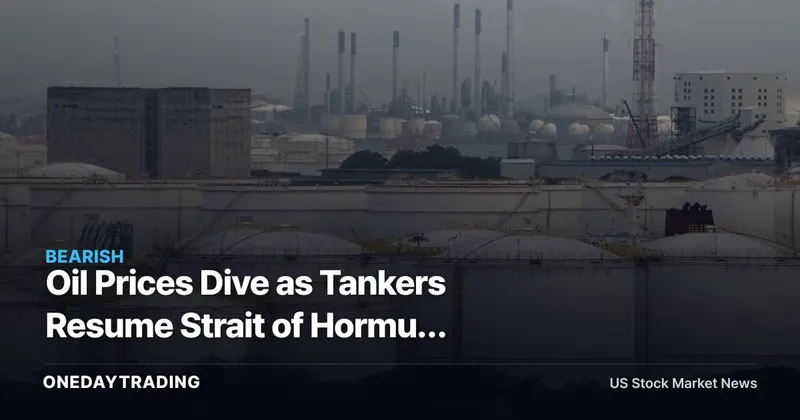
Crude prices fell as a greater number of tankers transited the Strait of Hormuz, signaling that the worst-case blockade scenario traders had been pricing is receding. The move bleeds the geopolitical risk premium out of oil, which cuts both ways: it pressures upstream producers while relieving fuel-cost strain on transport and consumer names.
Why It Matters Now
The Strait of Hormuz is the single most important chokepoint in the global energy map, the passage through which a large share of seaborne crude and LNG must travel. When traffic thins on disruption fears, the market prices in a scarcity premium; when tanker counts rise again, that premium unwinds fast. The current decline reflects the second dynamic — physical barrels are still flowing, so the feared supply shock has not materialized.
For integrated and exploration-and-production companies, the read-through is direct. Their earnings track the realized price of each barrel, so a falling spot price compresses cash flow per unit of output even when volumes hold steady. The names with the highest sensitivity are pure-play producers whose margins lack downstream refining offsets to cushion a price drop.
The mirror image is the demand side of the energy bill. Airlines, shippers and logistics operators treat fuel as one of their largest variable costs, so a lower crude curve flows toward wider operating margins. Consumer discretionary spending also benefits indirectly as gasoline pressure eases.
FAQ
- Why did oil fall on more tankers? More transits signal the supply route is open, removing the disruption premium that fear of a chokepoint closure had built into prices.
- Who is hurt most? Upstream producers whose revenue is tied to the realized crude price without a refining hedge.
- Who benefits? Fuel-intensive sectors — airlines, freight, shipping — and consumers facing lower pump prices.
- Is this a trend or a headline? It is a risk-premium unwind; the durable price floor still depends on OPEC supply policy and underlying demand, not tanker counts alone.
Related Stocks & Sectors
- ExxonMobil (XOM), Chevron (CVX) — integrated majors with large upstream books; lower crude trims per-barrel cash flow, partially buffered by downstream segments.
- Occidental (OXY) — higher upstream leverage means sharper earnings sensitivity to spot price.
- Delta (DAL), Southwest (LUV) — jet fuel is a top cost line; falling crude widens margins.
- Energy sector ETFs and oilfield services — track producer capex appetite, which softens as price expectations cool.
What to Watch
- Daily tanker transit counts through Hormuz as the real-time gauge of risk-premium direction.
- The next OPEC+ output decision, the structural lever on supply that outweighs short-term traffic data.
- WTI and Brent spreads and the futures curve shape for signs of sustained de-escalation versus a bounce.
- Producer guidance at the next earnings round for how management models the price deck.
Overall Outlook
The bull case for crude rests on any renewed chokepoint threat or an OPEC+ supply cut snapping the premium back; the bear case is that open transit confirms barrels keep flowing into an adequately supplied market. For equities, the cleaner trade is the cost-relief beneficiaries rather than a directional producer call, because the price move here is about removed fear, not changed fundamental demand. The key variable remains policy and physical supply, not the headline that triggered the drop.
📊 Analysis
Signal Bearish
Why Falling crude prices compress per-barrel cash flow for oil producers as the geopolitical risk premium unwinds.
Tickers$XOM$CVX$OXY$DAL$LUV
This article was independently written by OneDayTrading from public reporting. Read the original (Yahoo Finance)