Summary
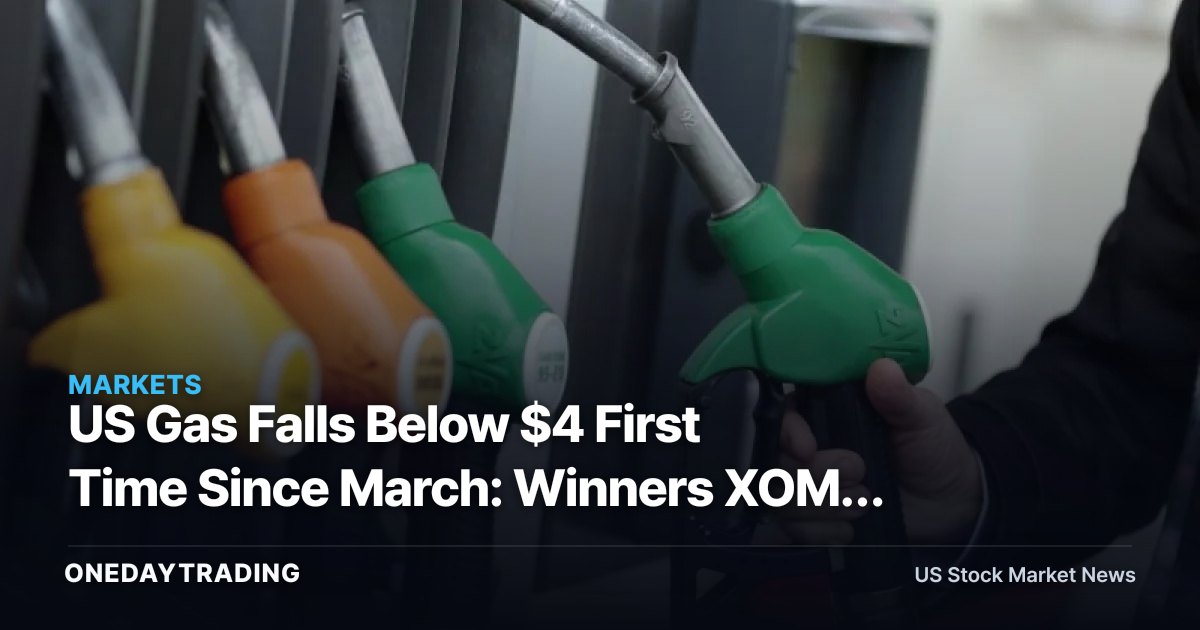
The US national average for gasoline has dropped below $4 per gallon for the first time since March, a move that quietly redistributes profit across the energy chain. Lower pump prices act like a tax cut for households but compress the crack spreads that drive refiner earnings, so the read-through is not uniformly positive across the sector.
The Full Story
Falling retail gasoline typically reflects some mix of softer crude oil input costs, ample refining throughput heading into or out of peak driving season, and steady-to-weak demand. When the pump price breaks a psychological level like $4, it tends to lift discretionary spending capacity for lower- and middle-income consumers, who spend a larger share of income on fuel.
The dividing line for investors is upstream versus downstream. Integrated majors and pure refiners do not all win when gasoline cheapens: refining margins depend on the spread between crude they buy and the products they sell, so a faster drop in product prices than in crude can squeeze downstream profitability even as drivers cheer.
Structural Background
Gasoline is one of the most visible prices in the US economy and feeds directly into headline inflation. A sustained move under $4 can cool the energy component of CPI, which matters for the rate path and, by extension, for rate-sensitive equities. The effect on corporate earnings, however, runs through margins and volumes rather than the headline price alone.
Stock & Sector Ripple
- Refiners (VLO, MPC, PSX): most exposed to crack-spread compression if product prices fall faster than crude; margin per barrel is the key variable, not the pump price itself.
- Integrated majors (XOM, CVX): cushioned by upstream and chemicals diversification, but downstream segments still feel softer gasoline.
- Discount retail (WMT, COST): lower fuel costs free up consumer wallet share for general merchandise, a modest demand tailwind.
- Airlines and freight (DAL, UAL): cheaper refined products can ease jet-fuel and diesel costs, a direct input-cost benefit if the decline persists.
Bull vs Bear Scenarios
Bull case: cheaper fuel supports consumer spending and eases inflation pressure, helping retailers, transports, and the broader rate outlook. Bear case: if prices are falling because demand is weakening, that signals a softening economy rather than a clean consumer windfall, and refiners face margin pain regardless of the cause. The key swing factor is whether crude or product prices are leading the move.
Investor Action Points
- Watch crack spreads and refiner guidance at the next earnings round to gauge real margin impact, not just the pump headline.
- Track whether crude is falling alongside gasoline (margin-neutral) or lagging (margin-negative for refiners).
- Monitor weekly inventory and demand data to separate a supply-driven drop from a demand-weakness signal.
- For consumer names, look for fuel savings showing up in same-store sales and discretionary categories.
📊 Analysis
Signal Neutral
Why Cheaper gasoline aids consumers, retailers and transports but pressures refiner crack spreads, so the net directional impact across the energy complex is genuinely mixed.
Tickers$XOM$CVX$VLO$MPC$WMT$DAL
This article was independently written by OneDayTrading from public reporting. Read the original (Yahoo Finance)