Summary
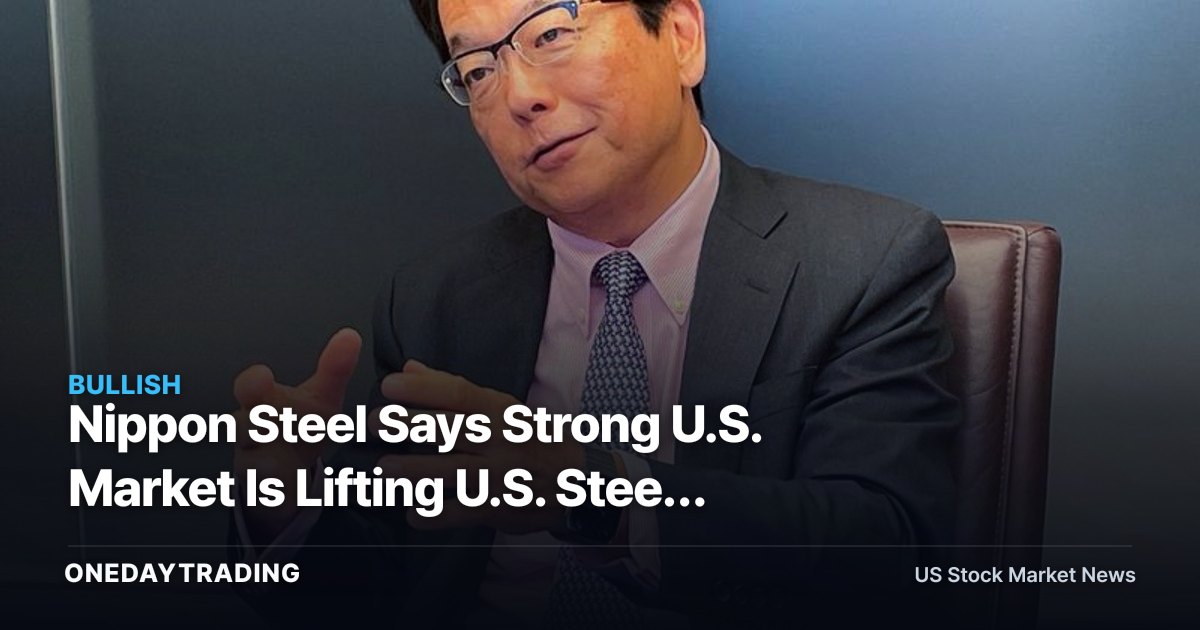
Nippon Steel signaling that a strong American market is lifting U.S. Steel earnings is the first concrete validation of the strategic logic behind its U.S. Steel takeover. The message matters less for the now-absorbed U.S. Steel and more for what it confirms about domestic steel pricing power, which flows straight to listed peers like Nucor, Steel Dynamics and Cleveland-Cliffs.
The Full Story
The headline takeaway is that demand and pricing inside the United States are running strong enough that Nippon Steel is publicly crediting the American market for improving U.S. Steel results. For a Japanese steelmaker that paid a premium and fought a long political battle to own American capacity, this is the outcome it underwrote: a high-price, tariff-protected market where domestic mills earn better margins than the global commodity average.
The read-through for investors is structural, not just a one-quarter data point. U.S. Steel is no longer separately tradable, so the cleanest way to express the same thesis is through the publicly listed domestic producers that sell into the identical end markets, automotive, construction, energy and appliances, at the same elevated domestic prices.
Structural Background
American steel prices have persistently traded above import-parity levels because Section 232 tariffs and trade barriers wall off cheaper foreign supply. That premium is precisely why a foreign buyer wanted U.S. capacity rather than simply exporting into the market. The same protection that boosts U.S. Steel margins is a tailwind for every domestic mill, which is the core of the investable angle here.
Stock and Sector Ripple
- NPSCY (Nippon Steel ADR): The subject and acquirer; a profitable U.S. arm helps justify the deal price and diversifies it away from slower Asian demand.
- NUE (Nucor): The largest U.S. producer and a pure-play on domestic pricing; strong American demand lifts its mini-mill spreads directly.
- STLD (Steel Dynamics): Similar low-cost EAF model with heavy exposure to U.S. construction and automotive sheet pricing.
- CLF (Cleveland-Cliffs): Most leveraged to auto-grade flat-rolled steel; benefits from firm domestic prices but carries higher debt and operating leverage.
- Steel sector and industrials: Sustained domestic pricing supports capex and margin assumptions across the group.
Bull vs Bear Scenarios
The bull case is straightforward: protected pricing plus resilient end-demand keeps margins elevated, and a foreign owner publicly confirming strength is a credible signal. The bear case is that steel is deeply cyclical and price-dependent; if construction softens, auto build rates slip, or hot-rolled coil prices roll over, today's strong market reverses quickly. Tariff policy is also a political variable, any easing of trade barriers would compress the domestic premium that underpins the whole thesis.
Investor Action Points
- Track U.S. hot-rolled coil spot prices weekly as the leading indicator of domestic mill margins.
- Watch the next earnings prints from NUE, STLD and CLF for guidance on shipment volumes and average selling prices.
- Monitor any policy headlines on Section 232 tariffs and trade exemptions that could alter the domestic price floor.
- Check auto production and construction starts as the demand backbone for flat-rolled steel.
Market data check: NPSCY
NPSCY last traded near $3.55 (+1.14%). Our composite signal — blending price momentum and news flow — reads 🟡 neutral. Price momentum scores 59/100.
Data as of publication. Price via market feeds; for reference only, not investment advice.
📊 Analysis
Signal Bullish
Why Confirmation that a strong American market is lifting U.S. Steel earnings signals firm domestic steel pricing and demand, a positive read-through for U.S.-listed steel producers.
Tickers$NPSCY$NUE$STLD$CLF
This article was independently written by OneDayTrading from public reporting. Read the original (Yahoo Finance)