Summary
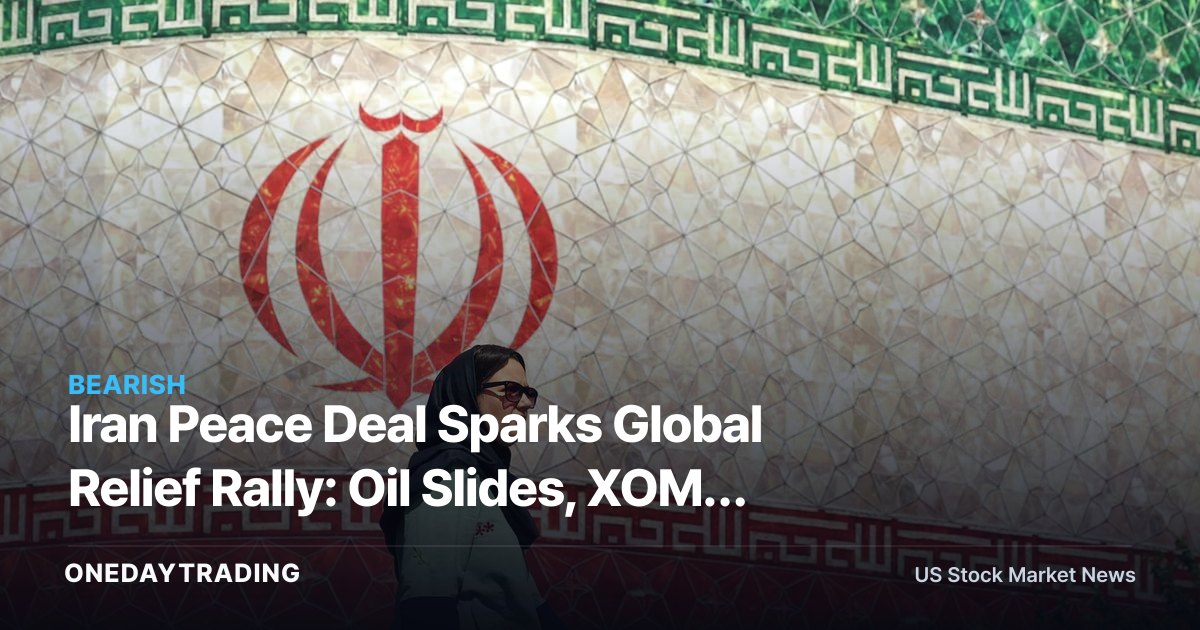
A peace deal involving Iran has triggered a broad relief rally across global equity markets, with investors betting that an end to the conflict will calm energy markets. The immediate read-through is downward pressure on crude oil and the energy producers most exposed to elevated prices, alongside a tailwind for fuel-sensitive sectors and risk assets generally.
The Full Story
The catalyst is a diplomatic breakthrough that markets interpret as removing a major source of geopolitical risk premium that had been embedded in oil prices. When war risk in the Middle East fades, the so-called fear premium that traders attach to barrels of crude tends to deflate, and that mechanical move ripples straight into equity index futures and sector positioning.
For months, elevated energy costs have weighed on economies worldwide, squeezing consumers through higher fuel and utility bills and pressuring corporate margins across transport, manufacturing and chemicals. A credible path toward lower energy prices changes that calculus, which is why the reaction was a relief rally rather than a narrow energy-only move. Lower input costs feed into cooler inflation expectations, which in turn supports the case for friendlier monetary policy.
Structural Background
Oil is the swing variable that links geopolitics to the real economy. A meaningful share of any conflict-driven price spike is risk premium rather than physical shortage, so de-escalation can unwind quickly. Crucially, cheaper energy acts like a tax cut for importing economies and consumers, lifting discretionary spending power even as it compresses the revenue of producers.
Stock & Sector Ripple
- XOM, CVX (oil majors): Falling crude reduces upstream realizations and can pressure earnings expectations.
- Airlines (DAL, AAL): Jet fuel is a top cost line, so lower oil is a direct margin tailwind.
- Consumer and retail: Cheaper gasoline frees up household budgets, supporting discretionary spending.
- Broad market (S&P 500): Reduced geopolitical risk and cooler inflation expectations lift risk appetite.
Bull vs Bear Scenarios
Bulls argue that durable de-escalation lowers oil, cools inflation, and clears the way for rate relief, extending the rally into cyclicals and consumer names. Bears counter that peace deals can unravel, that any supply disruption could snap crude higher again, and that an oil slide hurts the energy sector that has been a reliable earnings and dividend engine. A sustained crude decline also risks signaling weaker global demand rather than pure risk-premium unwind.
Investor Action Points
- Watch crude oil as the lead indicator; the durability of the move depends on whether the price decline holds.
- Reassess energy exposure (XOM, CVX) versus fuel-sensitive winners like airlines and transports.
- Treat the relief rally as headline-driven and stay alert to reversal risk if the deal falters.
- Monitor inflation and rate expectations, since cheaper energy strengthens the easing narrative.
📊 Analysis
Signal Bearish
Why An Iran peace deal deflates the geopolitical risk premium in oil, pressuring crude and the energy producers most levered to high prices even as the broad market rallies.
This article was independently written by OneDayTrading from public reporting. Read the original (CNBC)