Key Takeaways
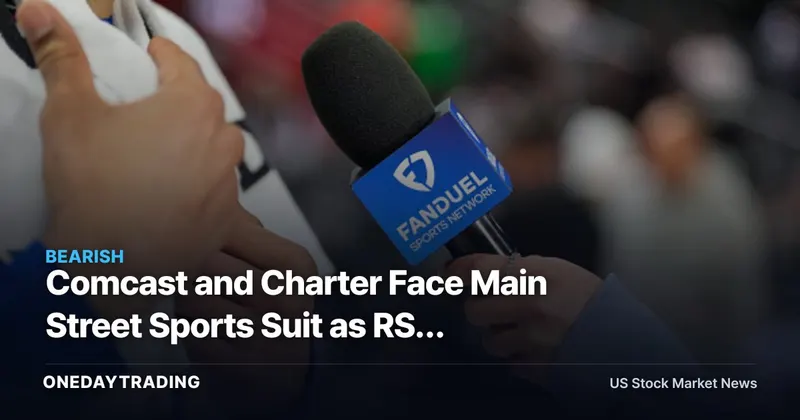
Comcast and Charter face a Main Street Sports lawsuit over allegedly underpaid licensing fees, and the investor issue is not the headline litigation alone but whether regional sports network obligations still carry cash-cost risk while Main Street Sports winds down its RSN portfolio.
Per CNBC's reporting, Main Street Sports has been winding down its regional sports networks since the NHL and NBA seasons ended earlier this year, putting distribution payments, contract language and media cost discipline back in focus for cable operators.
What Happened
Main Street Sports sued Comcast and Charter over allegedly underpaid licensing fees, according to CNBC. The source description did not provide a dollar amount, a court venue, or the specific contract period tied to the disputed payments.
Regional sports network licensing fees are payments distributors make to carry local sports channels, and those fees matter because live NBA and NHL programming has historically supported higher affiliate economics than general entertainment channels.
The timing sharpens the dispute. Main Street Sports has been winding down its portfolio of regional sports networks since the NHL and NBA seasons ended earlier this year, which means the fight centers on value extraction from contracts tied to assets already moving toward exit rather than expansion.
Background & Context
The regional sports network model sits between teams, leagues, rights holders and pay-TV distributors. Comcast and Charter are exposed through carriage economics: higher licensing costs pressure video margins, while aggressive resistance risks litigation or channel disruption.
Main Street Sports' wind-down changes the negotiation balance. A seller in retreat still has contractual claims, but Comcast and Charter can argue from a shrinking end-market where cord-cutting has made legacy sports bundles harder to monetize.
Market & Stock Impact
- Comcast CMCSA: Comcast faces potential payment or settlement risk if Main Street Sports proves underpaid licensing fees, but Comcast's broader cable, broadband and media mix dilutes any single RSN dispute.
- Charter CHTR: Charter is more directly read through as a distributor with video-margin sensitivity, so licensing-fee leakage matters if the suit exposes broader sports-carriage liabilities.
- Regional sports networks: Main Street Sports' wind-down after the NHL and NBA seasons shows the RSN sector remains under pressure even when live sports rights retain audience value.
- Pay-TV distributors: Cable operators benefit if declining RSN economics reduce future carriage costs, but adverse contract rulings can turn that benefit into near-term cash outflow.
Investor Checkpoints
- Check whether court filings disclose the alleged underpayment amount, the contract years and whether Comcast and Charter face separate or similar claims.
- Track Comcast and Charter commentary in the next earnings calls for video margin, programming-cost inflation and any litigation reserve language.
- Watch whether Main Street Sports' RSN wind-down produces additional disputes with distributors after the NHL and NBA season cycle.
- Follow any settlement terms because a cash payment matters less than whether the agreement resets how RSN fees are calculated.
Outlook
The bear case for Comcast and Charter is narrow but real: a licensing-fee dispute can reveal cost exposure that investors had assumed was fading with the RSN wind-down. The bull case is that the absence of a disclosed dollar figure in the provided CNBC summary keeps the financial risk unquantified, and both distributors have scale to absorb a contained settlement.
The next market-moving detail is not another headline saying the lawsuit exists. The next catalyst is a filing, settlement, earnings-call disclosure or contract detail that shows whether the alleged underpayment is immaterial cleanup or evidence of broader sports-rights cost risk.
FAQ
Why did Main Street Sports sue Comcast and Charter?
Main Street Sports sued Comcast and Charter over allegedly underpaid licensing fees, according to CNBC. The provided source did not specify the amount of the alleged underpayment or the precise contract period.
What are regional sports network licensing fees?
Regional sports network licensing fees are carriage payments that cable distributors make to carry local sports channels. For Comcast and Charter, regional sports network fees affect video profitability because sports programming often carries higher content costs than many general entertainment networks.
How does the Main Street Sports wind-down affect Comcast and Charter stock?
Main Street Sports has been winding down its regional sports network portfolio since the NHL and NBA seasons ended earlier this year, per CNBC. For Comcast and Charter stock, the key question is whether the wind-down reduces future programming costs or creates litigation payments tied to past carriage contracts.
Market data check: CMCSA
CMCSA last traded near $27.05 (+0.74%). Our composite signal — blending price momentum and news flow — reads 🟡 neutral. Price momentum scores 56/100. Recent coverage skews mixed (1 vs 1).
Data as of publication. Price via market feeds; for reference only, not investment advice.
📊 Analysis
Signal Bearish
Why The lawsuit creates potential payment and contract-risk exposure for Comcast and Charter, even though the provided source does not quantify the alleged underpaid licensing fees.
This article was independently written by OneDayTrading from public reporting. Read the original (CNBC)