What Changes
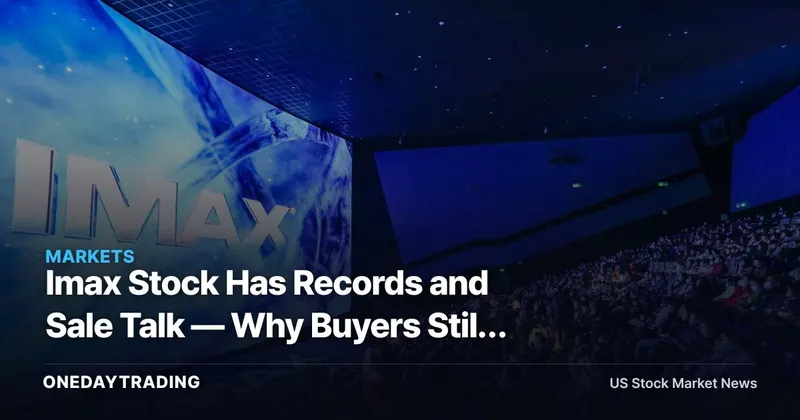
Imax Corporation (IMAX) is a premium cinema-technology and large-format exhibition company whose business depends on theater installations, branded releases and studio participation in event films.
The CNBC report changes the investor debate from operating recovery to strategic scarcity. Imax Corporation (IMAX) has record stock performance and record box-office momentum, according to CNBC, but a sale process rewards assets that are both scarce and transferable. Imax is scarce; transferability is the problem.
The tension sits in the customer map. A media buyer could gain a premium theatrical platform, but the same buyer could also become a competitor or gatekeeper to studios that need neutral access. Imax Corporation (IMAX) earns value from being useful to multiple studios, so the wrong owner can reduce the very demand an acquisition seeks to capture.
By the Numbers
The CNBC source provides no deal price, no bidder list and no valuation multiple, which matters because sale optionality cannot be modeled as a cash bid without those figures. The concrete facts are still investable: Imax Corporation (IMAX) has a record stock, record box office and a valuation high enough for CNBC to describe it as soaring.
That combination creates a narrower transaction window. A high share price raises the premium needed to persuade Imax Corporation (IMAX) holders, while studio conflicts reduce the number of strategic acquirers able to justify paying that premium.
Winners & Losers
- Imax Corporation (IMAX): Imax Corporation (IMAX) keeps strategic leverage because record box office supports the platform story, but the stock also carries less obvious takeover upside if valuation already reflects scarcity.
- Hollywood studios: Major film distributors benefit from Imax Corporation (IMAX) remaining broadly available because premium formats can amplify event-film economics without handing control to a rival studio owner.
- Exhibitors: Theater operators tied to premium screens benefit from strong Imax box office, but a buyer that changes studio economics could disrupt release allocation and screen utilization.
- Media acquirers: Potential buyers face the cleanest strategic logic and the messiest conflict risk, because owning Imax Corporation (IMAX) may make neutral studio relationships harder to preserve.
Risk Check
- Imax Corporation (IMAX) valuation risk rises when record stock performance leaves little room for a buyer to add a takeover premium.
- Imax Corporation (IMAX) deal risk rises when studio conflicts limit the strategic bidder pool before price negotiations even begin.
- Imax Corporation (IMAX) operating risk would increase if record box-office momentum cools before any sale process becomes concrete.
- Imax Corporation (IMAX) upside remains if a financial buyer or neutral strategic buyer can protect studio access while accepting a high entry valuation.
Bottom Line
Imax Corporation (IMAX) has the asset profile buyers want and the ownership problem buyers hesitate to underwrite. Record box office supports the premium-cinema thesis, but a sale only creates shareholder value if the buyer preserves studio neutrality and pays a price that does not depend on perfect theatrical momentum.
FAQ
Why is no one buying Imax if Imax is open to a sale?
Imax Corporation (IMAX) is difficult to buy because CNBC reports that studio conflicts and a soaring valuation complicate the bidder list. A buyer must pay for record stock and box-office strength without damaging studio relationships that support the Imax platform.
What does Imax sale talk mean for IMAX stock?
Imax Corporation (IMAX) sale talk adds strategic optionality, but CNBC's report suggests the takeover premium is constrained by valuation and conflicts. IMAX stock already reflects record performance, so investors should separate operating strength from deal certainty.
Which sector is most affected by the Imax sale question?
Imax Corporation (IMAX) primarily affects the media and cinema-exhibition sector because the issue is control of premium theatrical distribution. Studios, exhibitors and media conglomerates all depend on how Imax access is allocated across major film releases.
Market data check: IMAX
IMAX last traded near $50.22 (-3.32%). Our composite signal — blending price momentum and news flow — reads 🟡 neutral. Price momentum scores 23/100 (soft).
Data as of publication. Price via market feeds; for reference only, not investment advice.
📊 Analysis
Signal Neutral
Why Record stock and box-office momentum support IMAX fundamentals, but high valuation and studio-conflict risk limit clear takeover upside.
This article was independently written by OneDayTrading from public reporting. Read the original (CNBC)