
3-Line Briefing
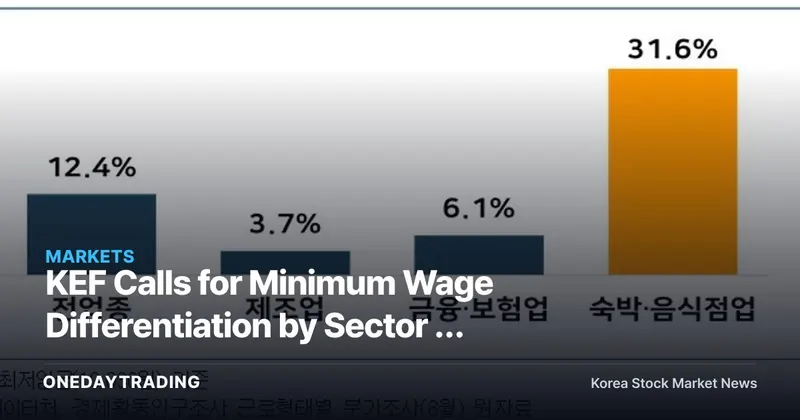
- At the Minimum Wage Commission deliberating the minimum wage to take effect in 2027, the KEF has once again called for a sector-specific application to the lodging and restaurant industries.
- As it did last year, the KEF this year again put forward differentiated treatment for the restaurant industry as its key card, citing the fact that 21 OECD countries differentiate the minimum wage by industry, age, or region.
- Whether it is actually adopted hinges on labor-management negotiations and a vote, so the current stage remains one of proposal and discussion.
What Changes
The crux is whether Korea will alter its long-standing approach of applying a single, uniform minimum wage across all industry sectors. The KEF argues that the lodging and restaurant industries have a high share of small, independent businesses that struggle to bear labor costs, and is calling for a differentiated application that would set a lower level for these sectors alone.
A differentiated minimum wage is legally permissible, but in practice there have been almost no cases of it being adopted. Labor groups have strongly opposed it, fearing discrimination against low-wage sectors and a downward leveling of wages. As such, rather than leading directly to institutionalization, this demand is more likely to function as a pressure card for the employer side in negotiations over the size of the 2027 minimum wage increase.
By the Numbers and in Context
The KEF presented as its core grounds the fact that 21 OECD countries differentiate the minimum wage by industry, age, or region. That said, Korea has maintained a single minimum wage system to date, and the backdrop to this demand is that successive increases accumulated over recent years have heightened the labor-cost burden on labor-intensive sectors such as dining, lodging, and convenience stores.
What matters is that this issue is unfolding simultaneously along two axes — the rate of increase itself and differentiated application. Even if differentiation falls through, if a compromise is reached toward lowering the size of the increase, the effect on labor-cost-sensitive sectors could end up being much the same.
Beneficiary and Affected Stocks
- Dining franchise stocks: Labor costs make up a large share of their cost base, so if differentiated treatment or a lower rate of increase materializes, it would help them defend margins.
- Convenience store and retail stocks: As a sector with a heavy per-store labor-cost burden, there is hope for an improved cost structure.
- Catering and dining operator stocks: Their multi-store, labor-intensive structure makes them highly sensitive to minimum-wage changes.
- Conversely, if the increase turns out larger than expected, these same sectors could flip into an affected zone that takes the cost pressure head-on.
Risk Check
- This is currently at the stage of an employer-side demand, and whether it actually becomes institutionalized is uncertain, depending on labor-group opposition and the variable of the vote.
- Differentiated application is a demand that has recurred every year with few cases of implementation, making it hard to translate directly into short-term share-price momentum.
- If the minimum-wage increase rate is separately set high, the labor-cost burden could grow regardless of the differentiation debate.
- With significant social-conflict and public-opinion variables, the policy direction could waver in line with the political calendar.
One-Line Conclusion
For labor-intensive sectors such as dining, lodging, and retail, this is a signal that raises hopes of cost relief, but as it is still only a demand at the early stage of negotiations, expectations and uncertainty must be weighed together until the actual institutionalization and the rate-of-increase decision are confirmed.
This article is content automatically summarized and analyzed based on the original news report. View original (Maeil Business Newspaper, Corporate)