
3-Line Briefing
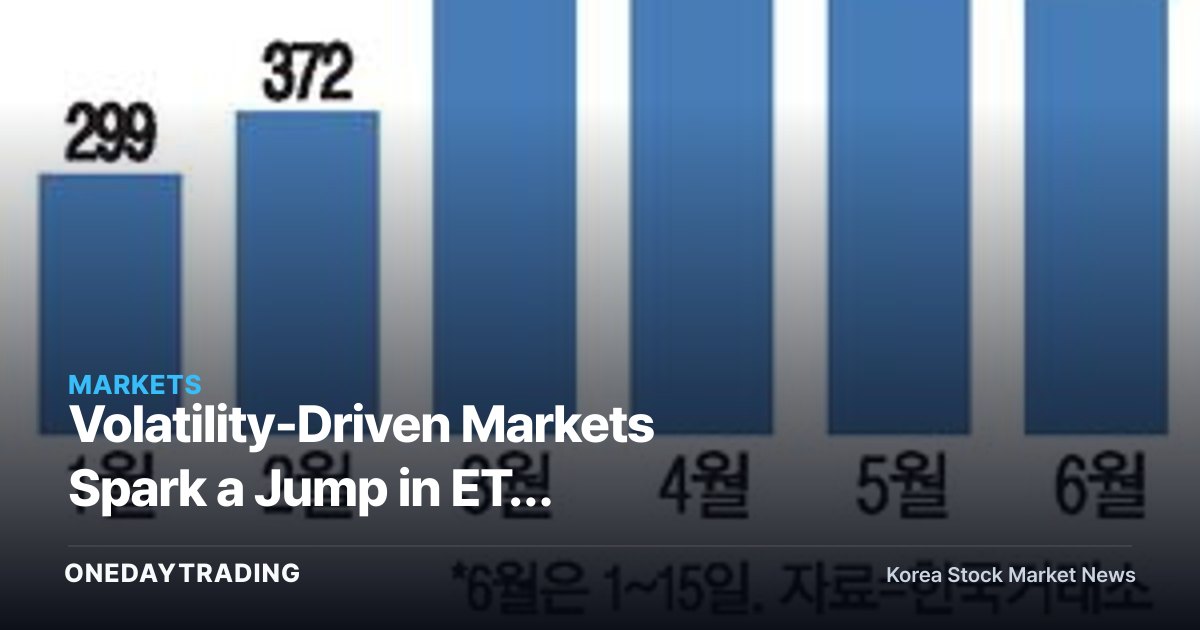
- As the market repeatedly swings up and down, disclosures of excessive deviation between an ETF's market price and its net asset value (NAV) are climbing quickly.
- With high-risk products such as single-stock leveraged ETFs joining an already volatile market, the deviation phenomenon is being amplified even further.
- Because the deviation rate increases the risk of investors buying above or selling below fair value, it has emerged as a key metric that must be checked before trading.
What Is Changing
ETFs are designed to track an index or underlying asset, so it is normal for the market price to converge toward net asset value. However, when the market surges or plunges in a short span, liquidity providers (LPs) cannot keep up with quoting, and as buying and selling pressure pile up on one side, the market price diverges far above or below the actual value. When this gap exceeds a certain threshold, an excessive deviation must be disclosed under exchange rules — and the number of such disclosures has been rising noticeably of late.
In particular, with single-stock leveraged ETFs that magnify a single stock's daily move by two or three times being listed one after another, volatility has expanded structurally. When the underlying stock itself swings sharply and a leverage multiple is added on top, intraday price distortions and deviations are bound to occur more frequently than before. The result is an environment where, even when buying the same product, returns can differ greatly depending on the timing of entry.
By the Numbers and Context
The deviation rate is the market price minus net asset value, divided by net asset value; a positive figure means the product trades at a premium to NAV, while a negative figure means it trades at a discount. Plain ETFs typically keep deviation rates very small, but derivative-type products such as leveraged or inverse ETFs are prone to wider gaps as volatility rises. An increase in disclosures signals that price distortions breaching the threshold have become more frequent, and reflects one facet of a volatile market dominated by short-term trading.
Beneficiary and At-Risk Stocks
- Mirae Asset Securities: Its affiliated asset manager is a top-tier player in Korea's ETF market, so the rise in trading value during volatile markets is favorable on the fee side, though product-reputation management cuts both ways.
- Samsung Securities: Tied to the Samsung group's ETF lineup, it is expected to benefit from expanding trading turnover, but controversy over high-risk products is a wild card.
- Kiwoom Securities: With a high proportion of retail investors, a surge in leveraged ETF trading could boost brokerage commission revenue, while exposing it to investor loss risk.
- The asset management sector overall: Growing ETF net assets and competition for new products expand the top line, but deviation and mis-selling issues could lead to tighter regulation.
Risk Check
- Chasing a buy when the deviation rate is high means paying above fair value, raising the risk of short-term losses.
- For single-stock leveraged and inverse ETFs, volatility and compounding effects can cause tracking errors to accumulate over long holding periods.
- If losses on high-risk products pile up, regulators could tighten listing and sales rules, shrinking asset managers' business environment.
- If volatility subsides, trading value will fall, which could also slow the short-term earnings contribution to the brokerage and asset-management industries.
Bottom Line
ETF market expansion and rising trading value are opportunities for the brokerage and asset-management industries, but the surge in deviation rates is a risk signal of a volatile market — so investors need a cautious approach, always checking the deviation rate and LP quotes before trading.
This article is content automatically summarized and analyzed based on the original news report. View original (Maeil Business Newspaper, Securities)