
Key Takeaways
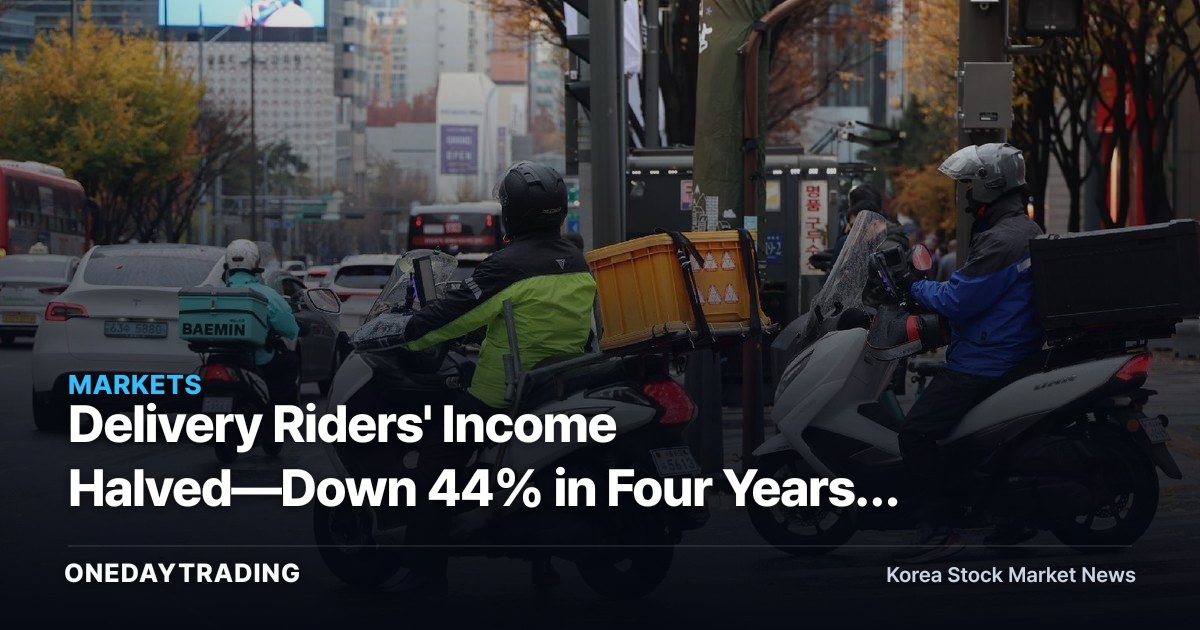
The number of delivery riders rose to 162,746 in 2024, yet average income per rider fell to 23.83 million won—a 44% decline in just four years. This is a textbook case of oversupply, with more workers chasing the same pie. The trend goes beyond individual riders' hardship; it is a mirror reflecting both the cost structure and growth prospects of delivery platforms and the underlying strength of domestic consumption.
What Happened
According to an analysis of gig-worker jobs and wages, the number of delivery riders grew rapidly while average income actually retreated. As job seekers struggling to land regular employment flocked to delivery work with its low entry barriers, and side-hustlers seeking extra income beyond their main jobs joined in, the number of people competing for the same orders ballooned.
The income decline is not confined to riders. Other gig-worker categories, such as content creators, also showed per-capita earnings falling even as the number of workers increased. The pattern reveals a structural stagnation across platform labor as a whole: entry is easy, but demand growth cannot keep pace.
Background and Context
Delivery orders, which exploded during the pandemic, lost momentum after the shift to the endemic phase amid a recovery in dining out and the burden of high delivery fees driven by inflation. Labor supply, on the other hand, kept growing, fed by an economic slowdown and weak employment. With demand stalling while supply alone expands, the shrinking share that each rider takes home is almost an arithmetic inevitability.
Impact on Markets and Stocks
- Coupang (Coupang Eats): An oversupply of riders tilts bargaining power over single-order delivery labor costs toward the platform, a favorable factor that lowers delivery costs. However, if this coincides with slowing order growth, the room for expanding gross merchandise value may be limited.
- Delivery Hero (parent of Baedal Minjok): The maturing of Korea's delivery market pushes market-share competition into a bleeding war over pricing and subscription memberships. While easier rider recruitment stabilizes variable costs, a demand ceiling weighs on revenue leverage.
- Domestic consumer stocks: Falling gig-worker income translates into shrinking disposable income for low-income earners and groups adjacent to self-employment, a mild downside variable that constrains pricing power for food, beverage, and consumer staples.
- Platform labor regulation theme: If worsening rider conditions become a prominent social issue, debate over algorithm and commission regulation could reignite, posing policy risk for platform companies.
Investor Checkpoints
- In Coupang's quarterly earnings, watch both the gross-merchandise-value growth rate of new business segments including Eats and the pace at which operating losses narrow.
- Check monthly card-spending and dining-out indicators to gauge whether delivery order volumes and average delivery fees rebound, or whether the shift toward dining out as a substitute is becoming entrenched.
- Monitor the timeline for legislation and commission regulation related to platform labor, as well as Fair Trade Commission developments, for their impact on cost structures.
- Treat the share of temporary and daily workers in employment statistics, along with the scale of involuntary economic inactivity, as leading indicators of gig-worker supply pressure.
Outlook
On the optimistic side, an abundant rider pool could structurally lower platforms' variable delivery costs, providing a springboard to bring forward the point of turning profitable. Conversely, as the sharp drop in rider income demonstrates, Korea's delivery market has already shifted from top-line growth to a battle over market share and profitability, a phase in which a demand ceiling and regulatory risk operate simultaneously. How much cost efficiency can offset slowing revenue is likely to become the turning point for the valuation of platform companies going forward.
This article is content automatically summarized and analyzed based on an original news report. View original (Maeil Business Newspaper, Corporate)